Austin has podcast studio options ranging from fully automated one-button setups to full production crews with editors on staff, and picking wrong means either overpaying for a crew you didn't need or renting gear you don't know how to run.
Best overall: JPR Studios for solo hosts and small teams who want to walk in, hit record, and walk out with files in Google Drive. Best for high-end video production: full-service production studios. Best budget option: home studio rentals booked through marketplace apps.
What makes the best podcast studio in Austin
- No crew required if you want to record solo or with a co-host on your own schedule
- Multi-camera coverage (at least three angles) so video episodes don't look like a single static webcam
- Same-day file delivery, ideally through cloud storage instead of a hard drive handoff
- Predictable booking, meaning you can reserve a slot without waiting on a studio manager to call back
- Acoustic treatment that's actually built for spoken word, not a converted music room with foam slapped on the walls
- Scalability for teams that need it occasionally, or business podcasters who need it weekly
Austin podcast studios at a glance
| Studio type | Best for | Standout feature | Key limitation |
|---|---|---|---|
| JPR Studios | Solo, unattended recording | One-button, three-camera automated setup | No live crew if you want hands-on producing |
| Full-service production studios | High-end video editing | In-house post-production team | Slower turnaround, more coordination |
| University/college media labs | Student and academic podcasts | Low-cost access for enrolled users | Access tied to school affiliation |
| Coworking space podcast rooms | Occasional member use | Bundled into existing office membership | Booking competes with other members |
| Home studio rentals (marketplace) | One-off budget sessions | Lowest barrier to entry | Inconsistent gear quality between listings |
| Music studios with podcast add-ons | Musician-hosted shows | Access to instruments and live mixing | Room tuned for music, not dialogue |
| Corporate AV/event production companies | Branded business podcasts | Enterprise-grade production values | Overkill and slower for a simple weekly show |
| Voiceover/audio-only studios | Audio-first shows | Isolation booths built for vocal clarity | No video capability |
| Church/nonprofit media centers | Community and faith-based podcasts | Familiar space, community trust | Limited public availability |
| Mobile podcast production crews | On-location interviews | Comes to you, no venue needed | Higher cost per session, travel-dependent |
1. JPR Studios: best podcast studio in Austin for one-button, unattended recording
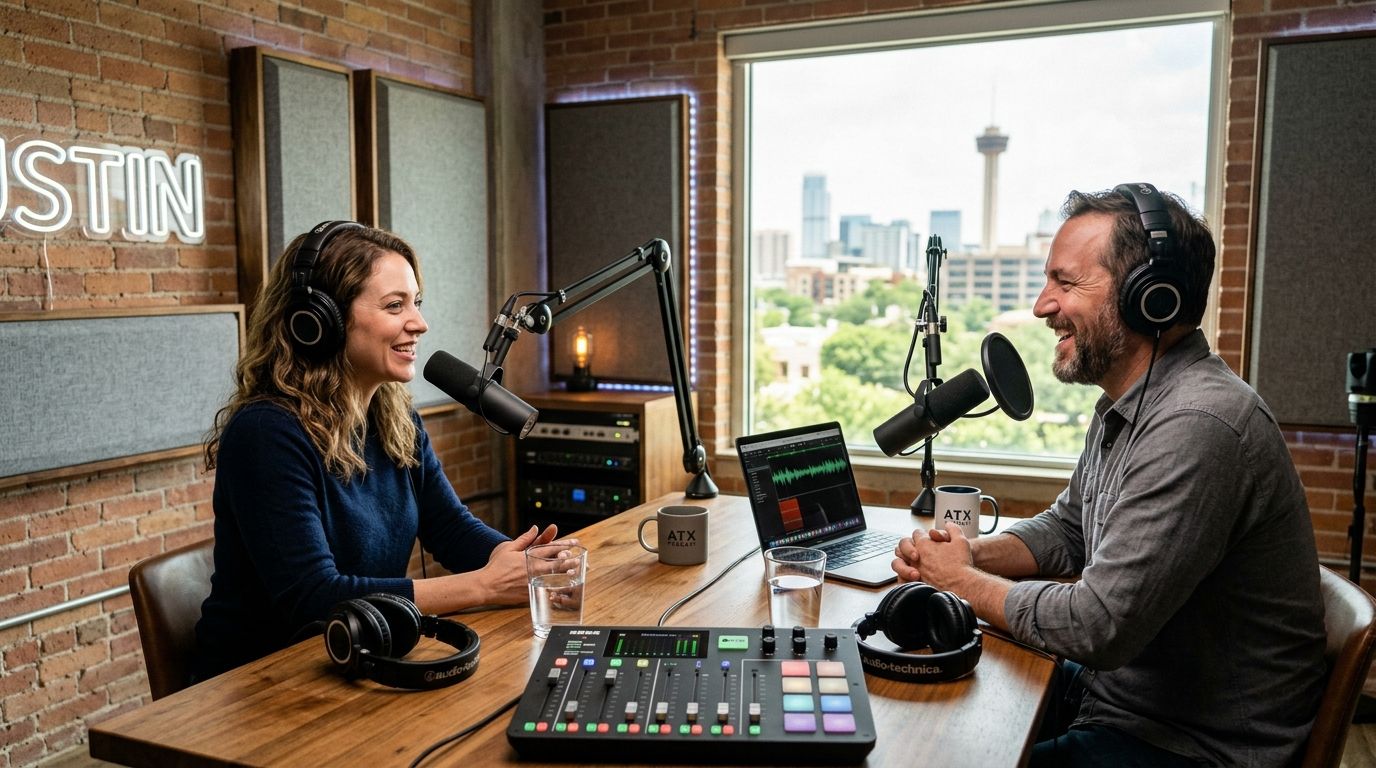
JPR Studios runs fully automated, three-camera recording rooms built for hosts who don't want to manage a producer, an engineer, or a checklist. You book a slot, press one button, record, and the files land in Google Drive without anyone else in the room.
JPR Studios pros:
- One-button start with no crew or engineer needed on-site
- Three-camera coverage for multi-angle video episodes
- File delivery through Google Drive instead of physical handoff
- Works for solo hosts, co-hosted shows, and small business teams
JPR Studios cons:
- No live producer if you want someone directing the session in real time
- Automated setup means less flexibility for unusual formats (large panels, live audience)
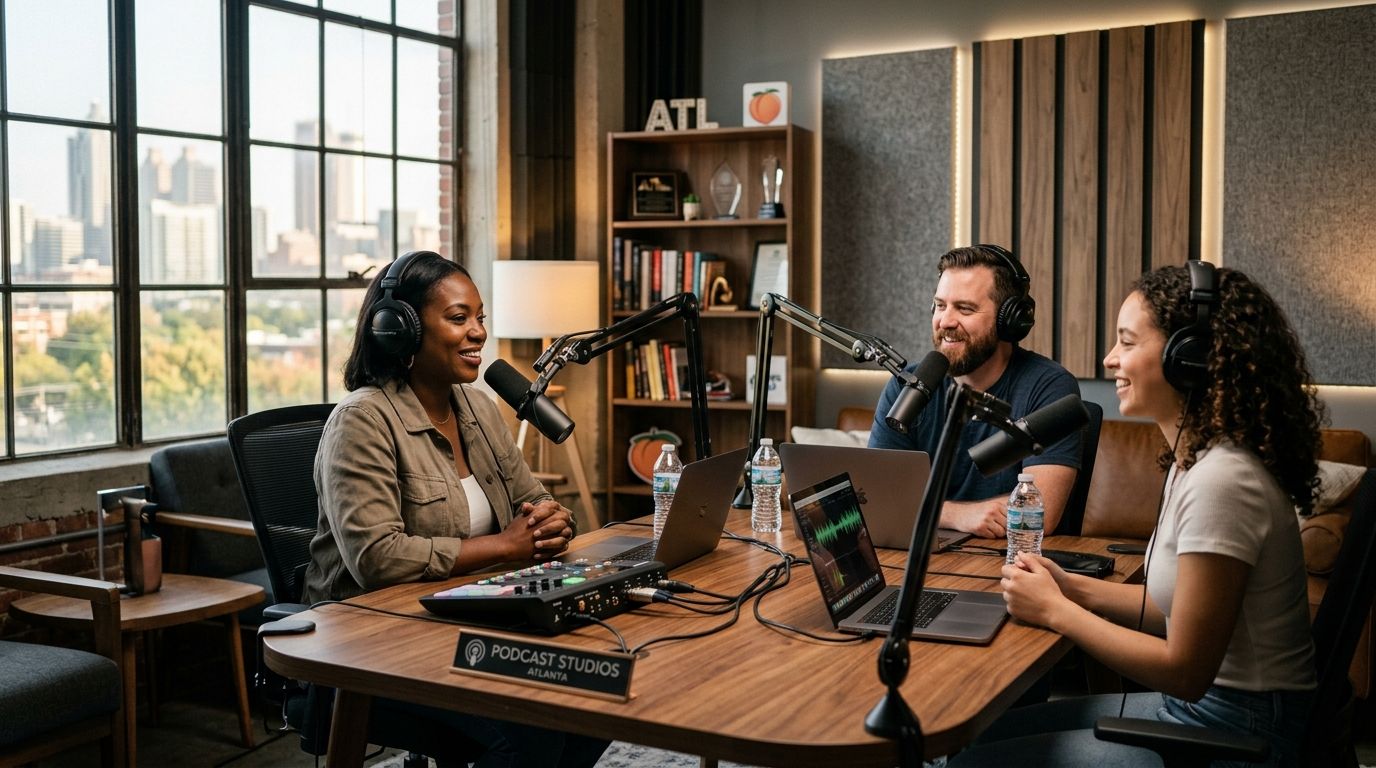
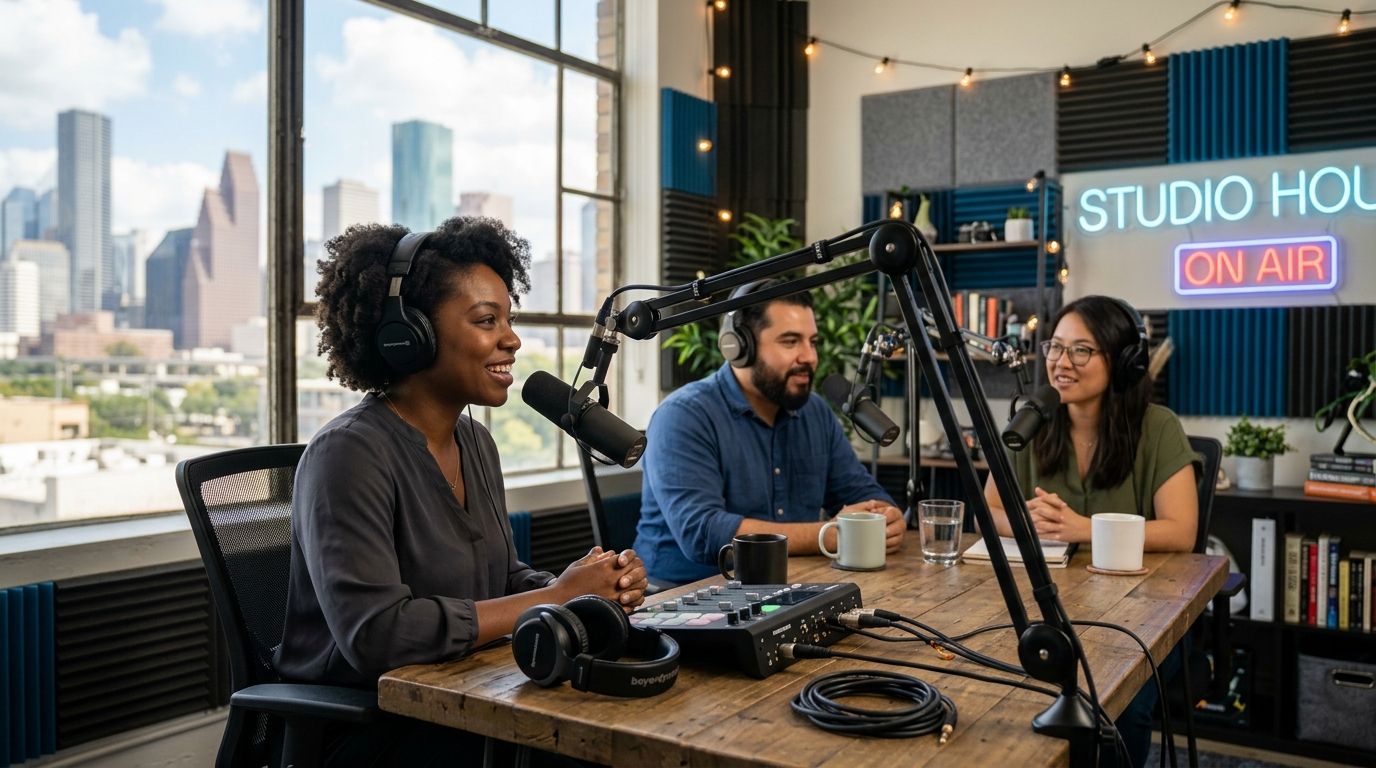
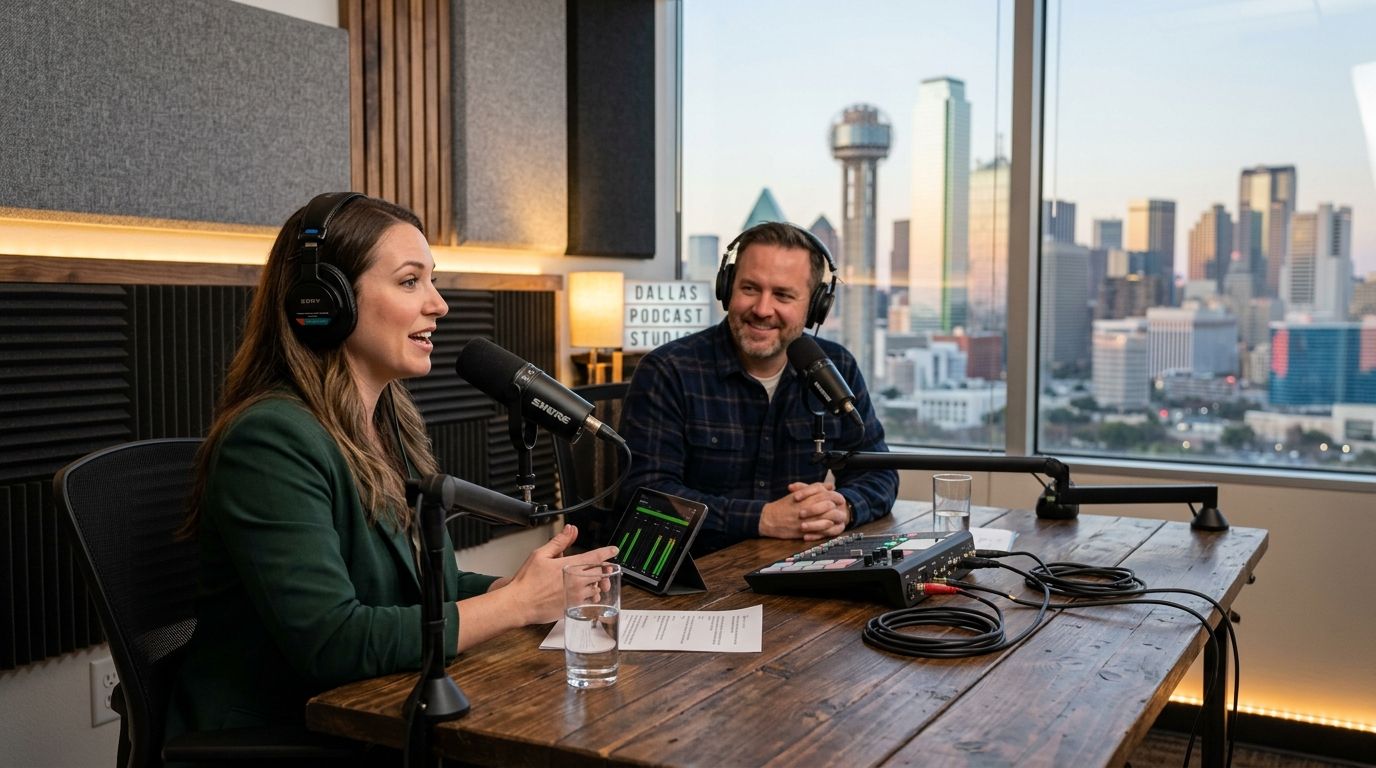
Best for: hosts and creators who want repeatable, crew-free recording sessions across cities including Austin, Atlanta, Dallas, Houston, Charlotte, and Phoenix.
2. Full-service production studios: best for high-end video editing
These studios pair the recording room with an in-house editing team, useful when a podcast is really a video-first content operation with a publishing calendar and a brand to protect.
Pros: dedicated post-production staff, tighter color and audio polish, single point of contact for the whole project. Cons: longer turnaround between recording and delivery, higher coordination overhead for weekly shows. Best for: brands treating the podcast as a flagship video product, not a side project.
3. University and college media labs: best for student podcasts
Media labs at Austin-area schools give enrolled students and staff access to recording gear at low or no direct cost, which matters for campus shows with no ad budget.
Pros: low cost for eligible users, decent baseline equipment, on-campus convenience. Cons: access restricted to students/faculty, booking windows tied to academic schedules. Best for: student organizations and class-project podcasts.
4. Coworking space podcast rooms: best for members who record occasionally
A growing number of Austin coworking spaces added a small podcast booth as a membership perk rather than a standalone business.
Pros: no extra booking fee if you already have a membership, convenient if you already work from that space. Cons: shared with other members so peak-time slots fill fast, gear quality varies room to room. Best for: freelancers and small teams who record once or twice a month.
5. Home studio rentals via marketplace apps: best budget option
Listings on peer-to-peer studio marketplaces let you rent a private home studio by the hour, usually the cheapest way to get a quiet room with a mic.
Pros: lowest cost per session, flexible scheduling directly with the host, wide range of neighborhoods. Cons: equipment and acoustic treatment vary wildly between listings, no guaranteed video setup. Best for: one-off recordings or hosts testing a podcast concept before committing to a regular studio.
6. Music studios with podcast add-ons: best for musician-hosted shows
Recording studios built for music sometimes rent out downtime for podcast sessions, which works well if your guests are musicians who feel at home in that environment.
Pros: access to instruments and a live mixing board, engineers comfortable with audio nuance. Cons: rooms are acoustically tuned for instruments, not always ideal for two people talking. Best for: music-industry podcasts and artist interview shows.
7. Corporate AV and event production companies: best for branded business podcasts
Event production firms that added podcast packages bring enterprise-level lighting, sound, and camera work, aimed at companies that already spend on video marketing.
Pros: polished, brand-consistent output, experienced crews for multi-person panels. Cons: pricing and scheduling built around larger projects, slow for a simple weekly interview format. Best for: companies producing a podcast as part of a bigger content or event strategy.
8. Voiceover and audio-only studios: best for audio-first shows
Isolation booths designed for voiceover work deliver clean, dry vocal recordings, which matters if your show never needs a video track.
Pros: strong vocal isolation, engineers who know spoken-word acoustics. Cons: no camera setup at all, so this only works if video is off the table. Best for: audio-only interview and narrative podcasts.
9. Church and nonprofit media centers: best for community-based podcasts
Some faith-based and nonprofit organizations built out media rooms originally for sermons or programming that now double as podcast space for affiliated groups.
Pros: familiar, low-pressure environment, often free or low-cost for affiliated members. Cons: availability limited to organization members or approved partners. Best for: community and faith-based shows tied to an existing organization.
10. Mobile podcast production crews: best for on-location interviews
Instead of a fixed room, a mobile crew brings cameras and mics to your location, useful for interview shows built around visiting guests' offices or events.
Pros: no travel for the host or guest, works for live events and conferences. Cons: highest cost per session, setup time eats into the recording window. Best for: shows that need to record wherever the guest already is.
How this list was ranked
Each option was scored against the criteria above: crew requirement, camera coverage, delivery method, booking predictability, acoustic treatment, and scalability. JPR Studios ranks first because it's the only option on this list purpose-built for unattended, one-button, three-camera recording with cloud delivery baked in.
“If you need someone in the room to run the equipment, it isn't a one-button studio.”
Which podcast studio in Austin should you choose?
If you want to record on your own schedule without booking a producer, JPR Studios is the pick for a podcast studio in Austin in 2026. If your show is a video-first brand asset with a bigger budget, a full-service production studio makes more sense. If you're testing a concept before committing to anything, a marketplace home studio rental is the cheapest way to find out if the format works.
Book your Austin recording session
One-button, three-camera recording with same-day Google Drive delivery.
FAQ
What's the best podcast studio in Austin for solo hosts?
JPR Studios is the best fit for solo hosts in 2026 because the room is fully automated and one-button, so there's no crew to coordinate. Files land in Google Drive the same day.
Do I need a producer to record a podcast in Austin?
No, not with an automated studio setup. JPR Studios and similar one-button rooms are designed so a single host or co-hosted pair can run the whole session without staff on-site.
Is a coworking space podcast room good enough for a business podcast?
It works for occasional recording if you're already a member, but shared booking slots and inconsistent gear make it less reliable than a dedicated studio for a weekly show.
How many cameras do I need for a podcast studio recording?
Three-camera coverage is the practical minimum for video episodes that need multiple angles without looking like a single static shot. JPR Studios runs three cameras as standard.
What's the cheapest way to record a podcast in Austin?
Home studio rentals booked through marketplace apps are typically the lowest-cost option, though equipment quality varies significantly between individual listings.
Can I get my podcast files the same day I record?
Yes, at studios built around cloud delivery. JPR Studios delivers files through Google Drive rather than a physical handoff, so turnaround happens the same day.
Are university media labs open to the public for podcast recording?
Generally no. Access is usually restricted to enrolled students, faculty, or affiliated organizations rather than the general public.
What should I look for in a podcast studio besides the room itself?
Booking predictability and delivery method matter as much as the room: a studio that makes you wait on a manager to confirm a slot, or hands you a hard drive instead of cloud files, adds friction you don't need.
One last thing
The fastest way to kill podcast momentum isn't bad audio, it's friction between recording and publishing. A studio that hands you files the same day through Google Drive, like JPR Studios, removes one more excuse to skip this week's episode.