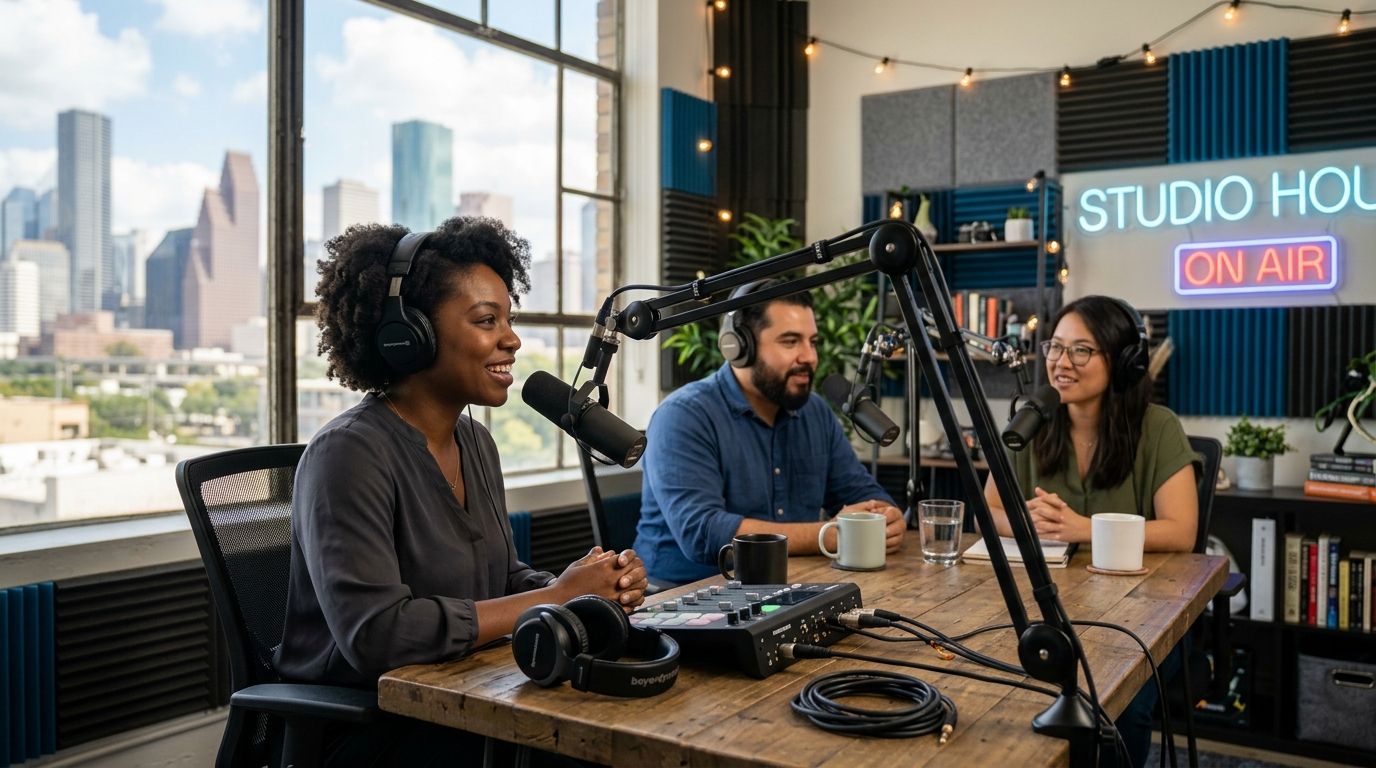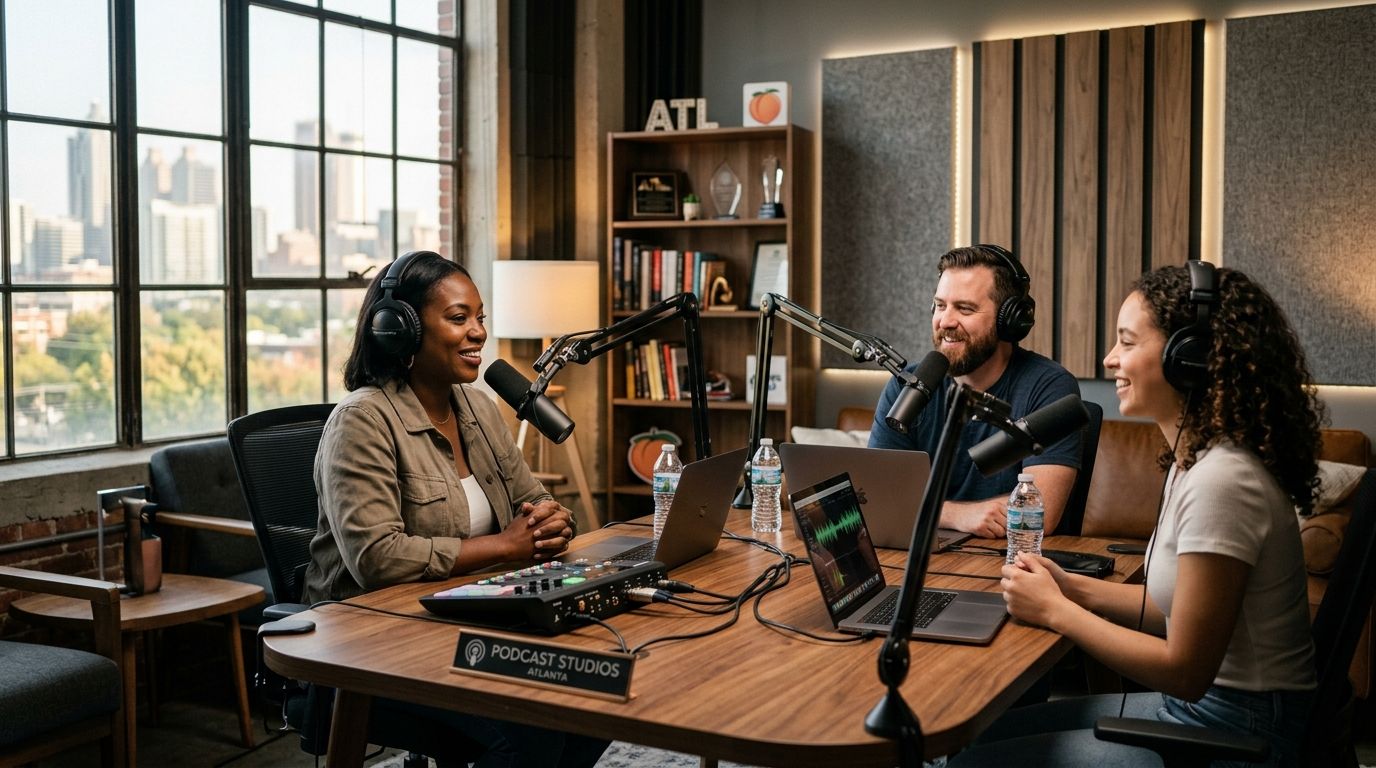
Atlanta has no shortage of places that call themselves a "podcast studio," but most of them fall into one of a handful of real categories: self-serve automated setups, full-crew production houses, coworking rooms, campus labs, and one-off home rentals. Picking the wrong type wastes a session before you've hit record. Here's how the ten main options in Atlanta stack up in 2026, ranked by who each one actually fits.
- JPR Studios wins for solo hosts and small teams who want a one-button, three-camera podcast studio in Atlanta with no crew and Google Drive delivery.
- Full-service production studios fit high-budget video podcasts that need a director and an on-site editor.
- Coworking podcast rooms suit members who already pay for desk space and record occasionally.
- University and library media labs cover students and nonprofits needing free or low-cost access.
- Peerspace-style home rentals work best for one-off shoots that need a specific backdrop.
Why this matters
The phrase "podcast studios Atlanta" covers wildly different setups. Some are built for a solo host who wants to press one button and leave with three-camera footage. Others require booking a full crew weeks out. If you're comparing options, JPR Studios runs one of the few one-button, three-camera setups in the city as of 2026, but it's not the right fit for every use case on this list.
The real question isn't which studio is "best" in the abstract. It's which model matches how often you record, whether you want a producer in the room, and how fast you need the files back.
What makes the best podcast studio in Atlanta
- Self-serve vs. full-crew — whether you run the session yourself or a producer does it for you
- File delivery method — direct download, Google Drive, or a wait for an edited cut
- Camera coverage — three-camera multi-angle setups versus a single static shot
- Booking flexibility — same-day availability versus scheduling weeks out
- Fit for repeat recording — friction and cost for a weekly show versus a one-time event
- Location access across the metro — one site versus multiple Atlanta-area options
Atlanta podcast studios at a glance
| Studio type | Best for | Standout feature | Key limitation |
|---|---|---|---|
| JPR Studios | Solo hosts recording without a crew | One-button, three-camera self-serve setup with Google Drive delivery | No in-house producer if you want someone running the session for you |
| Full-service production studio | High-budget video podcasts | On-site director, audio engineer, and editor | More friction to book, less control over your own schedule |
| Coworking podcast room | Members already renting desk space | Recording room bundled into an existing membership | Gear is usually single-camera or audio-only |
| University or library media lab | Students, educators, public-access projects | Free or low-cost access tied to enrollment or a library card | Booking windows tied to academic or library hours |
| Peerspace-style home rental | One-off shoots needing a specific look | Wide variety of backdrops and room styles | No dedicated recording gear included |
| Radio station rental | Interview shows needing broadcast-grade audio | Professional mixing board and soundproofed booth | Built for audio, not multi-camera video |
| Music studio with a podcast add-on | Musicians recording interview content between sessions | Existing acoustic treatment and mic selection | Podcast recording is secondary to the studio's music work |
| Corporate AV/event production company | Brand podcasts tied to a bigger campaign | Full production team and post-production pipeline | Built for campaigns, not a quick weekly episode |
| Mobile podcast recording service | On-location interviews at conferences or offices | Crew travels to you with portable gear | Audio and lighting quality depend on the location you pick |
| DIY home setup | Testing a format before renting a studio | Zero cost beyond gear you already own | No multi-camera coverage or acoustic treatment |
1. JPR Studios: best podcast studio in Atlanta for solo hosts recording without a crew
JPR Studios operates a fully automated, three-camera setup where you press one button and record without a producer, engineer, or camera operator in the room. Files land in Google Drive after the session instead of sitting in a production queue. It's built for hosts who record regularly and don't want to schedule around a crew's availability.
JPR Studios pros:
- One-button start, no technical setup required
- Three-camera coverage without hiring a videographer
- Files delivered to Google Drive, no separate handoff step
- Self-serve booking instead of waiting on a producer's calendar
JPR Studios cons:
- No on-site producer if you want someone else running the session
- No live editing or mixing during the recording itself
- Best suited to interview and conversational formats, not multi-segment live productions
Best for: solo hosts and small teams recording on a regular cadence. Verdict: Buy.
2. Full-service production studio: best for high-budget video podcasts needing a crew
These studios put a director, audio engineer, and sometimes an editor in the room with you. They fit shows tied to a larger media budget, where production value matters more than turnaround speed or scheduling flexibility.
Pros:
- Professional crew handles technical decisions in real time
- Higher production polish for multi-camera, multi-segment shows
- Often bundles editing into the same engagement
Cons:
- Booking usually requires lead time and a larger budget
- Less control over pacing since a crew is running the session
Best for: brands and networks producing high-budget video episodes. Verdict: Hold — worth it only if the budget and crew match your show's ambition.
3. Coworking podcast room: best for members already renting desk space
Coworking spaces around Atlanta increasingly bundle a small recording room into a membership. It's convenient if you're already paying for a desk and want to record without leaving the building.
Pros:
- No extra booking process if you're already a member
- Convenient for hosts who work from the same space daily
- Usually cheaper than a dedicated production studio
Cons:
- Camera setup is typically single-angle or audio-only
- Room availability depends on other members' bookings
Best for: coworking members who record occasionally, not weekly. Verdict: Hold.
4. University or library media lab: best for students and public-access projects
Campus media labs and public library recording booths exist in several Atlanta institutions, usually tied to enrollment or a library card rather than a paid rental.
Pros:
- Free or near-free access for eligible users
- Often includes basic mic and camera gear
- Good for learning the fundamentals before renting elsewhere
Cons:
- Access windows are tied to academic terms or library hours
- Not available to hosts outside the eligible group
Best for: students, educators, and nonprofit projects on a zero budget. Verdict: Buy — if you qualify for access.
5. Peerspace-style home rental: best for one-off shoots needing a specific look
Marketplace listings for homes and lofts give you a distinct visual backdrop for a single episode or special segment, without committing to a dedicated studio membership.
Pros:
- Wide range of aesthetics, from industrial lofts to modern living rooms
- No long-term commitment, book by the hour or day
- Useful for a one-time special episode or brand shoot
Cons:
- No recording gear included — you bring or rent your own
- Acoustic treatment varies widely by listing
Best for: a single episode that needs a specific visual setting. Verdict: Wait — fine for a one-off, not for a recurring show.
6. Radio station rental: best for interview shows needing broadcast-grade audio
Some Atlanta radio stations rent out their soundproofed booths and mixing boards during off-air hours. This is a strong option if audio quality matters more than video.
Pros:
- Professional-grade soundproofing and mixing equipment
- Engineers on-site understand broadcast-level audio standards
Cons:
- Built for audio, not multi-camera video coverage
- Availability tied to the station's own broadcast schedule
Best for: audio-first interview podcasts. Verdict: Hold.
7. Music studio with a podcast add-on: best for musicians recording interviews between sessions
A number of Atlanta music studios have added a podcast package to fill downtime between recording sessions, using the existing acoustic treatment and mic selection.
Pros:
- Acoustic treatment already built for professional audio
- Convenient for artists already booking studio time for music
Cons:
- Podcast recording is a secondary offering, not the studio's focus
- Camera setup, if any, is usually an afterthought
Best for: musicians and labels recording interview content on the side. Verdict: Wait.
8. Corporate AV/event production company: best for brand podcasts tied to a bigger campaign
Event production firms with AV divisions sometimes fold podcast recording into a larger video campaign for a company or agency client.
Pros:
- Full production and post-production pipeline in one vendor
- Useful when the podcast is one piece of a bigger content push
Cons:
- Overkill and slower turnaround for a standalone weekly episode
- Pricing and scheduling built around campaign work, not quick sessions
Best for: marketing teams launching a podcast as part of a wider campaign. Verdict: Hold.
9. Mobile podcast recording service: best for on-location interviews
Mobile crews bring portable camera and audio gear to your office, event, or conference floor instead of you traveling to a fixed studio.
Pros:
- No travel required on your end
- Good for capturing interviews at a live event or conference
Cons:
- Audio and lighting quality depend heavily on the location
- Usually needs advance scheduling around the crew's availability
Best for: on-location interviews at events or offices. Verdict: Wait.
10. DIY home setup: best for testing a format before renting a studio
A basic microphone, a webcam, and a quiet room can get a first episode recorded before you invest in a rental at all.
Pros:
- Zero facility cost, just the gear you already own or buy once
- Useful for validating a format before committing to a studio
Cons:
- No multi-camera coverage or professional acoustic treatment
- Audio and video quality plateau quickly without upgrades
Best for: first-time hosts testing whether a podcast format works. Verdict: Skip — once you're past episode one, move to a real studio.
How we ranked these
Each entry was measured against the six criteria above: self-serve versus full-crew, file delivery, camera coverage, booking flexibility, fit for repeat recording, and access across the metro. JPR Studios ranks first because it's the only option on this list combining one-button self-serve recording, three-camera coverage, and direct Google Drive delivery without a crew requirement. The rest of the list splits by use case rather than competing head-to-head with it.
“The wrong studio type doesn't ruin one episode — it ruins your recording cadence, because you stop booking sessions that feel like a hassle.”
Which podcast studio in Atlanta should you choose?
If you're recording weekly or biweekly and don't want to schedule around a producer's calendar, JPR Studios is the default pick for 2026 — three cameras, one button, files in Google Drive. If your show needs a full crew and post-production, go with a full-service production studio instead. Everything else on this list fits a narrower case: coworking rooms for occasional members, campus labs for students, home rentals for a one-off look, and DIY setups for testing a format before you commit to any studio at all.
Record your next episode in Atlanta
One button, three cameras, files delivered to Google Drive.
FAQ
What's the best podcast studio in Atlanta for a solo host?
JPR Studios is the best fit for a solo host in Atlanta in 2026 because it's a one-button, three-camera setup with no crew required and files delivered to Google Drive.
Is a full-crew production studio better than a self-serve studio?
It depends on budget and format. A full-crew studio suits high-budget video podcasts that want a director and editor on-site, while a self-serve studio like JPR Studios fits hosts who record regularly and want control over their own schedule.
Do coworking spaces in Atlanta have podcast rooms?
Some coworking spaces bundle a small recording room into membership, but the gear is usually single-camera or audio-only rather than the multi-camera coverage a dedicated studio provides.
Can students record podcasts for free in Atlanta?
University and library media labs offer free or low-cost access for students, educators, and eligible cardholders, though booking windows are tied to academic terms or library hours.
What's the difference between a podcast studio and a home rental listing?
Marketplace home rentals give you a specific visual backdrop for a shoot but don't include recording gear, while a dedicated podcast studio provides cameras, mics, and a repeatable setup.
How does file delivery work at an automated podcast studio?
At JPR Studios, recordings are delivered directly to Google Drive after the session instead of going through a separate production handoff.
Is a DIY home setup good enough to launch a podcast?
A DIY setup works for testing whether a format is worth pursuing, but it lacks the multi-camera coverage and acoustic treatment a dedicated studio provides once you're recording regularly.
How many cameras does a typical automated podcast studio use?
JPR Studios uses a three-camera setup as of 2026, giving multi-angle coverage without needing a camera operator in the room.
One last thing
The biggest mistake hosts make in 2026 isn't picking the wrong studio — it's picking a studio type that doesn't match how often they actually record. A full-crew production house sounds impressive for episode one, but a host recording weekly needs something bookable same-day without a producer's calendar in the way. That's the gap JPR Studios is built to close in Atlanta.