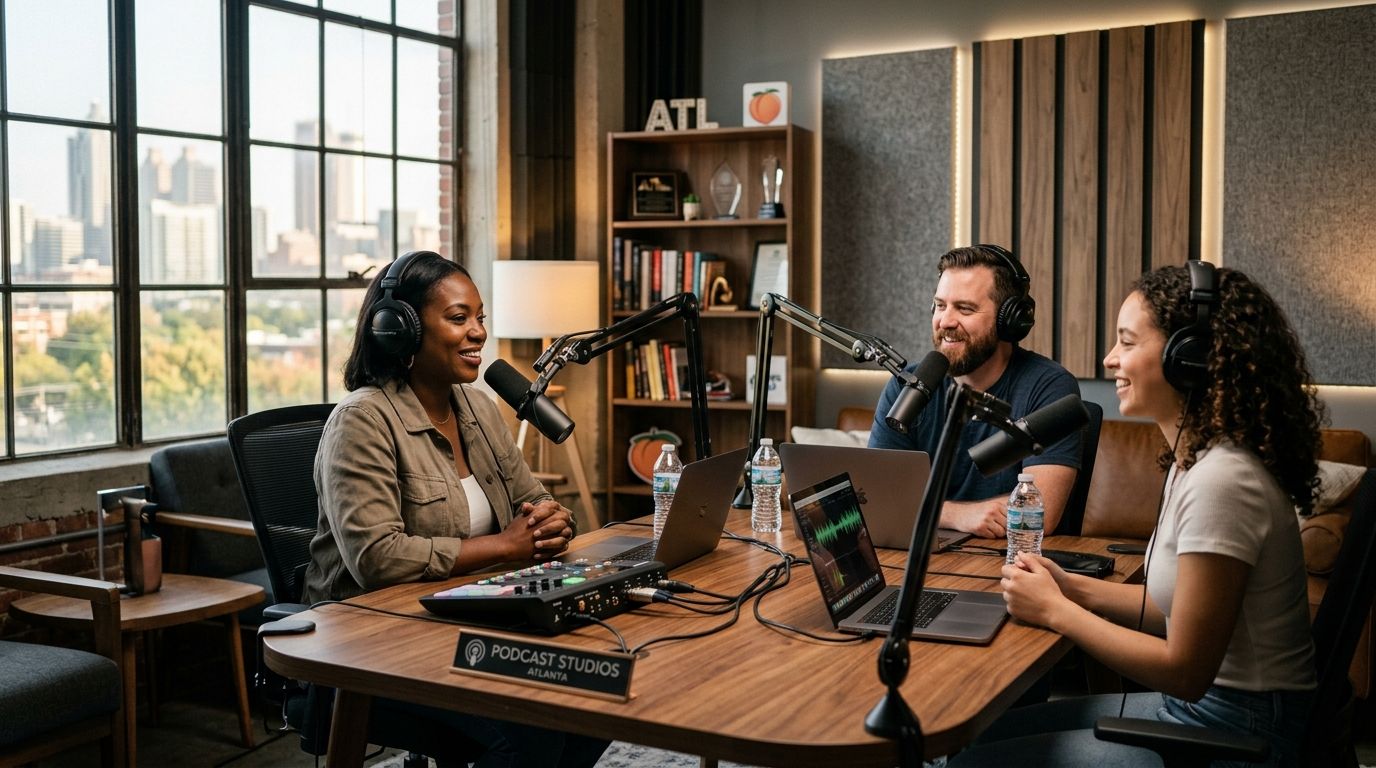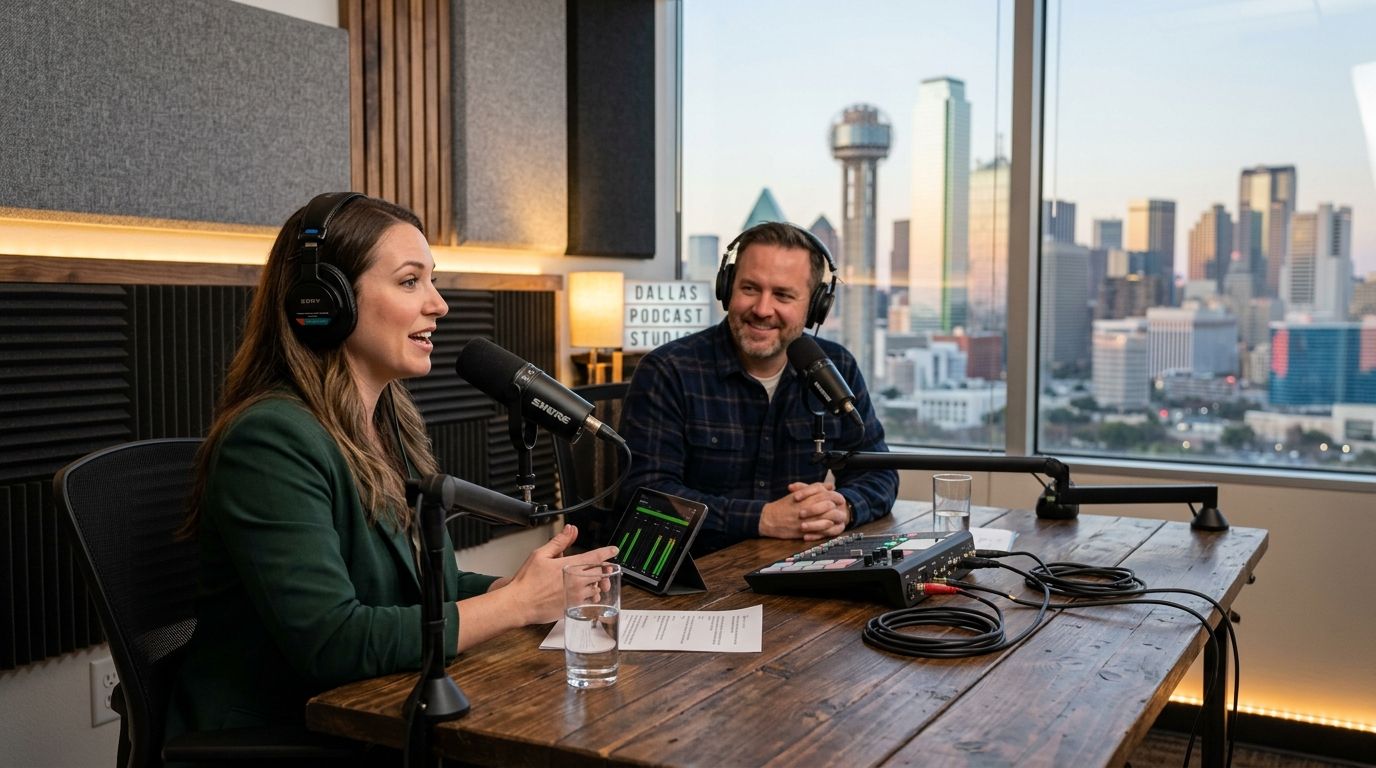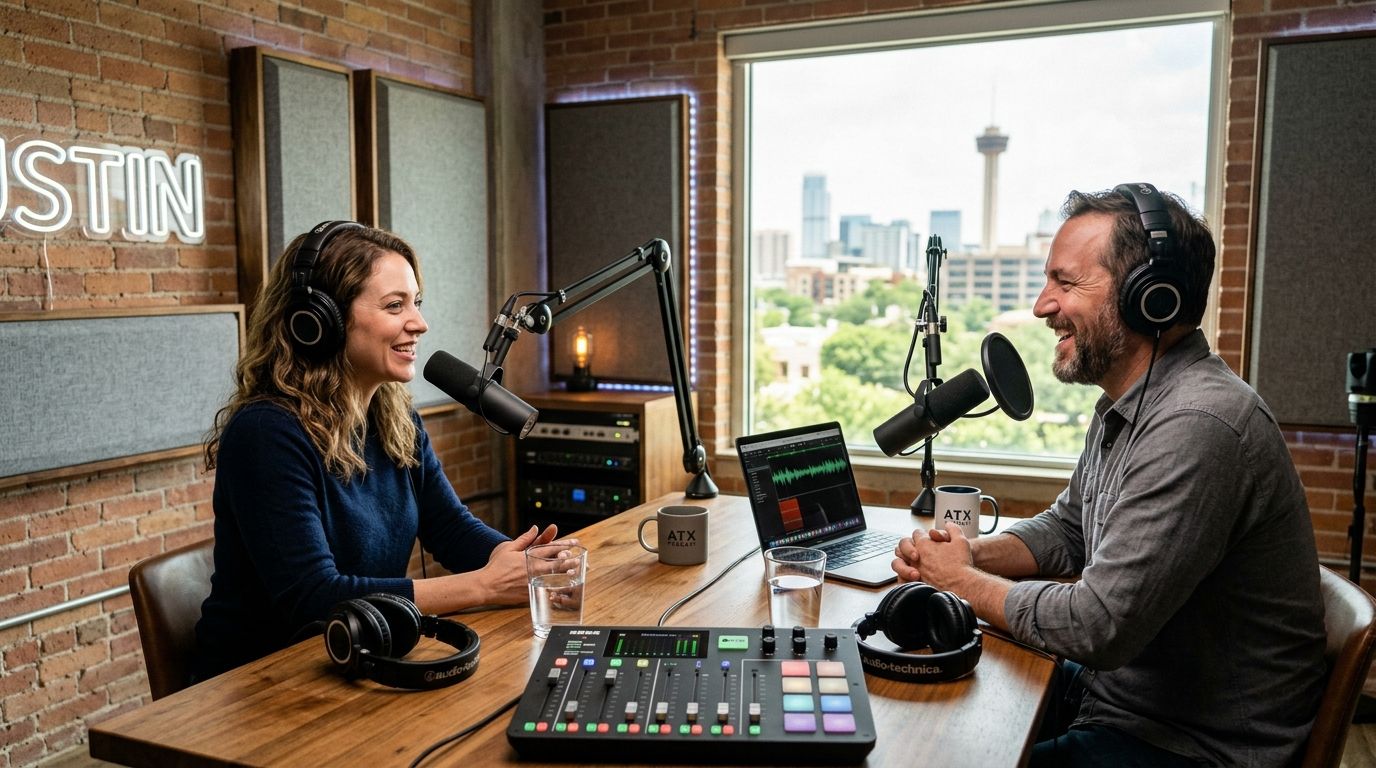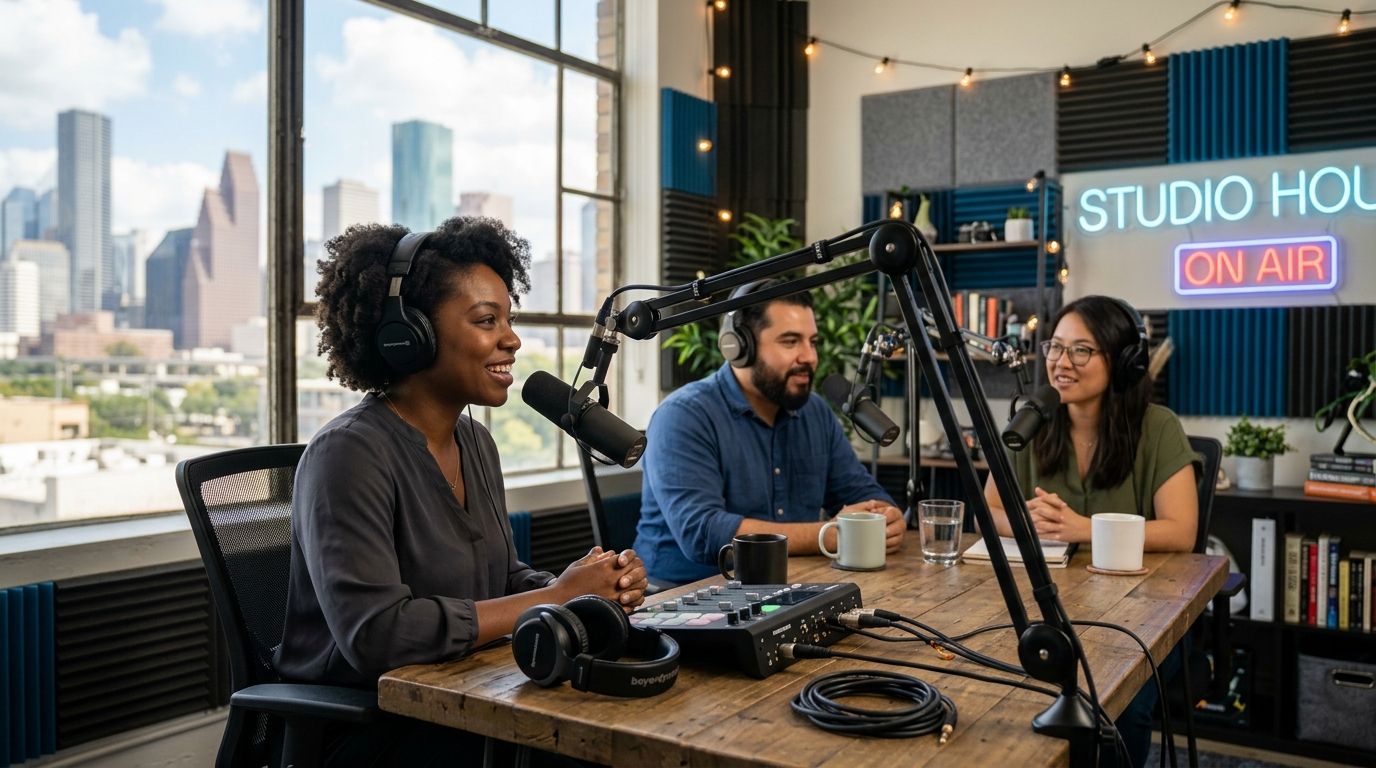
Houston has more podcast recording options than a quick search suggests, and most of them don't look anything alike. A one-button automated studio, a university media lab, and a coworking space booth all call themselves "podcast studios," but they solve completely different problems. This guide ranks the ten types of podcast studios in Houston worth considering in 2026, so you can match your show's cadence and budget to the right setup instead of guessing.
- JPR Studios wins for solo hosts and small teams who want a one-button, three-camera setup with Google Drive delivery in 2026.
- University media centers suit campus-affiliated shows with access to student crews and academic gear.
- Coworking space recording booths make sense when your team already pays for office space in Houston.
- Skip full-service production studios unless your budget covers a crew and higher day rates.
- Mobile and event setups fit conference tapings, not weekly episode production.
Why this matters
Most Houston hosts lose more time coordinating a studio than actually recording in one. A crew-based facility needs a producer, an engineer, and a booking lead time measured in days. An automated studio needs a reservation and a button press. Neither is wrong, but picking the wrong one for your publishing cadence is how weekly shows turn into monthly shows.
The categories below are ranked by who they actually serve, not by which one is biggest or flashiest. Read the "best for" line before the pros and cons — that's the fastest way to find your slot.
What makes the best podcast studio in Houston
- Booking flexibility — can you record same-week, or does it need a producer's calendar?
- Camera and audio setup — multi-camera video, clean mic isolation, or audio-only
- File delivery workflow — how fast you get raw files and in what format
- Crew requirement — does someone need to run the session for you, or can you run it yourself
- Location coverage — how many parts of Houston have a usable option
- Cost transparency — flat rate vs. quote-based pricing
Best overall: JPR Studios' automated three-camera setup for solo hosts and small teams who want to record without a crew. Best for campus-affiliated shows: university media centers with academic equipment access. Best for teams with office memberships: coworking space recording booths already built into the building.
Podcast studios in Houston at a glance
| Studio type | Best for | Standout feature | Key limitation |
|---|---|---|---|
| JPR Studios | Solo hosts, small teams | One-button, three-camera, Google Drive delivery | No in-person crew if you want one |
| University media centers | Student and campus podcasts | Academic-grade cameras and mics | Requires campus affiliation |
| Coworking recording booths | Teams with an existing membership | Booking built into office access | Single-camera or audio-only in most builds |
| Full-service production studios | Scripted, high-budget shows | Dedicated producer and engineer | Higher day rates, longer booking lead time |
| Audio-only rental studios | Interview and narrative audio shows | Acoustic treatment tuned for voice | No video capture |
| Home studio equipment rental | Remote or hybrid recording | Gear delivered to your location | You run setup and teardown yourself |
| Peer-to-peer space marketplaces | One-off recordings, pilots | Wide range of spaces and neighborhoods | Inconsistent equipment quality |
| Church and nonprofit media centers | Ministry and community shows | Low-friction access for members | Limited availability outside org hours |
| Video production companies | Brand and marketing podcasts | Full video post-production support | Priced closer to commercial video, not podcasting |
| Mobile and event setups | Conference and live tapings | Comes to the event | Not built for recurring weekly episodes |
1. JPR Studios: best podcast studio in Houston for solo hosts and small teams
JPR Studios runs one-button, three-camera recording rooms built for hosts who don't have a producer on staff. You walk in, press one button, and the system handles camera switching and audio capture. Files land in Google Drive on a 48-hour turnaround, so there's no waiting on an editor to hand off raw footage.
JPR Studios pros:
- No crew needed — the room runs itself
- Three-camera video without hiring a videographer
- Google Drive delivery instead of a manual file transfer
JPR Studios cons:
- No option to have a human operator run the session for you
- Fixed studio locations mean travel if you're not near one
Best for: hosts who want studio-quality video and audio without managing a production team. Verdict: Buy.
2. University media centers: best for campus-affiliated podcasts
Houston's universities run media labs with broadcast-grade cameras and mics, usually available to students, faculty, or affiliated organizations. Access is typically free or low-cost if you're inside the institution.
Pros: high equipment quality, low or no cost, student crew support available. Cons: requires campus affiliation, booking tied to academic calendars, not open to the general public.
Best for: student-run shows and campus research podcasts. Verdict: Buy if eligible.
3. Coworking space recording booths: best for teams with an office membership
Some Houston coworking spaces build a recording booth into their amenities package. If your team already works out of one, it's the path of least resistance.
Pros: no extra booking system, familiar location, often included in membership. Cons: usually single-camera or audio-only, booth availability competes with other members.
Best for: teams already paying for office space who want a recording option on-site. Verdict: Hold — good if you're already a member, not worth joining for.
4. Full-service production studios: best for scripted, high-budget shows
These are traditional studios with a producer, camera operator, and audio engineer on staff. They exist for shows that need someone else running the technical side.
Pros: dedicated crew, full production support, editing packages often bundled. Cons: higher day rates than self-serve options, booking lead time can run days to weeks.
Best for: branded shows with a real production budget and a script to execute. Verdict: Hold — right for well-funded shows, overkill for a weekly interview format.
5. Audio-only rental studios: best for interview and narrative audio shows
If your show never needs video, an audio-only room with acoustic treatment tuned for voice is the simplest option in Houston.
Pros: clean, isolated sound, usually cheaper than video-equipped rooms, quick booking. Cons: no video output at all, which limits distribution on YouTube or social clips.
Best for: narrative and interview shows built purely for audio platforms. Verdict: Buy if you're audio-only.
6. Home studio equipment rental: best for remote or hybrid hosts
Instead of traveling to a studio, some Houston vendors deliver mics, cameras, and lighting to your location for a session.
Pros: no travel, works for remote guests, flexible scheduling. Cons: you handle setup and teardown, output quality depends on your room's acoustics.
Best for: hosts recording from a home office who still want gear upgrades. Verdict: Hold — useful occasionally, not a long-term substitute for a treated room.
7. Peer-to-peer space marketplaces: best for one-off recordings and pilots
Marketplace-style platforms list private spaces across Houston that can double as a recording location for a single episode or a pilot.
Pros: wide range of neighborhoods and price points, good for testing a format once. Cons: equipment quality varies by listing, no guarantee of podcast-specific gear.
Best for: testing a pilot episode before committing to a recurring setup. Verdict: Wait — fine for a one-time test, not a format you should build a schedule around.
8. Church and nonprofit media centers: best for ministry and community shows
Many Houston churches and nonprofits run in-house media rooms originally built for services or events, now used for member podcasts.
Pros: low or no cost for affiliated members, familiar and low-pressure environment. Cons: availability tied to organizational hours, not open to outside hosts.
Best for: ministry and community podcasts tied to a specific organization. Verdict: Buy if affiliated.
9. Video production companies with podcast add-ons: best for brand and marketing podcasts
Some Houston video production companies added podcast recording as a service line on top of their commercial video work.
Pros: strong post-production support, useful for brand content repurposed across channels. Cons: priced closer to commercial video production than to a standard podcast studio rental.
Best for: companies producing a podcast as one piece of a larger marketing package. Verdict: Hold — worth it only if you already need the video production arm.
10. Mobile and event-based podcast setups: best for conferences and live tapings
These are portable rigs that travel to a conference, trade show, or live event instead of hosting in a fixed room.
Pros: captures live audience energy, no need to relocate the event. Cons: not built for weekly production, setup time eats into the event schedule.
Best for: one-off live tapings at conferences or industry events. Verdict: Wait — great for a single event, wrong tool for a recurring show.
“If you can push a button, you can record a three-camera show.”
How we ranked these
Each category was scored against the same six criteria: booking flexibility, camera and audio setup, file delivery workflow, crew requirement, location coverage, and cost transparency. Categories that force a host to hire a crew before recording a single episode ranked lower for weekly shows, even when the output quality was strong.
Book a Houston recording session
One-button, three-camera studio with Google Drive file delivery.
Which podcast studio in Houston should you choose?
If you're recording weekly and don't have a producer, JPR Studios is the default answer in 2026 — one button, three cameras, files in Google Drive within 48 hours. If you're affiliated with a university or nonprofit, use that access before paying for anything else. Full-service and video production studios only make sense once your show has a real production budget behind it, and mobile setups are for the one event, not the ongoing show.
FAQ
What is the best podcast studio in Houston in 2026?
JPR Studios is the best option for solo hosts and small teams who want a one-button, three-camera setup without hiring a crew. University media centers and coworking booths are better fits for hosts with existing campus or office access.
Is there an automated podcast studio in Houston?
Yes. JPR Studios runs a fully automated, one-button, three-camera room in Houston with files delivered through Google Drive, no crew required.
Do I need a crew to record a podcast in Houston?
No, not if you use an automated studio. Full-service production studios and video production companies require a crew, but self-serve rooms let you run the session yourself.
Can I record video and audio in the same session in Houston?
Yes. Automated three-camera studios and full-service production studios both capture multi-camera video alongside audio in a single session. Audio-only rental studios do not offer video.
How fast do I get my files after recording in Houston?
At JPR Studios, files land in Google Drive on a 48-hour turnaround. Turnaround at other studio types depends on whether an editor is processing footage manually.
Are university media centers open to non-students?
Usually not. Access is typically limited to students, faculty, or affiliated organizations, which makes them a strong option only if you already have that affiliation.
What's the difference between a coworking booth and a dedicated podcast studio?
A coworking booth is built for occasional use inside an office membership and is often single-camera or audio-only. A dedicated podcast studio like JPR Studios is purpose-built with multi-camera video as the default.
One last thing
The category that trips up the most new hosts isn't the studio at all — it's cadence. A show recorded once a month can justify a full-service crew booking; a weekly show can't, because the coordination overhead compounds every seven days. Match the studio type to your publishing schedule before you match it to your budget, and the right pick on this list gets a lot more obvious.