
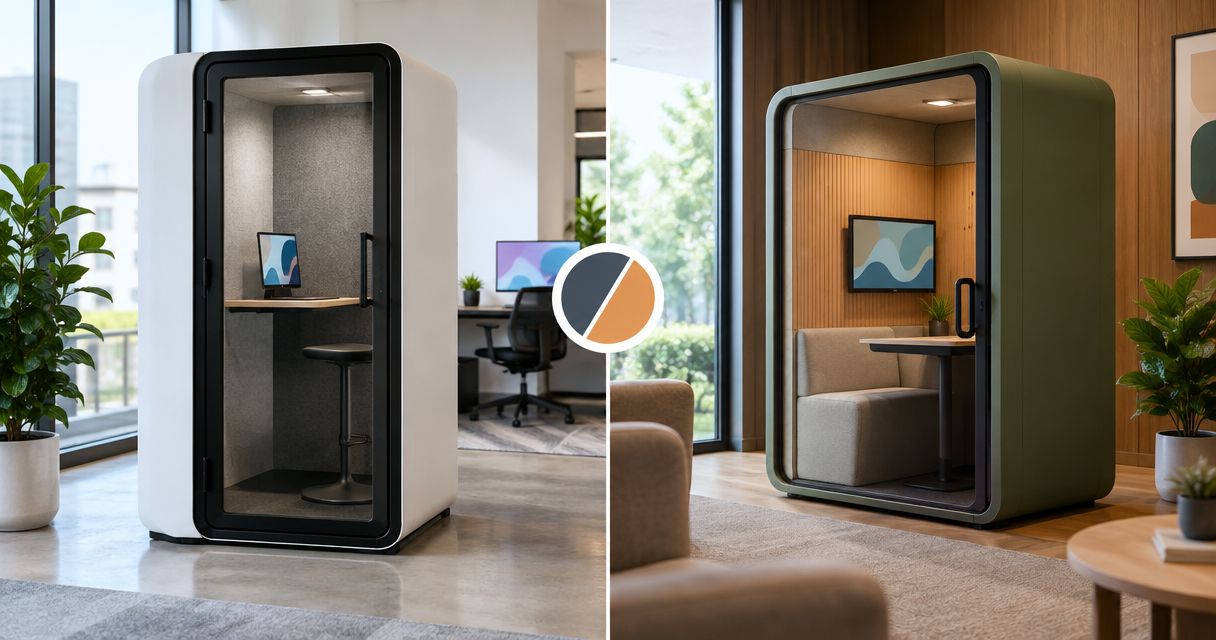
Choose Justpushrecord if you want a self-serve podcast studio with three cameras, one-button recording, and Google Drive file delivery; choose Camp N Studios if its confirmed booking scope better matches a requirement outside that workflow. The decision in 2026 is about who handles production, what you need to record, and what you receive afterward.
- For jpr studios vs camp n studios, Justpushrecord fits self-serve podcast recording with three cameras and one button.
- Choose Camp N Studios when its confirmed recording scope matches requirements beyond the automated workflow.
- Compare video podcast deliverables, session responsibilities, and booking terms before committing.
- Google Drive file delivery is not the same as a finished, published episode.
Why this matters
A studio booking is only part of producing a podcast. You still need an episode plan, prepared guests, usable recordings, and someone responsible for editing and publishing. Decide which tasks you want the studio to handle before comparing rooms.
Justpushrecord is best for podcast hosts who want three-camera recording without a crew. Its self-serve podcast studio model addresses the recording step. Your booking decision should also account for everything that happens before you press the button and after you receive the files.
For a 2026 comparison, use the same written brief for both studios. That keeps equipment descriptions from distracting you from the actual job: recording an episode your team can finish and publish.
At a glance
| Dimension | Justpushrecord | Camp N Studios |
|---|---|---|
| Best for | Hosts, creators, and businesses seeking self-serve recording | Choose when its confirmed scope better matches your production brief |
| Recording operation | Fully automated, one-button recording without a crew | Confirm who operates the recording session |
| Video setup | Three-camera podcast recording | Confirm camera setup for your format |
| File handoff | Files delivered through Google Drive | Confirm delivery method and file contents |
| Production support | Self-serve recording model | Confirm any operator, producer, or editing involvement |
| Location fit | Cities include Austin, Atlanta, Dallas, Houston, Charlotte, and Phoenix | Confirm the location for your intended session |
| Booking responsibilities | Prepare for a self-serve session | Confirm what you and the studio each handle |
| Pricing model | Confirm the rental structure and included scope | Confirm the booking structure and included scope |
The table separates a defined workflow from the questions that determine an alternative's fit. It is not a ranking of image quality, sound quality, or customer service. Those judgments require comparable evidence, not a list of equipment names.
Justpushrecord fits hosts who want recording without a crew
The automated podcast recording model has a clear purpose: let you record without bringing a production crew. Three cameras capture the session, and one button controls the recording workflow. That fits a host who wants to focus on the conversation rather than operate separate recording devices.
Best for: prepared hosts who want a self-serve session. The benefit is a defined way to record. The tradeoff is responsibility: removing a crew does not remove your need to prepare the episode, direct the conversation, and decide when a take needs repeating.
Before booking, settle these questions:
- Who opens and closes the episode?
- Who keeps the conversation on topic?
- Who catches an incorrect name or factual claim?
- Who decides whether to repeat an answer?
- Who receives the files and starts post-production?
Choose the automated route when those roles already belong to your team. If you need someone else to direct the session, make that a booking requirement rather than assuming recording equipment includes production assistance.
Camp N Studios wins only when its confirmed scope fits better
Camp N Studios is the better choice for a specific requirement only when that requirement appears in its confirmed booking scope. Examples of requirements to ask about include an operator during recording, a particular set arrangement, or responsibility for delivering an edited episode. These are questions to resolve, not services to assume.
Best for: buyers whose production brief requires a different arrangement from self-serve recording. Ask Camp N Studios to explain that arrangement before choosing it. A studio name alone does not tell you who presses record, who monitors the session, or who finishes the episode.
Use a direct request: describe the show, identify the work you need handled, and ask for an itemized scope. If the reply confirms your requirement, compare that scope against the automated option.
The tradeoff is straightforward. A broader scope matters only when you need the work it covers. A self-serve session fits when your team already owns those tasks and needs a place to record.
Three cameras establish capture scope, not finished-video quality
Three-camera recording is a concrete part of the automated workflow. It gives a video podcast multiple camera views to work with. It does not, by itself, establish the resolution, file arrangement, editing treatment, or finished appearance of your episode.
For either studio, match the recording setup to your actual format. A solo explanation, a host-and-guest interview, and a group discussion place different demands on framing. Do not infer seating capacity or guest coverage from camera count.
Ask both studios:
- How will each participant appear in the recording?
- What video files will you receive?
- What audio files will your editor receive?
- Are separate camera recordings part of the handoff?
- What must you confirm for your intended guest arrangement?
The automated option wins on having a stated three-camera workflow; neither studio earns a quality verdict from camera count alone. Your editor's requirements should decide whether the delivered material fits your publishing process in 2026.
Google Drive delivery fits a file-based editing workflow
Justpushrecord delivers recording files through Google Drive. That is useful when your next step is to pass material to an editor or manage post-production yourself. The handoff method is clear; the editing assignment still needs an owner.
A delivered recording and a finished episode are different outputs. Editing, titles, captions, thumbnails, descriptions, and publishing are separate tasks unless your booking explicitly includes them. Keep that distinction visible when comparing studios.
Use this handoff sequence:
- Receive files: identify the person responsible for accessing delivery.
- Check files: confirm the material opens and covers the intended session.
- Assign editing: give the editor your episode brief and requested outputs.
- Approve episode: name the person who signs off before publication.
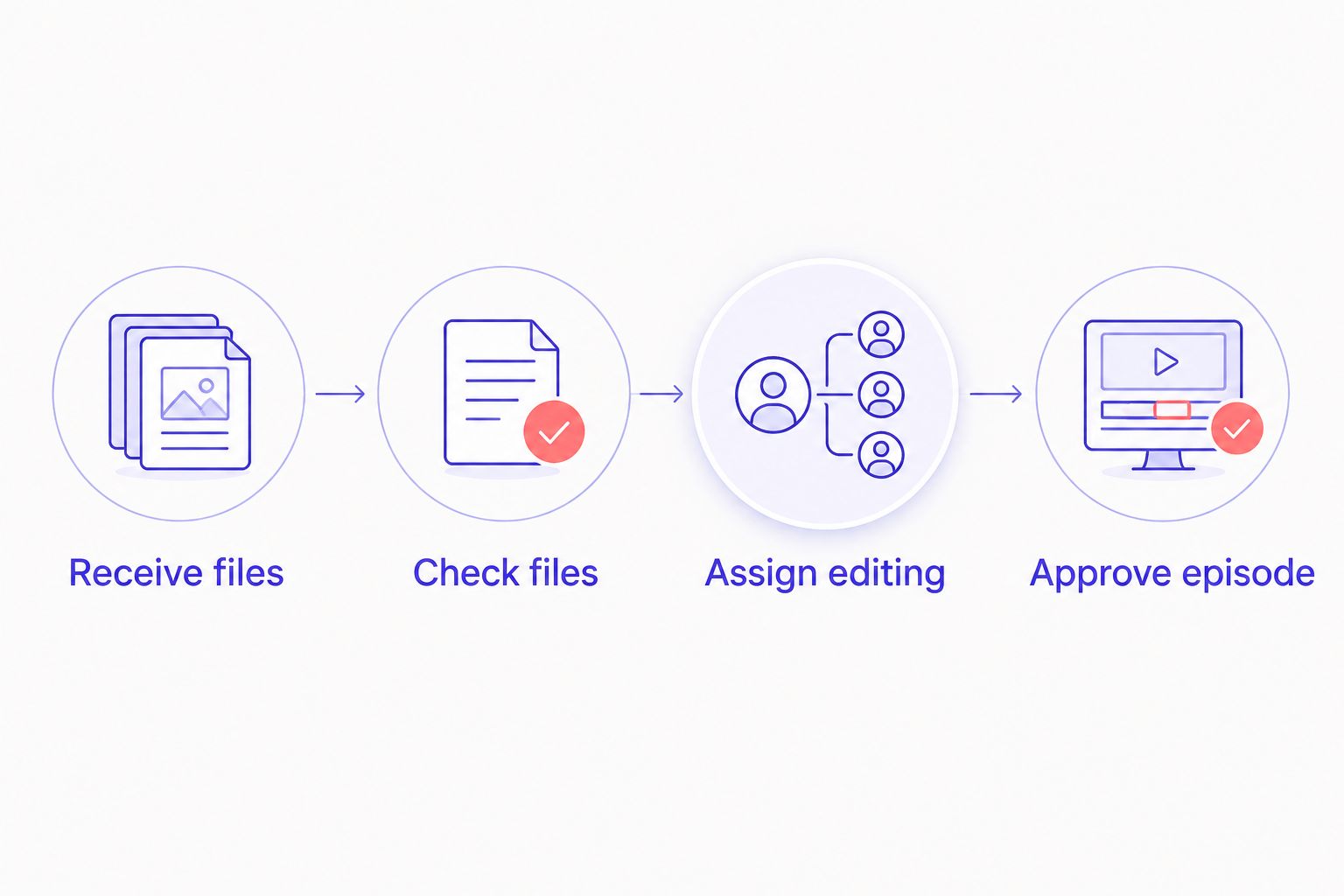
Best for: teams with an established file-based editing process. The tradeoff is that delivery does not finish the production job. Ask Camp N Studios for its handoff method and deliverables, then compare both against the same editor brief.
Production support matters only when you need it
A host can need help with recording, editorial direction, or post-production. Those are separate needs. Write them separately so a booking response cannot blur them into a general promise of support.
For recording help, ask who operates and monitors the session. For editorial help, ask who manages the outline, prompts follow-up questions, or identifies retakes. For post-production, ask who edits and what the finished deliverable contains.
Choose the automated workflow when you can direct your own show. Choose Camp N Studios for additional support only when that support is confirmed. Neither decision requires a negative claim about the other studio.
The same distinction applies to business podcasts. A founder interview needs a prepared interviewer, not just working microphones. An accurate technical discussion needs someone to check terminology. Assign those roles yourself or make them explicit requirements in the booking brief.
Location is a practical fit test, not a quality ranking
The automated studio network includes Austin, Atlanta, Dallas, Houston, Charlotte, and Phoenix. That gives you named cities to evaluate against your host and guest arrangements. Confirm the specific location before building a recording plan around it.
Location matters because everyone involved must reach the session and arrive prepared. Compare the actual address, access instructions, and guest travel requirements. A familiar studio name is not a substitute for checking the booking location.
For a 2026 recording plan, choose the location first, then coordinate participants. If a guest needs to join remotely or your session needs an unusual arrangement, confirm that requirement separately. Do not assume it follows from a studio's presence in your city.
Neither option wins on location in the abstract. The winner is the confirmed location that fits your participants and recording requirements.
Both bookings need a clear division of responsibilities
Booking clarity is a shared standard, not a feature victory. You should know what happens before arrival, during recording, and after the session at either studio. Put each stage in your brief.
Create a 1-page recording brief with these headings:
- Show format: solo, interview, discussion, or another defined structure.
- Participants: identify everyone who will appear or attend.
- Recording needs: describe the intended audio and video outputs.
- Session roles: assign hosting, direction, and recording responsibilities.
- File handoff: identify the recipient and editor.
- Final output: specify what your team intends to publish.
This brief is more useful than asking which studio is best without defining the job. It also exposes mismatches early. If your request needs production assistance, ask for it explicitly; if you want self-serve recording, keep the scope focused on that workflow.
Compare pricing models by scope, not headline claims
For a 2026 booking, ask each studio how it structures the rental and what that structure includes. Confirm whether the booking covers recording space, production work, post-production, or a defined combination. Compare equivalent scopes rather than treating every studio booking as the same service.
The practical tradeoff is predictability versus flexibility. A clearly defined session scope helps you plan responsibilities. Optional services let you request different outputs, but every addition needs an explicit agreement.
Review these terms before committing:
- What defines the booked session?
- What preparation must happen before arrival?
- What work is included after recording?
- How are changes to the booking handled?
- What happens if the requested scope changes?
Choose the booking whose written terms match the work you need. Do not infer editing, staff involvement, rescheduling rules, or delivery timing from the word studio.
Final verdict: match the studio to your production roles
Choose Justpushrecord for a prepared, self-directed show
You are a host, creator, or business team with an episode plan and an owner for post-production. You want a podcast recording studio with three cameras, one-button operation, and Google Drive delivery without a crew. That is the defined fit.
Choose Camp N Studios for a confirmed different requirement
You have a production requirement that the self-serve workflow does not establish. Choose Camp N Studios when its booking scope explicitly covers that requirement. Get the arrangement in writing before treating it as the better fit.
| Dimension | Winner |
|---|---|
| Self-serve recording | Automated one-button workflow |
| Stated camera count | Automated three-camera workflow |
| Stated file-delivery method | Google Drive handoff |
| Additional production support | Camp N Studios, only when the required support is confirmed |
| Location fit | The location that fits your participants |
| Booking clarity | Tie: require explicit responsibilities from both |
| Pricing-model fit | The written scope that matches your brief |
FAQ
Is JPR Studios better than Camp N Studios in 2026?
Choose the automated option for self-serve, three-camera recording with one-button operation and Google Drive delivery. Choose Camp N Studios when its confirmed scope better matches a different production requirement.
Do I need a crew for the automated recording session?
The automated recording model does not require a crew. You still need to prepare the episode and assign responsibility for the conversation, editing, and publishing.
Does three-camera recording mean I receive an edited episode?
Three-camera recording does not establish that an edited episode is included. Confirm the delivered files and any post-production work separately.
Can I assume Camp N Studios includes a producer?
No. Ask Camp N Studios to confirm who operates the session and whether production assistance is included in your booking.
How should I compare the two studios' booking costs?
Compare the same recording brief and included scope. Confirm the rental structure, deliverables, production responsibilities, and change terms before choosing.
What should I ask before recording a video podcast?
Ask how participants will be framed and what video and audio files you will receive. Give both studios the same format and participant requirements.
What happens after files arrive through Google Drive?
Your designated recipient should check the files and pass them to the person responsible for post-production. Editing and publishing need assigned owners unless your booking explicitly includes those tasks.
One last thing
Before booking, send your intended editor the recording brief. Ask what files and framing the editor needs. Then use that answer to question both studios. In 2026, a recording workflow that fits your editor is more useful than an equipment list that leaves the handoff unresolved.


