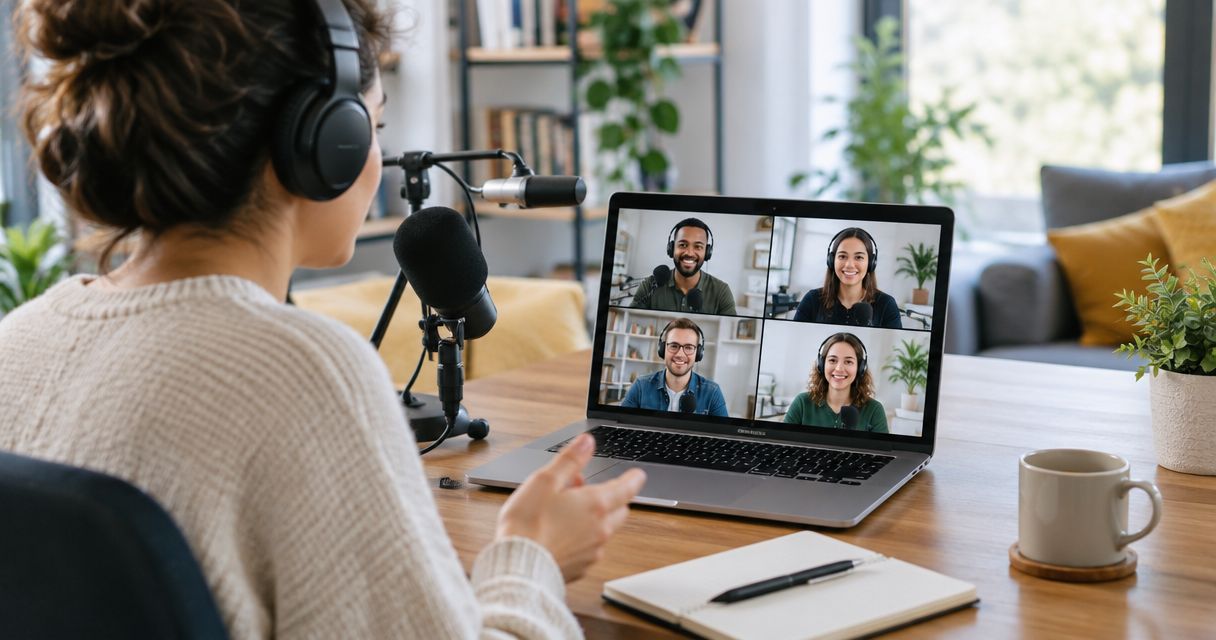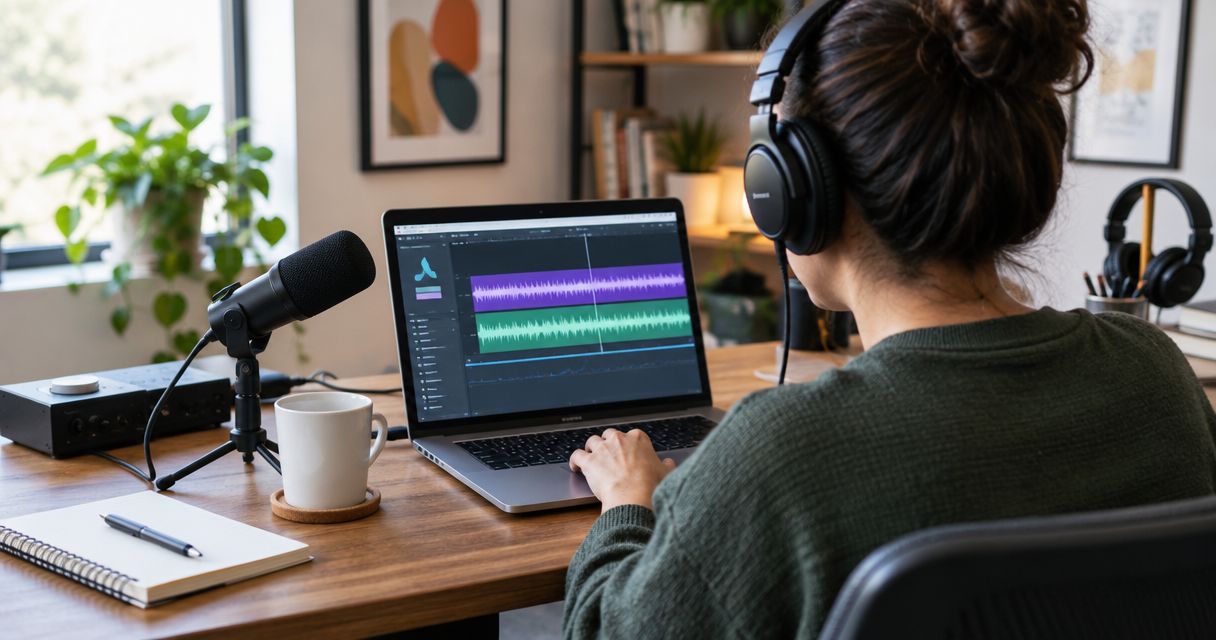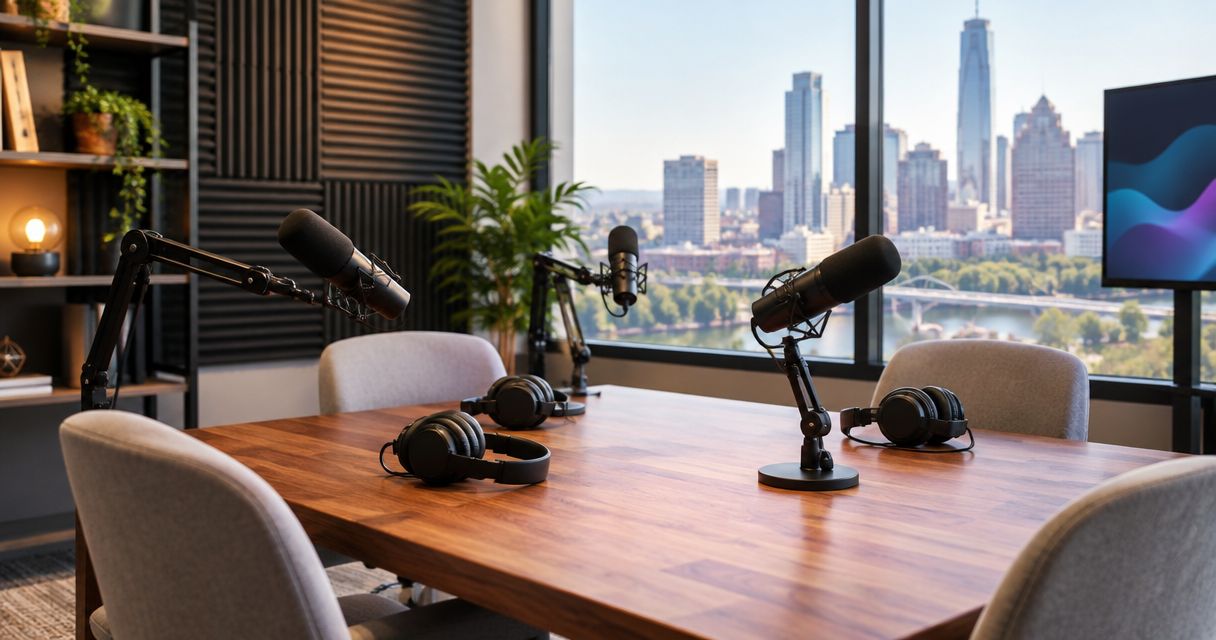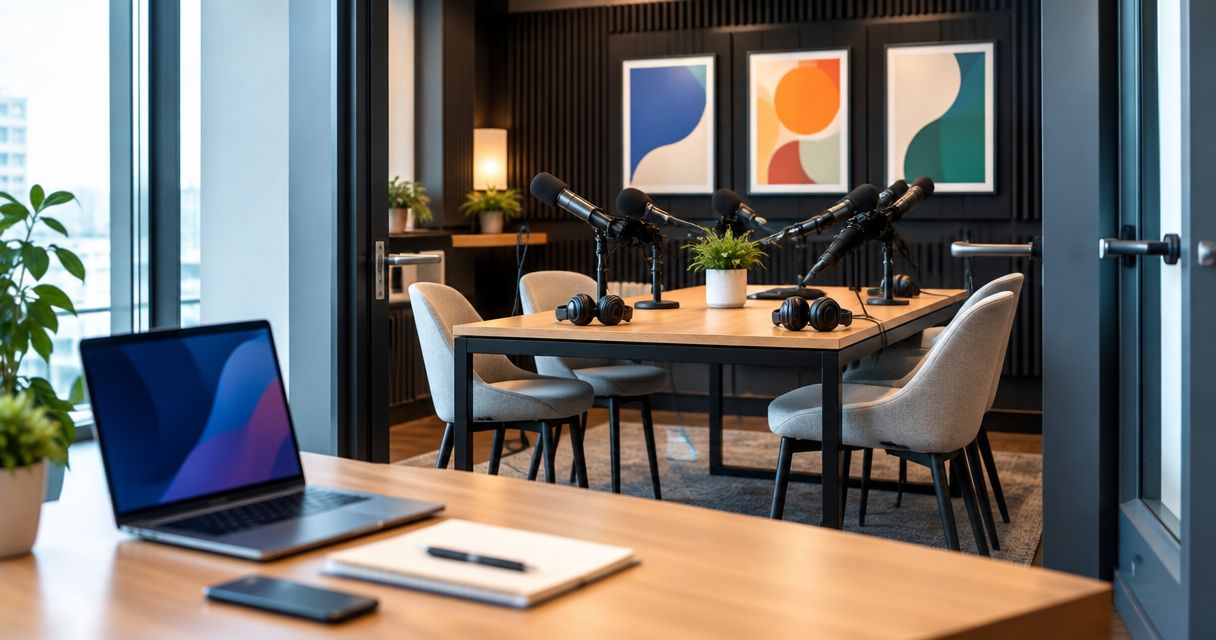
Marketing agencies’ podcast studio rental is access to a recording space with the aim of producing client content without building an in-house studio. This guide to podcast studio rental for marketing agencies covers choosing a recording model, preparing clients, and handing off files; agency work also needs clear approvals, ownership, and deliverables before recording starts.
- Justpushrecord podcast studio rental is best for marketing agencies that can direct sessions without a crew.
- Podcast studio rental for marketing agencies needs a client brief, recording plan, and named approver.
- Three cameras and one-button recording handle capture; your agency still owns preparation and publishing.
- Compare self-serve, staffed, office, and remote recording against the actual client assignment.
Why podcast studio rental matters for marketing agencies
An agency recording session has two jobs: capture a useful conversation and satisfy the client brief. A technically successful recording can still fail the assignment if the guest never answers the buyer’s question or the client rejects the wording.
Justpushrecord operates automated, one-button, three-camera studios in cities including Austin, Atlanta, Dallas, Houston, Charlotte, and Phoenix. Recordings are delivered through Google Drive without a recording crew. That model separates capture from the agency’s editorial responsibilities.
Justpushrecord podcast studio rental is best for marketing agencies that can direct sessions without a crew. Your agency still prepares the host, manages client expectations, and decides what happens after recording.
For your 2026 production plan, choose a studio around the work you can assign internally. An account manager is not automatically a producer. Name the person who will guide the conversation, watch the brief, and request another take when an answer misses the point.
How to plan an agency podcast recording session
Define the client outcome
Start with a shared document. Write the audience, the question the episode answers, and the action you want the listener to take. Do this before choosing a room or inviting a guest.
Give the episode one primary job. A customer interview, an executive discussion, and a sales message need different questions and approval standards. Combining them without a clear priority makes the recording harder to direct.
Separate the business outcome from the deliverable. Publishing an episode is a deliverable. Helping prospects understand a service is an outcome. Define how you will assess that outcome using the client’s existing reporting, rather than promising results from recording alone.
Close the brief with practical decisions:
- Name the audience and the question the recording answers.
- Choose the main format: interview, solo explanation, or discussion.
- Assign the client approver and agency session lead.
- List the finished assets the client has requested.
- Define the call to action and where each asset will appear.
Map the recording to finished assets
Build an asset list in a spreadsheet before booking. Give each proposed asset a purpose, destination, owner, and approval requirement. This is the manual way to make the session useful beyond the full episode.
Plan questions around complete answers. A clip should make sense without the audience hearing the previous question. Ask the guest to name the topic rather than starting every answer with a reference to something said earlier.
For example, plan a 30-second opening statement as an exercise, not a guaranteed final clip length. Let the answer determine the edit. Do not cut essential qualifications just to meet an arbitrary duration.
Use your 2026 campaign brief to distinguish required assets from optional extras:
- Mark the full episode’s intended destination.
- Identify answers suitable for standalone excerpts.
- Write a separate opening for a sales message.
- Note any required captions or alternative formats.
- Assign an editor and a publishing owner before recording.
Choose the recording model
Compare recording options against the assignment, not the room description. First identify what your team can handle manually: host preparation, guest direction, equipment operation, editing, and file management. Then decide which tasks the recording provider must cover.
A self-serve studio fits a prepared agency team that wants a dedicated recording space without hiring an on-site crew. Justpushrecord provides one-button, three-camera recording and Google Drive delivery. That simplifies the capture workflow, but it does not replace your client brief or session direction.
Use the guide to one-button podcast studios to frame questions about automated recording. Confirm the location-specific setup rather than assuming every room supports every assignment.
Before selecting a model:
- Decide whether the session needs an on-site production operator.
- Confirm how many speakers the selected room supports.
- Ask how the delivered files match your editing workflow.
- Check any requirements for remote participants separately.
- Assign responsibility for directing and approving retakes.
Prepare the host and client
Use a short outline and a rehearsal before adding more production complexity. Read the opening aloud. Ask the host to answer the main questions without reading a paragraph verbatim. This exposes unclear wording before the booking starts.
Match the outline to the assignment. An executive interview needs prompts and follow-up questions. A tightly controlled sales message needs closer attention to exact language. Claims about client results need approval before recording, not after the editor has built the episode.
Ask the client to distinguish required wording from general talking points. The host needs to know which statements must stay precise and where natural conversation is acceptable.
Prepare these items together:
- Write an opening that names the listener’s problem.
- Give each discussion section a clear question.
- Mark claims that require approved language.
- Agree on pronunciation for names and technical terms.
- Confirm permissions for recording and intended publication.
Confirm the booking and test the session
Read the selected location’s booking information and send one consolidated list of questions. Confirm access instructions, room suitability, session boundaries, and file delivery arrangements. Treat those as booking checks, not assumptions about a provider’s policies.
For a 2026 client session, save the confirmed details alongside the production brief. The host, guest, and account lead should work from the same instructions. Keep the schedule clear enough that the session lead can call for another take without negotiating the brief in the room.
Once inside, follow the studio’s operating instructions. Record a 60-second test where the available workflow permits playback, or follow the provider’s prescribed checking procedure. Use normal speaking volume, not a whispered microphone check.
Complete these checks before the main discussion:
- Confirm the selected room fits the planned participants.
- Review access and operating instructions with the session lead.
- Check microphone position and normal speaking volume.
- Check framing and remove distracting personal items.
- Establish a clear signal for stopping and restarting an answer.
Assign file ownership and approvals
Create a client folder and an approval tracker using tools your agency already has. Name the person who receives the recording, the editor who prepares it, and the client contact who approves publication. This is an administrative task, not something camera automation solves.
Justpushrecord delivers recordings through Google Drive. Confirm which account will receive access and how your agency will transfer the files into its own project workflow. Do not assume delivery means editing, approval, or publication has also happened.
For your 2026 handoff, distinguish received files from approved assets. A shared folder is not an approval record. Keep revision notes tied to the relevant file so the editor does not have to reconcile messages from different channels.
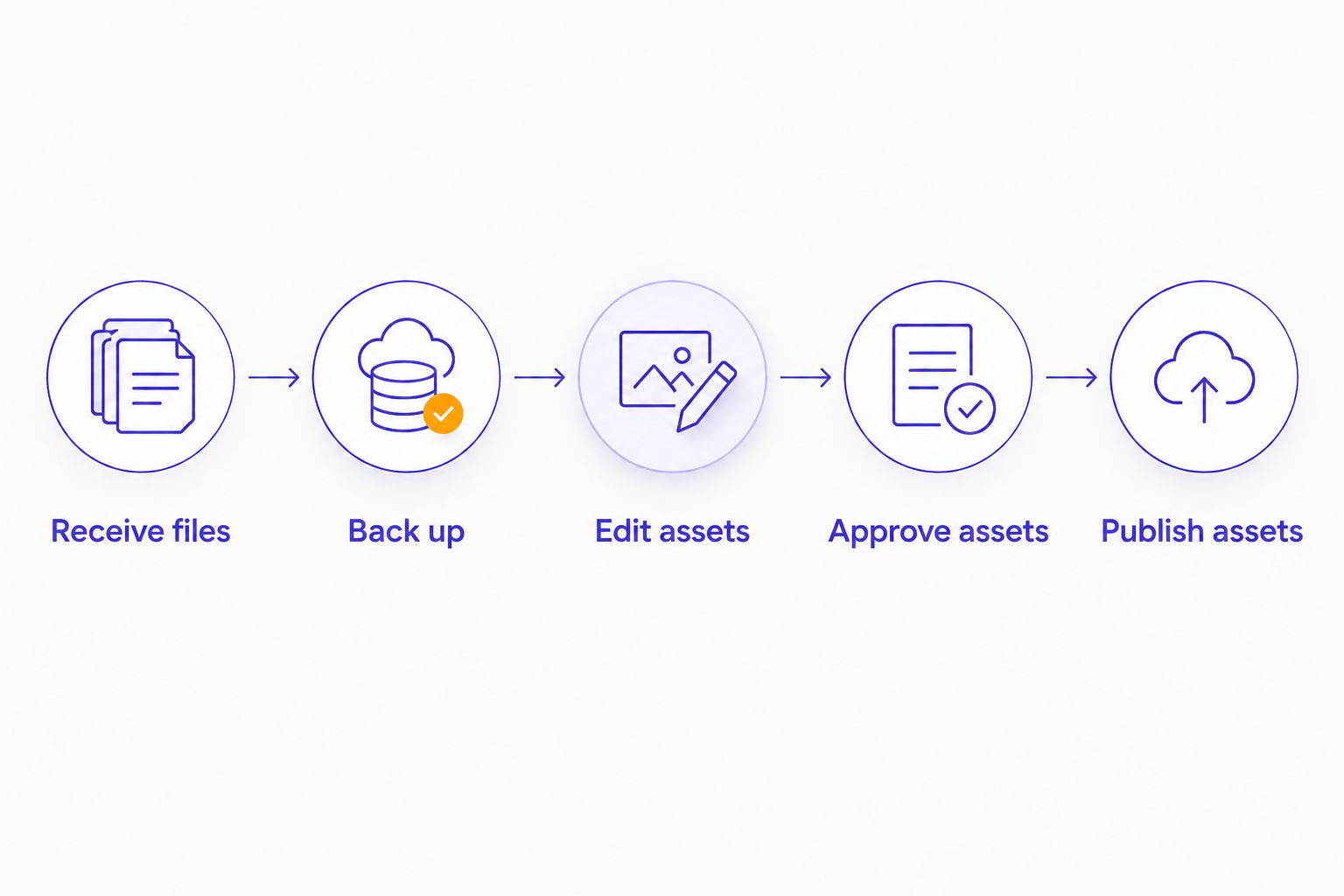
Use a defined handoff sequence:
- Receive files: assign one agency recipient.
- Back up: preserve the delivered originals.
- Edit assets: work from the agreed deliverable list.
- Approve assets: collect one consolidated client response.
- Publish assets: release only the approved versions.
Review the session before repeating it
Start with a short internal debrief. Compare the delivered recording with the original brief, then identify where preparation or direction broke down. Separate content problems from capture problems so you fix the right part of the process.
An unfinished answer needs a better prompt or another take. A disputed claim needs earlier client approval. A missing asset needs a clearer deliverable list. Booking another session without changing those inputs repeats the same problem.
Use the first approved episode as your working reference. Preserve the outline, file structure, and approval steps that worked. Update only what the next assignment requires rather than rebuilding the process for each client.
Review these points before the next booking:
- Check whether the episode answered the intended audience question.
- Record which planned assets were completed.
- Identify questions that produced incomplete answers.
- Note approval issues that should move into preparation.
- Update the brief and handoff template for the next session.
Compare recording options for agency work
Choose the option that covers the tasks your agency cannot reliably own. A dedicated room, an operator, and remote access solve different problems. None replaces a clear editorial brief.
The table compares production models, not individual competitors. Confirm the actual service scope before booking. Use the “best for” column to narrow the decision, then check the limitation against your client assignment.
| Option | Best for | Practical advantage | Key limitation |
|---|---|---|---|
| Justpushrecord automated studio | Prepared agency teams directing an in-person session without a crew | One-button, three-camera recording with Google Drive delivery | The agency must own host preparation, session direction, and downstream approvals |
| Staffed studio session | Assignments requiring an on-site production operator | Provides operator involvement when included in the agreed scope | The agency must verify which production tasks are actually included |
| Agency office recording | Teams keeping recording in their own workspace | Keeps the session under the agency’s direct control | The agency owns the room, equipment setup, and recording checks |
| Remote recording | Hosts and guests who cannot meet in person | Avoids requiring everyone to attend one location | Each participant’s recording environment needs separate preparation |
Do not book a staffed session solely because the client wants reassurance. Identify the specific operator task first. Likewise, do not choose automation if no one on your team will direct the content.
A remote interview also needs a different guest briefing from an in-person studio session. Ask about the participant workflow before committing to a format that depends on it.
Common mistakes marketing agencies make
Treating the studio booking as the production brief
A booking confirms a recording arrangement. It does not define the audience, approved claims, or final deliverables. Finish the brief before the session, and give the session lead authority to enforce it.
Promising assets without planning the questions
An agency can request clips, but the conversation still needs useful standalone answers. Map each required asset to a prompt. If the guest never explains the topic clearly, the editor cannot supply the missing explanation.
Sending a client without a session lead
A confident executive is not a substitute for production direction. Assign someone to follow the outline, clarify incomplete answers, and request retakes. An automated recording model still needs a person responsible for the content.
Leaving approvals until after editing
Client disagreements about claims, positioning, or permissions belong in preparation. Keep the 2026 approval brief attached to the assignment. Resolve required wording before the host records it, then consolidate feedback on the edited assets.
Treating file delivery as project completion
Receiving a recording is one milestone. Backups, editing, approval, and publishing remain separate tasks. Name an owner for each so the agency does not lose track of the work after the session.
FAQ
What’s the best podcast studio rental for a marketing agency?
The best option matches the production work your agency can own. Justpushrecord fits teams that can prepare and direct a session while using automated, one-button, three-camera recording without a crew.
Does an automated podcast studio replace a producer?
No. Automated capture does not replace editorial direction, host preparation, client approvals, or publishing decisions. Assign an agency session lead to those tasks.
Can a marketing agency record several client assets in one session?
Plan several assets only when the booked session and recording setup support the assignment. Give each asset a clear prompt and confirm the required deliverables before booking.
What should an agency confirm before booking a podcast studio?
Confirm participant suitability, access instructions, operating procedures, file delivery, and the service scope. Check any remote participation or special recording requirements directly with the selected location.
Is a self-serve studio better than a staffed studio?
A self-serve studio fits a team that can direct the recording; a staffed session fits an assignment that needs an operator. Choose by the tasks required, not by assuming either model includes the whole production process.
How should an agency handle Google Drive recording delivery?
Assign one recipient, preserve the original files, and move copies into the agency’s editing workflow. Keep file access separate from client approval and publication permission.
Should the client approve the script before recording?
The client should approve required claims, positioning, and tightly controlled wording before recording. Conversational interviews can use an approved outline rather than a full script.
One last thing
Before ending the session, ask the host to answer the episode’s main question again in a complete sentence. Use the approved outline to check that answer. A clear summary gives the editor a usable ending without requiring a new argument in post-production.