
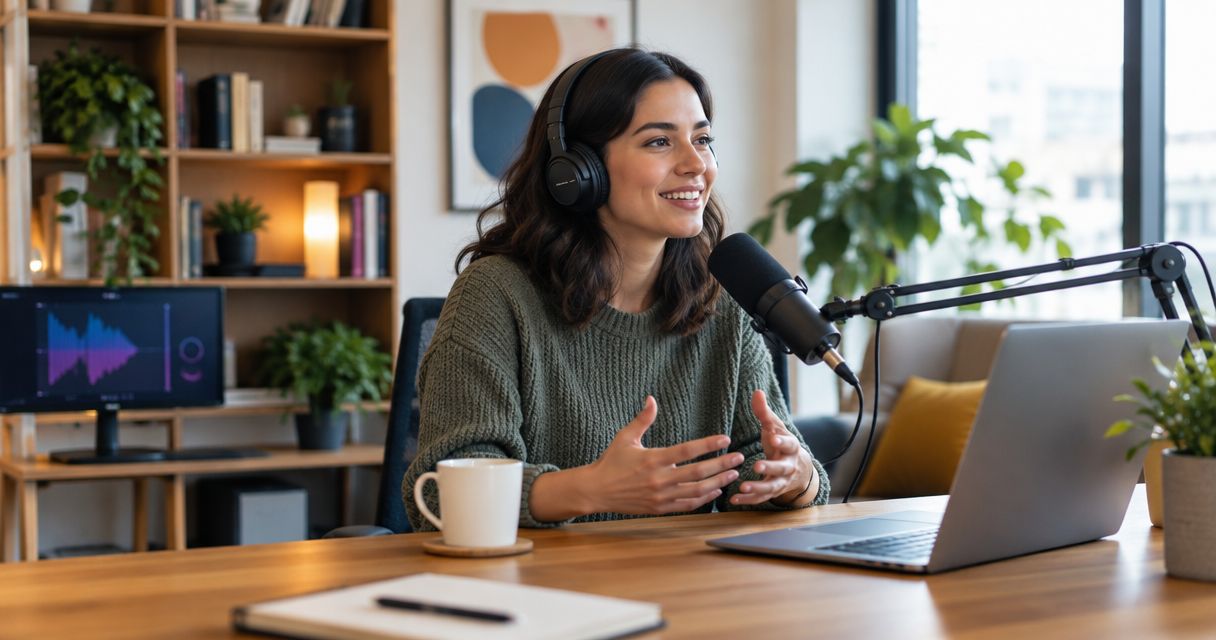
For the heart of podcast alternatives in 2026, Justpushrecord is the best fit for self-serve, three-camera podcast recording without a crew. Choose a staffed recording session instead when you need someone to direct the recording or manage production decisions during the session.
- For the heart of podcast alternatives, Justpushrecord fits self-serve podcast studio rental with three cameras and one-button recording.
- Choose a staffed session when you need live production help; confirm exactly what the operator handles.
- Choose home recording when controlling your setup matters more than using a separate studio.
- Keep The Heart of Podcast if your existing arrangement already meets your recording and delivery needs.
Why this matters
A podcast studio is part of a workflow, not just a room. You need to arrive prepared, capture the episode, receive usable files, and move into editing and publishing. Compare those steps before changing providers.
Justpushrecord offers automated podcast studio rentals with three cameras, one-button recording, and file delivery through Google Drive. That is a specific alternative for hosts, creators, and businesses who want to record without a crew. It does not remove the need to prepare your conversation or decide what happens after recording.
For your 2026 shortlist, start with the work you want the studio to handle. Then separate recording from directing, editing, and publishing. A good match handles the right part of the process; a poor match leaves you expecting help you never arranged.
The Heart of Podcast alternatives at a glance
These options represent different ways to produce an episode. The comparison is about recording models, not an unsupported ranking of individual studios.
| Option | Best for | Main distinction | What to check before choosing |
|---|---|---|---|
| Justpushrecord | Self-serve video podcast recording | Automated, one-button recording with three cameras and Google Drive delivery | Whether a crew-free session fits your host and guest needs |
| Staffed recording session | Hosts who want live production assistance | An operator has an agreed role during recording | Exactly which technical and directing tasks the operator handles |
| Home recording | Creators who want to manage their own setup | You control the equipment, room, and recording process | Audio, framing, file handling, and your ability to repeat the setup |
| The Heart of Podcast | Hosts evaluating whether to keep their existing arrangement | Your current experience provides the benchmark | Whether the arrangement meets your actual recording and handoff requirements |
Best for means a match to your production needs. It does not mean every provider offers the same equipment, staffing, or deliverables.
1. Justpushrecord: best for self-serve video podcasts
Justpushrecord's podcast studio rentals use an automated, one-button, three-camera recording setup. You record without a crew and receive files through Google Drive. The business serves podcast hosts, creators, and businesses in cities including Austin, Atlanta, Dallas, Houston, Charlotte, and Phoenix.
The appeal is straightforward: you do not need to assemble your own recording setup. You still need a prepared episode. Automation handles the recording workflow, not your interview questions, guest preparation, or editorial decisions.
Where this option shines
- Defined recording model: One-button operation gives you a clear alternative to managing equipment yourself.
- Video capture: Three cameras are part of the stated studio setup.
- Crew-free sessions: You can choose this model when you do not want a crew involved in the recording.
- File handoff: Google Drive is the stated delivery method, giving you a known place to receive your files.
Where this option falls short
- No crew in the stated recording model: Do not choose a self-serve session expecting an operator to direct the conversation.
- Preparation remains yours: You must bring the questions, outline, and intended outcome.
- Recording is not publishing: Decide who will review, edit, approve, and publish the episode after the files arrive.
Best for: Hosts and businesses who want an in-person video podcast session without managing a recording setup or working with a crew.
Before you book
Write down the episode format and the people involved. Explain whether you are recording an interview, a solo episode, or a business discussion. Ask about any requirement that sits outside the stated automated recording workflow.
Also decide who receives the Google Drive files. The host, editor, and marketing lead do not automatically have the same responsibilities. A clear handoff prevents the recording from becoming an unfinished project.
Verdict: Choose the self-serve model when you can run the conversation yourself and need a defined recording workflow.
2. Staffed recording session: best for live production help
A staffed recording session is the alternative to consider when you want a person responsible for agreed production tasks during the recording. Define that role before booking. Technical operation, guest coaching, and interview direction are different jobs.
Do not select a staffed session merely because someone will be in the room. Select it because the operator's responsibilities match the help you need.
Where this option shines
- Assigned technical responsibility: You can arrange for an operator to handle specified recording tasks.
- Live direction: If included, direction gives the host and guests someone to consult during the session.
- A defined point of contact: You can agree who responds when the recording needs an adjustment.
Where this option falls short
- The scope needs precision: Having an operator does not establish that editing, directing, or publishing is included.
- You still need an episode plan: Production assistance cannot substitute for a useful subject and prepared questions.
- Responsibilities can overlap: Decide whether the host or producer controls pauses, retakes, and the final session plan.
Best for: Hosts who want specified technical help or direction while they record.
Ask the provider to describe the session from arrival to file handoff. Then ask who is responsible at each stage. This is more useful than a broad promise of production support.
Verdict: Choose a staffed session when live assistance is part of the requirement, not an optional extra.
3. Home recording: best for controlling your own setup
Home recording keeps the room, equipment, and recording process under your control. It also puts responsibility for those elements on you. Treat it as a production workflow, not just a microphone purchase.
This option fits creators who want to build and maintain their own setup. It is a different decision from choosing another rented studio.
Where this option shines
- Control over the setup: You choose the equipment, framing, and room arrangement.
- Control over the process: You decide how to start, stop, review, and store recordings.
- A reusable environment: You can document the setup and use those instructions for later episodes.
Where this option falls short
- You own the technical work: Testing audio and managing recordings become your tasks.
- The room matters: Background noise, reflections, and interruptions need attention before recording.
- Consistency requires effort: Moving equipment or changing the room means checking the setup again.
Best for: Creators who want responsibility for both the show and its recording environment.
Before committing, make a sample recording in the intended room. Listen to the audio and inspect the video. Judge the result against the standard you want to publish, rather than against how the setup looks in person.
Verdict: Choose home recording when you want to own the process and are prepared to maintain it.
When switching from The Heart of Podcast makes sense
Switch because your requirements have changed or your current arrangement does not meet them. Do not switch just because another provider appears on an alternatives list.
For 2026, use these decision points to compare your current experience with the recording models above:
- You want self-serve recording. Look for an explicitly automated workflow rather than assuming any rented room is self-serve.
- You need live help. Agree on an operator's role instead of expecting automation to provide direction.
- You need video. Confirm the recording format and camera arrangement before planning a video-led episode.
- You need a clearer handoff. Establish where files arrive and who takes responsibility afterward.
- You want to manage your own setup. Compare home recording with rental as a change in responsibility, not just a change of location.
These are reasons to review your arrangement. They are not claims about The Heart of Podcast's equipment, staff, or service. Your own session experience and agreed scope are the basis for that comparison.
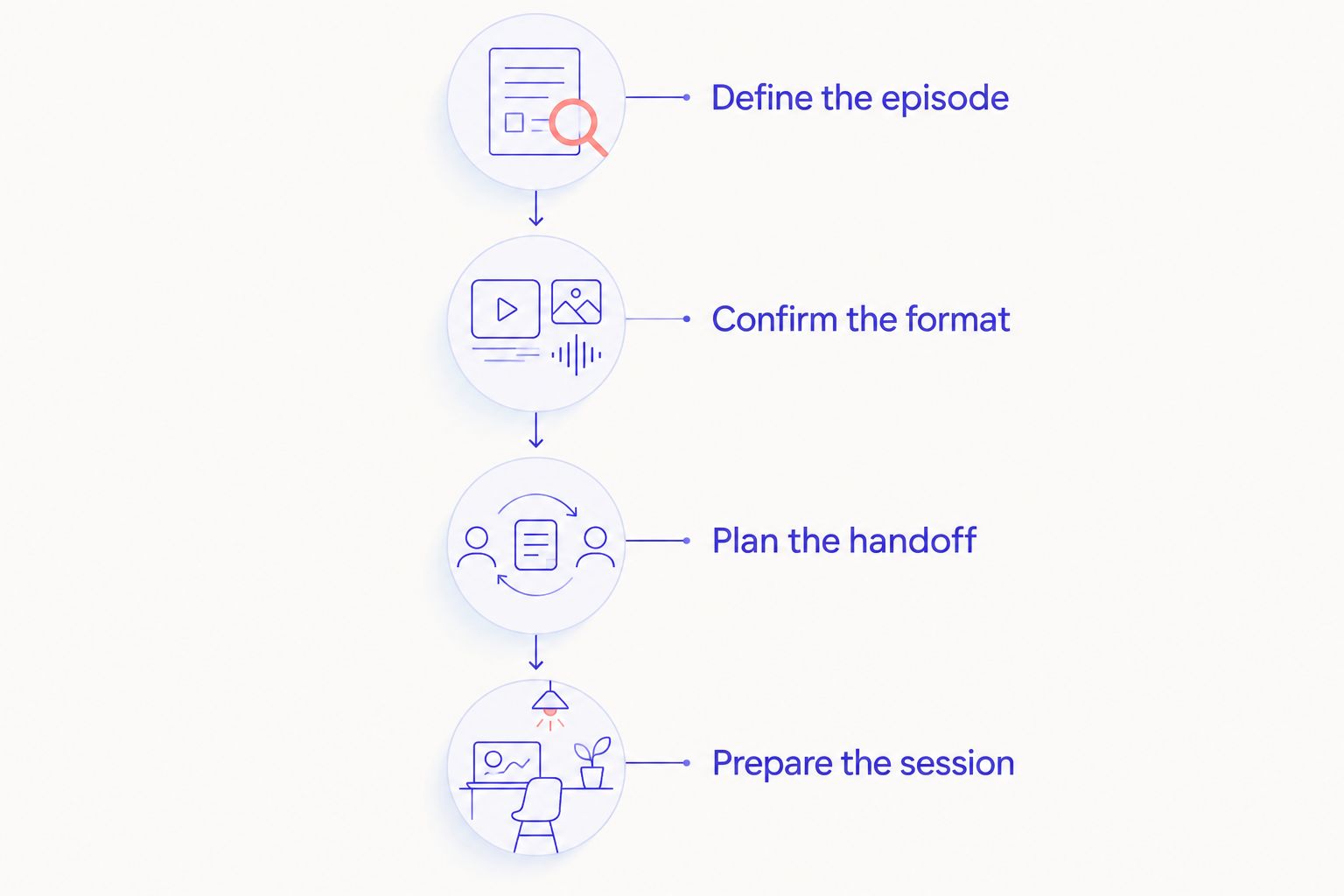
How to choose your recording workflow in 2026
Use the same brief for every option. A consistent brief makes the differences visible and keeps the discussion focused on your episode.
Define the episode
State who the episode serves and what listeners should learn. Identify the host, guests, and subject. Bring an outline that separates essential questions from optional follow-ups.
For a business podcast, also name the person who approves the finished episode. That decision belongs in the plan, not in a message thread after recording.
Confirm the format
Specify whether you need audio, video, or both. Describe how participants will join and whether anyone needs material visible during the recording. Ask the provider to confirm the fit rather than assuming a general podcast service covers every format.
Three cameras describe the Justpushrecord recording setup. They do not, by themselves, define the final edit or what you will publish.
Plan the handoff
Name the file recipient and the editor. Decide who checks the recording and who signs off on the finished work. Confirm the delivery method before the session.
Keep capture and post-production separate in your brief. Receiving recorded files is a milestone; it is not the same as receiving an approved episode ready to publish.
Prepare the session
Send guests the topic, expected format, and essential questions. Decide who starts the conversation, who handles transitions, and how you will call for a retake. Keep the plan readable during recording.
A clear session plan is useful in every recording model. It gives a self-serve host a structure and gives a staffed production team an explicit brief.
When staying with The Heart of Podcast is the right call
Keep your current arrangement if it produces the recordings you need and gives you a workable handoff. Familiarity with a session process is useful when it lets you focus on the episode.
Review the actual result. Can you use the files? Does the session fit your guests? Are responsibilities clear? If those answers meet your needs, another provider's different workflow is not automatically a better workflow.
For 2026, change providers to solve a specific production problem. Keep the existing arrangement when it already solves that problem.
FAQ
What's the best alternative to The Heart of Podcast in 2026?
Justpushrecord is the best fit for hosts seeking automated, self-serve, three-camera podcast recording without a crew. Choose a staffed session instead when you need agreed technical assistance or direction during recording.
Is a one-button podcast studio better than a staffed studio?
A one-button studio fits self-serve recording; a staffed studio fits a session that requires live assistance. Choose based on who should operate the recording and direct the session, not on the label alone.
What should I check before changing podcast studios?
Check the recording format, session responsibilities, and file handoff. Use the same episode brief for each option so you compare the work you actually need.
Can I record a video podcast without a crew?
Yes. An automated studio can provide crew-free video recording, while the host remains responsible for the conversation and preparation. Confirm the setup and your episode requirements before booking.
Does recording a podcast include editing and publishing?
Recording does not, by itself, establish that editing and publishing are included. Agree on those tasks separately and name the person responsible for taking the recorded files to a finished episode.
Should I record my podcast at home instead?
Choose home recording if you want to manage your own room, equipment, and file workflow. Make a sample recording first and judge its audio and video against your intended publishing standard.
When should I stay with The Heart of Podcast?
Stay when your existing arrangement meets your recording, guest, and delivery needs. Switch only when another recording model solves a specific problem or supports a changed requirement.
One last thing
Choose the person responsible for the files before choosing the room. A recorded conversation still needs review, decisions, and a publishing owner. Put those names in the episode brief so everyone knows what happens next.


