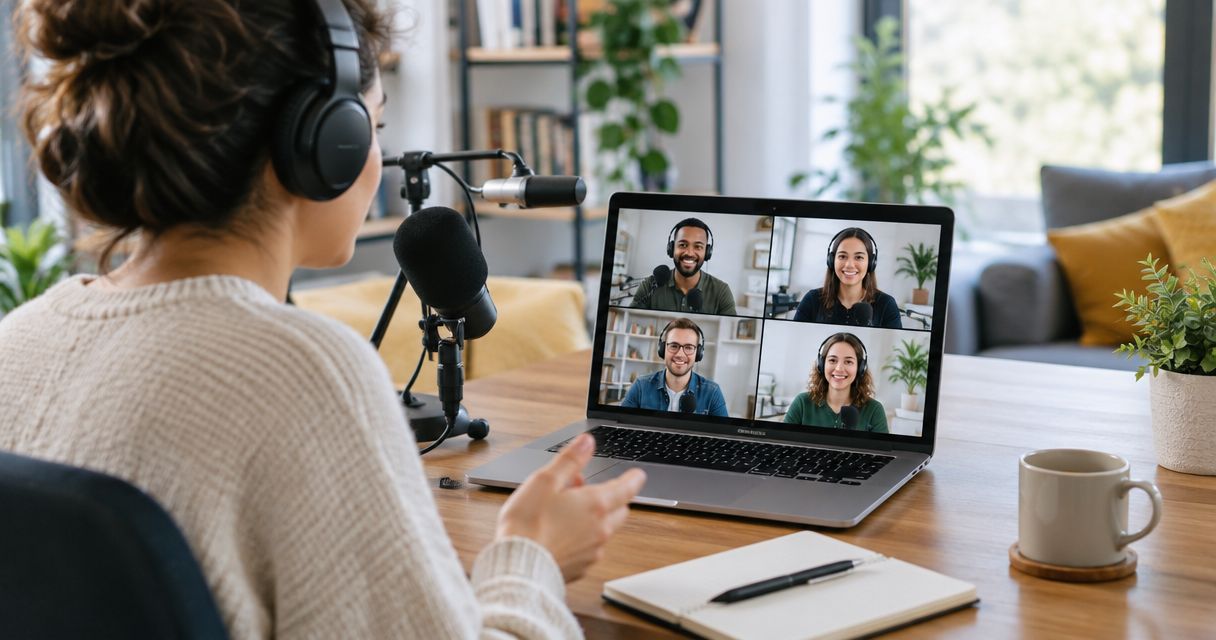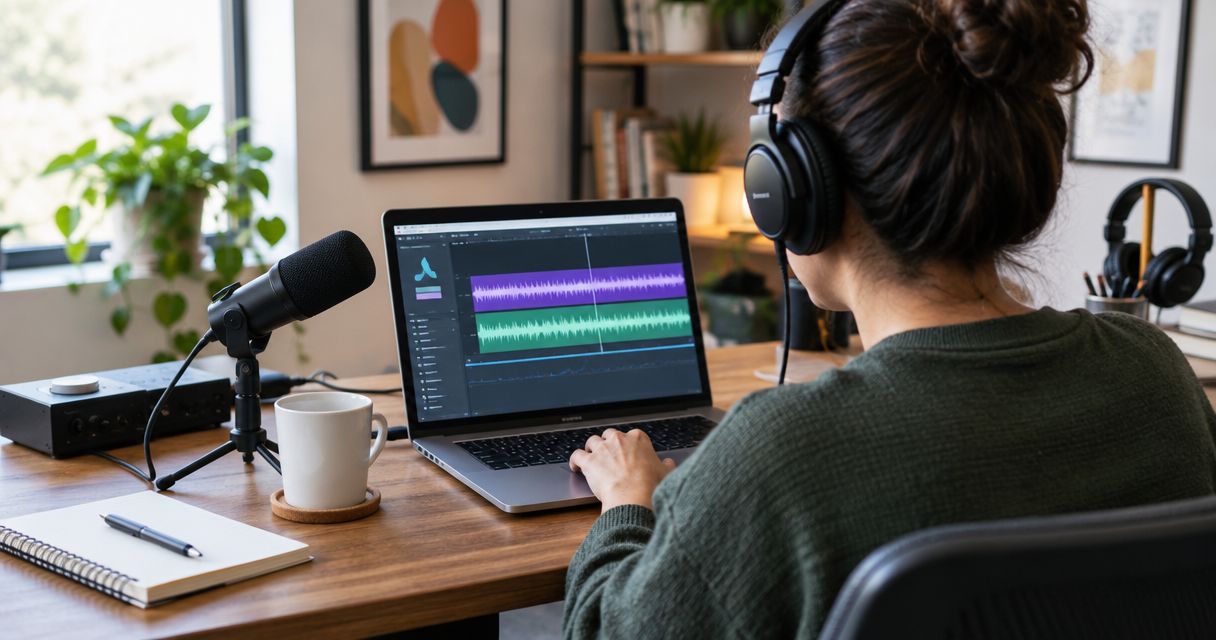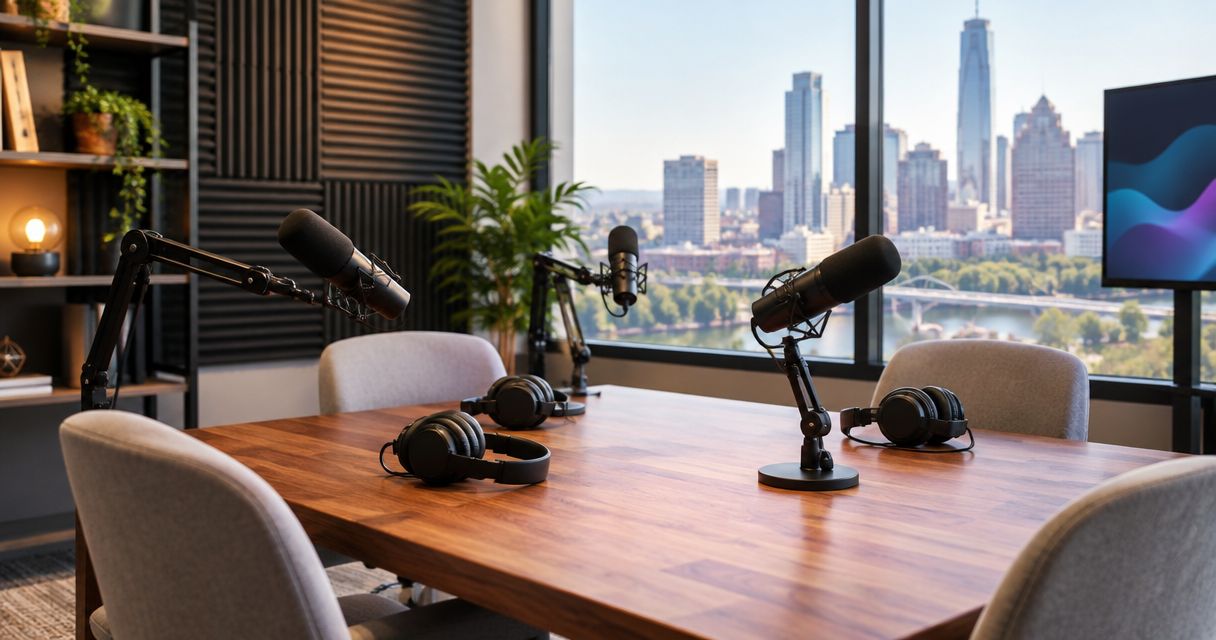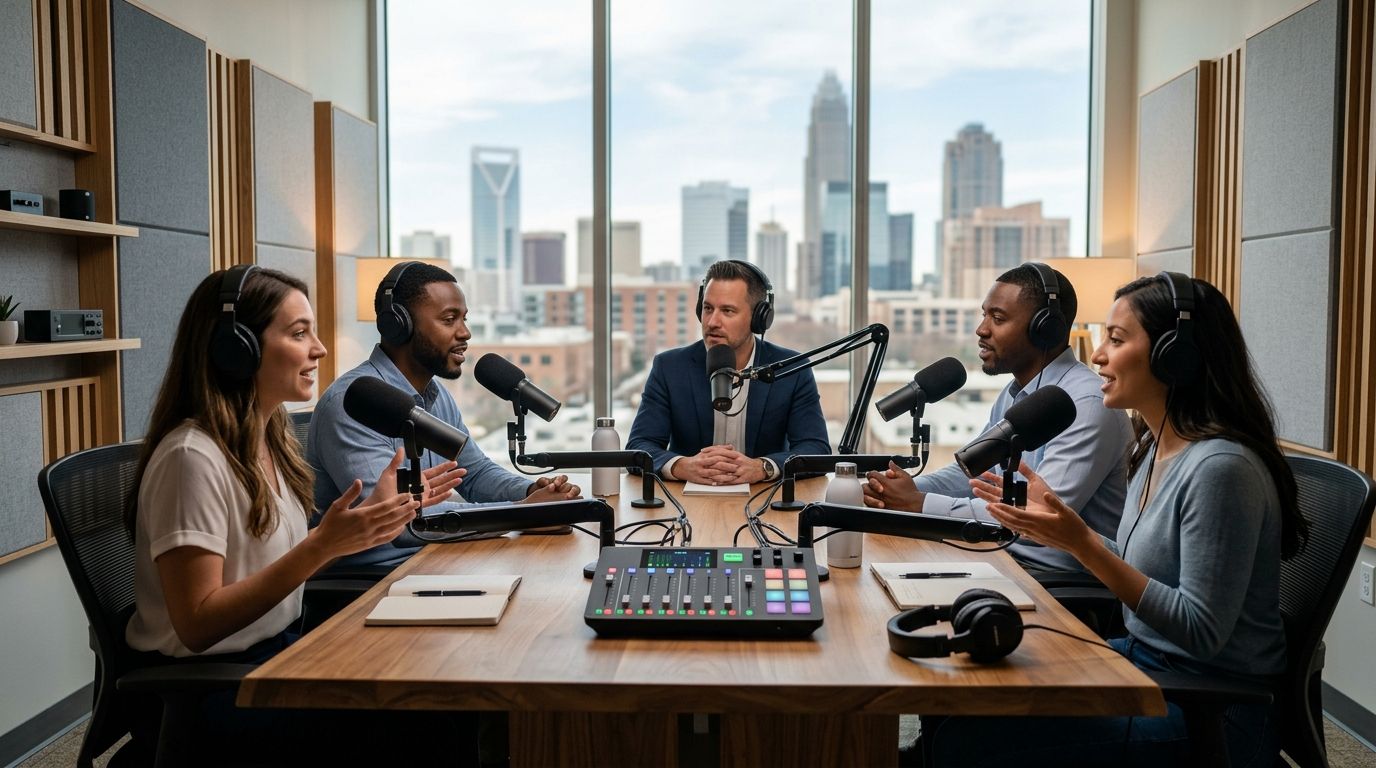
Charlotte's podcast scene splits into a handful of real options, not ten identical studios competing on the same feature. Best overall: JPR Studios Charlotte for solo hosts who want a one-button, crew-free setup. Best for full production: a full-service Charlotte studio with an in-house crew. Best budget option: a coworking space with a bookable podcast room. Everything else on this list fills a specific gap those three don't cover.
- JPR Studios Charlotte wins for solo hosts who want one-button, three-camera recording with files delivered via Google Drive.
- Full-service production studios beat automated setups when a podcast needs a live director or complex lighting.
- Coworking podcast rooms are the lowest-friction budget pick but gear quality varies by location.
- University media labs offer broadcast-grade gear but only to students, faculty, or alumni.
- Match the studio type to your format first — audio-only, video, or event coverage — before comparing individual rooms.
Why this matters
Most "best podcast studios in Charlotte" searches come from hosts who've never rented a room before. They don't need a ranked popularity contest — they need to know which type of studio fits their format, their crew size, and how much hand-holding they want during the session.
A solo creator recording a weekly interview show has almost nothing in common with a marketing team shooting a branded video podcast. Renting the wrong type wastes a session fee and, worse, wastes the episode. This guide sorts Charlotte's podcast recording options by what they're actually built for in 2026, starting with JPR Studios, a self-serve, one-button, three-camera studio.
What makes the best podcast studio in Charlotte
- Booking flexibility — can you reserve a slot without a sales call or a multi-week lead time?
- Crew requirement — do you need to hire a producer, or can one person run the whole session?
- Camera and audio setup — fixed multi-camera coverage versus a single mic and a phone tripod.
- File delivery — how you get your raw footage and audio after the session ends.
- Format fit — audio-only, video podcast, live event, or branded content.
- Access requirements — public booking versus membership, student ID, or corporate contract.
Charlotte podcast studios at a glance
| Studio type | Best for | Standout feature | Key limitation |
|---|---|---|---|
| JPR Studios Charlotte | Solo hosts, crew-free recording | One-button start, three-camera coverage, Google Drive delivery | No on-site staff to adjust lighting mid-session |
| Full-service production studio | High-production video podcasts | In-house director and camera switching | Requires scheduling around crew availability |
| Coworking space podcast room | Budget-conscious teams | Flexible hourly, membership-based booking | Gear quality varies by location |
| University media lab | Students and alumni | Broadcast-grade gear at low or no cost | Restricted to campus affiliation |
| AV/equipment rental company | Custom gear builds | Choice of specific mic, camera, lighting | You handle setup and breakdown yourself |
| Freelance engineer's home studio | Guided, intimate sessions | One-on-one audio coaching during recording | Limited to one engineer's schedule |
| Radio station studio rental | Broadcast-quality audio shows | Acoustic treatment built for spoken word | Little to no video capability |
| Corporate production house | Brand and marketing podcasts | Full editing and branding included | Built for brand video first, podcast second |
| Shared creator space with booths | High-volume solo recording | Walk-in access, no full booking cycle | Booths are usually single-camera or audio-only |
| Mobile/pop-up podcast setup | Live events and conferences | Recording travels to the event floor | Audio quality depends on venue noise |
1. JPR Studios Charlotte: best podcast studio for solo, crew-free recording
JPR Studios Charlotte runs on a one-button model: three fixed cameras and a mic setup that starts recording when you press one button, no engineer required. Files land in Google Drive after the session, so you leave with raw footage instead of waiting on a production team to send it back.
This format fits a host who records alone or with one guest and wants a clean three-camera angle without hiring anyone. It's built for repeat weekly recording, not a one-off branded shoot.
JPR Studios pros:
- One-button start — no camera operator or audio engineer needed
- Three-camera coverage for a standard two-person interview format
- Files delivered via Google Drive, no waiting on a production house
- Bookable without a sales call
JPR Studios cons:
- No on-site staff to adjust lighting or reframe a shot mid-session
- Fixed camera setup — not built for custom angles or multi-guest panels beyond the standard layout
- Editing is on you; the studio delivers raw files, not a finished episode
Best for: solo hosts and two-person interview shows who want to record without booking a crew. Verdict: Book.
2. Full-service production studio: best for high-production video podcasts
A full-service studio in Charlotte pairs a room with an in-house crew — a director, a camera operator, sometimes a lighting tech. You show up, sit down, and someone else runs the technical side of the shoot.
This fits shows that need multi-camera switching decisions made live, custom lighting per segment, or a producer managing pacing during the recording.
Full-service studio pros:
- Live crew handles camera switching and lighting adjustments
- Better fit for panel formats with three or more guests
- Often bundles basic editing into the session
Full-service studio cons:
- Requires booking around crew schedules, not just room availability
- Costs more than a self-serve room because you're paying for labor
- Less flexible for last-minute or spontaneous recording
Best for: video podcasts with multiple guests or complex lighting needs. Verdict: Consider.
3. Coworking space podcast room: best budget option
Many Charlotte coworking spaces now include a small podcast room as part of membership or a low hourly add-on. These rooms are usually a single mic, a basic camera, and acoustic panels — no crew, no automation.
They work well for a host who already has membership access and just needs a quiet room, not a full production setup.
Coworking room pros:
- Lowest barrier to entry if you're already a member
- Flexible hourly booking through a shared calendar
- No long-term contract required
Coworking room cons:
- Gear quality and camera count vary widely by location
- No dedicated support if something goes wrong mid-session
Best for: hosts on a tight budget who just need a quiet room and a mic. Verdict: Consider.
4. University media lab: best for students and alumni
Charlotte-area universities with media or communications programs often run recording labs with broadcast-grade cameras and audio gear. Access is usually tied to enrollment, faculty status, or an alumni program.
University lab pros:
- Access to professional-grade gear at low or no direct cost
- Often includes technical staff or student assistants
University lab cons:
- Restricted to students, faculty, or verified alumni
- Booking calendars follow the academic schedule, not a business one
Best for: students and alumni with campus access who want professional gear without renting it. Verdict: Consider if eligible, Skip otherwise.
5. AV/equipment rental company: best for a custom gear build
Some creators skip studio rooms entirely and rent specific mics, cameras, and lighting from an AV rental company, then set up in their own space. This suits a host who already knows exactly what gear they want.
AV rental pros:
- Full control over the specific mic, camera, and lighting brand
- No competing with other bookings for room time
AV rental cons:
- You handle setup, breakdown, and transport
- No built-in acoustic treatment or lighting design
Best for: experienced hosts who want to build their own recording environment. Verdict: Consider.
6. Freelance engineer's home studio: best for guided, intimate sessions
A number of Charlotte audio engineers run recording sessions out of home studios, offering hands-on coaching during the recording itself. This fits a first-time host who wants someone explaining mic technique in real time.
Freelance engineer pros:
- One-on-one guidance during the actual recording
- Often more flexible scheduling than a commercial studio
Freelance engineer cons:
- Limited to one person's schedule and equipment inventory
- Video capability, if any, is usually secondary to audio
Best for: first-time podcasters who want real-time coaching. Verdict: Consider.
7. Radio station studio rental: best for audio-only broadcast quality
Some Charlotte radio stations rent out studio time when the room isn't in use for live broadcast. These rooms are built for spoken-word acoustics first.
Radio studio pros:
- Acoustic treatment designed specifically for voice
- Professional broadcast console and mic chain
Radio studio cons:
- Little to no video setup
- Availability depends on the station's own broadcast schedule
Best for: audio-only shows that prioritize voice clarity over video. Verdict: Consider.
8. Corporate video production house: best for branded podcasts
Production houses that normally shoot commercials and brand video have started offering podcast recording as an add-on service, usually bundled with editing and graphics.
Production house pros:
- Editing and branding package often included
- Strong lighting and video quality by default
Production house cons:
- Built around brand video workflows first, podcast formatting second
- Typically the most expensive option on this list
Best for: marketing teams producing a branded podcast tied to a bigger content push. Verdict: Consider.
9. Shared creator space with recording booths: best for high-volume solo creators
A few Charlotte creator spaces run walk-in recording booths — smaller than a full studio room, built for fast, single-camera or audio-only sessions without a booking cycle.
Creator booth pros:
- Walk-in access without reserving a full session block
- Good for recording several short episodes in one visit
Creator booth cons:
- Usually single-camera or audio-only, not multi-angle video
- Less soundproofing than a dedicated studio room
Best for: solo creators recording high volumes of short-form content. Verdict: Consider.
10. Mobile/pop-up podcast setup: best for live events and conferences
Some Charlotte production teams bring a portable recording rig to event floors — conferences, trade shows, live tapings — instead of hosts traveling to a fixed studio.
Mobile setup pros:
- Recording happens on-site at the event
- Good fit for interview-style content captured between sessions
Mobile setup cons:
- Audio quality depends heavily on ambient event noise
- Video quality varies with venue lighting
Best for: live event coverage and on-the-floor interviews. Verdict: Consider.
How we ranked these
Each option was placed against the six criteria above: booking flexibility, crew requirement, camera and audio setup, file delivery, format fit, and access requirements. JPR Studios Charlotte ranked first because it's the only option on this list that removes the crew requirement entirely while still delivering three-camera video coverage — the combination most solo and two-person podcasts in 2026 actually need.
Book your Charlotte session
One-button, three-camera recording with files via Google Drive.
Which podcast studio should you choose in Charlotte?
If you're recording a standard interview show alone or with one guest, book JPR Studios Charlotte and skip the crew booking entirely. If your format needs live camera switching or a multi-guest panel, go with a full-service production studio instead. Everyone else on this list solves a narrower problem — budget, campus access, live events — worth using only when it matches your exact format.
Outside Charlotte, the same decision tree applies. Check the nationwide podcast studio rental guide if you're comparing cities before you commit.
FAQ
What's the best podcast studio in Charlotte?
JPR Studios Charlotte is the best pick for solo hosts and two-person shows who want one-button, three-camera recording without hiring a crew. Full-service production studios are the better fit for multi-guest panels needing live camera switching.
Do I need a producer to record a podcast in Charlotte?
No. Self-serve studios like JPR Studios Charlotte are built so one person can start and run a full three-camera session alone. A producer only becomes necessary for formats that need live camera switching or on-set lighting changes.
Is a self-serve studio better than a full-service studio?
It depends on format. Self-serve studios are better for solo or two-person interview shows recording weekly, while full-service studios fit multi-guest panels or branded video that needs a live crew.
How do I get my podcast files after recording?
At JPR Studios, files are delivered through Google Drive after the session ends, so you leave with raw footage instead of waiting on a production team.
Can students record for free at a Charlotte studio?
University media labs in the Charlotte area often provide access to students, faculty, and alumni at low or no direct cost, though access is restricted to that affiliation.
What equipment do I need to bring to a podcast studio?
At a one-button studio like JPR Studios, you don't need to bring cameras, mics, or lighting — the room is already set up. Bring only your notes, guest, and anything specific to your format.
Are coworking podcast rooms a good option in 2026?
They're a solid budget option if you already have membership access, though gear quality and camera count vary by location, so check the room's setup before booking.
What's the difference between an audio-only studio and a video podcast studio?
Audio-only studios, like radio station rentals, focus on acoustic treatment and mic chains for voice clarity. Video podcast studios add multi-camera coverage, which is what a format like an interview show on YouTube needs.
One last thing
The biggest misconception about automated studios in 2026 is that removing the crew means lower quality. In practice, fixed three-camera coverage removes the single most common recording failure — forgetting to hit record on one of several separate devices. A one-button studio like JPR Studios starts everything at once, which is the opposite of a downgrade.