The best podcast production studio in 2026 depends on how much of the process you want to run yourself. JPR Studios wins for self-serve, three-camera video podcasts recorded without a crew — full-service agencies, home setups, and shared spaces each solve a different problem, and this guide breaks down which one fits which host.
- JPR Studios is the best podcast production studio in 2026 for self-serve, three-camera recording without a crew.
- Full-service agencies handle scripting, editing, and distribution but require more lead time and less schedule control.
- Home studios work for audio-only shows on a tight budget but can't match multi-camera video output.
- City studio directories for Houston, Dallas, and Austin help you compare local options before booking.
- Shared and university studios fit a one-off episode, not a weekly production cadence.
Why this matters
"Podcast production studio" search results mix three very different products: fully automated recording rooms, full-service agencies that write and edit for you, and shared spaces you rent by the hour. Picking the wrong one wastes a Saturday and a script.
The gap that matters most in 2026 is crew. A studio with a producer running the board changes your schedule, your cost structure, and how much creative control you keep over the finished episode. A self-serve studio like JPR Studios removes the crew requirement entirely — push one button, three cameras start, and the raw files land in your Google Drive when the session ends.
This guide ranks five categories of podcast production studio by what they're actually built for, not by which one sounds best in an ad.
What makes the best podcast production studio
- Camera setup — how many angles you get without adding your own gear.
- Audio quality — mic type and room treatment, not just "professional sound."
- Crew requirement — staffed sessions versus self-serve, one-button recording.
- File delivery — how footage reaches you and in what format.
- Location access — a single room versus a multi-city network you can book from.
- Production support — whether editing, scripting, or distribution comes bundled with the room.
Podcast production studios at a glance
| Studio type | Best for | Standout feature | Key limitation |
|---|---|---|---|
| JPR Studios | Self-serve three-camera recording without a crew | One-button start, files delivered via Google Drive | No in-house editing or scripting included |
| Full-service production agency | Brands that want production handled end-to-end | Scripting, editing, and distribution bundled | Less control over your own recording schedule |
| City studio directories | Comparing local options in Houston, Dallas, or Austin | Side-by-side local listings | Equipment and quality vary studio to studio |
| Home studio setup | Solo, audio-only hosts on a tight budget | Zero travel, full schedule control | No multi-camera video without buying gear |
| University or coworking studio | Occasional or first-time recorders | Low incremental cost for existing members | Inconsistent gear, hard to book weekly |
1. JPR Studios: best podcast production studio for self-serve three-camera recording
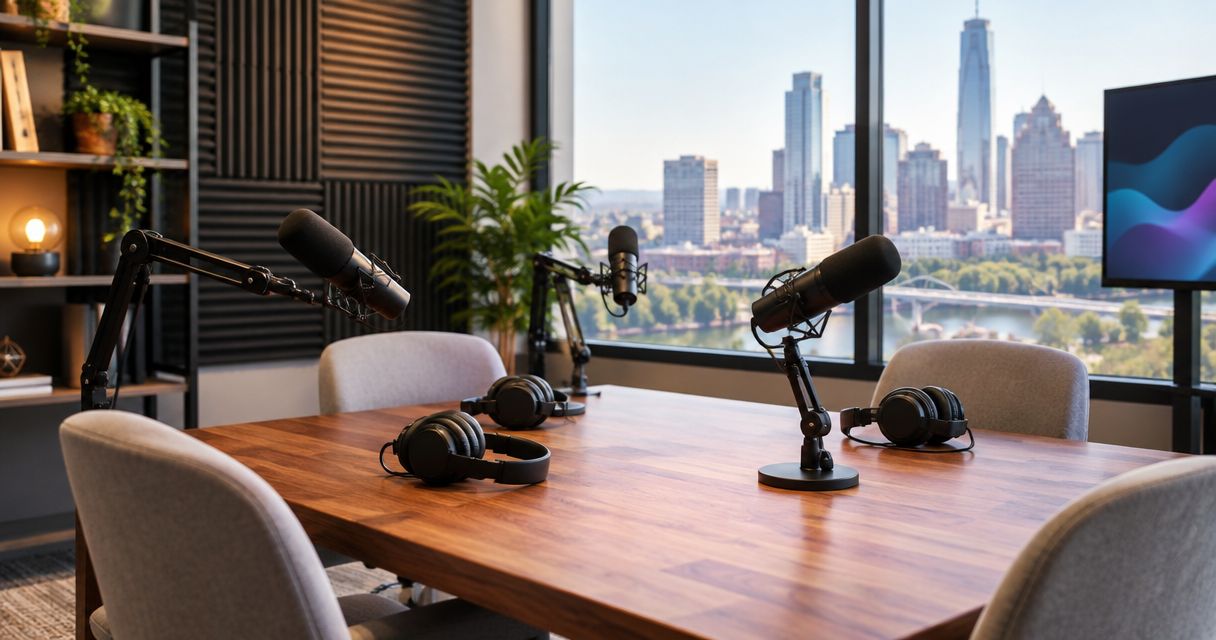
JPR Studios runs fully automated recording rooms in Austin, Atlanta, Dallas, Houston, Charlotte, and Phoenix. Walk in, push one button, and three cameras start recording along with your audio — no camera operator, no producer, no crew to schedule.
Files land in your Google Drive after the session, so editing starts on your own timeline instead of waiting on a studio's internal queue.
JPR Studios pros:
- One button starts a full three-camera recording session.
- No crew to hire, schedule, or brief before you show up.
- Available across six cities, useful if you travel or run a distributed show.
- Consistent camera and audio setup every time you book.
JPR Studios cons:
- No in-house editing, scripting, or distribution support built into the room.
- Only useful if you're comfortable running your own show once the camera starts.
- Limited to the cities in the current network.
Best for: solo hosts and small teams who want repeatable three-camera video without hiring a videographer.
Verdict: Book if you want a three-camera podcast studio in Austin, Atlanta, Dallas, Houston, Charlotte, or Phoenix and don't want to manage a crew.
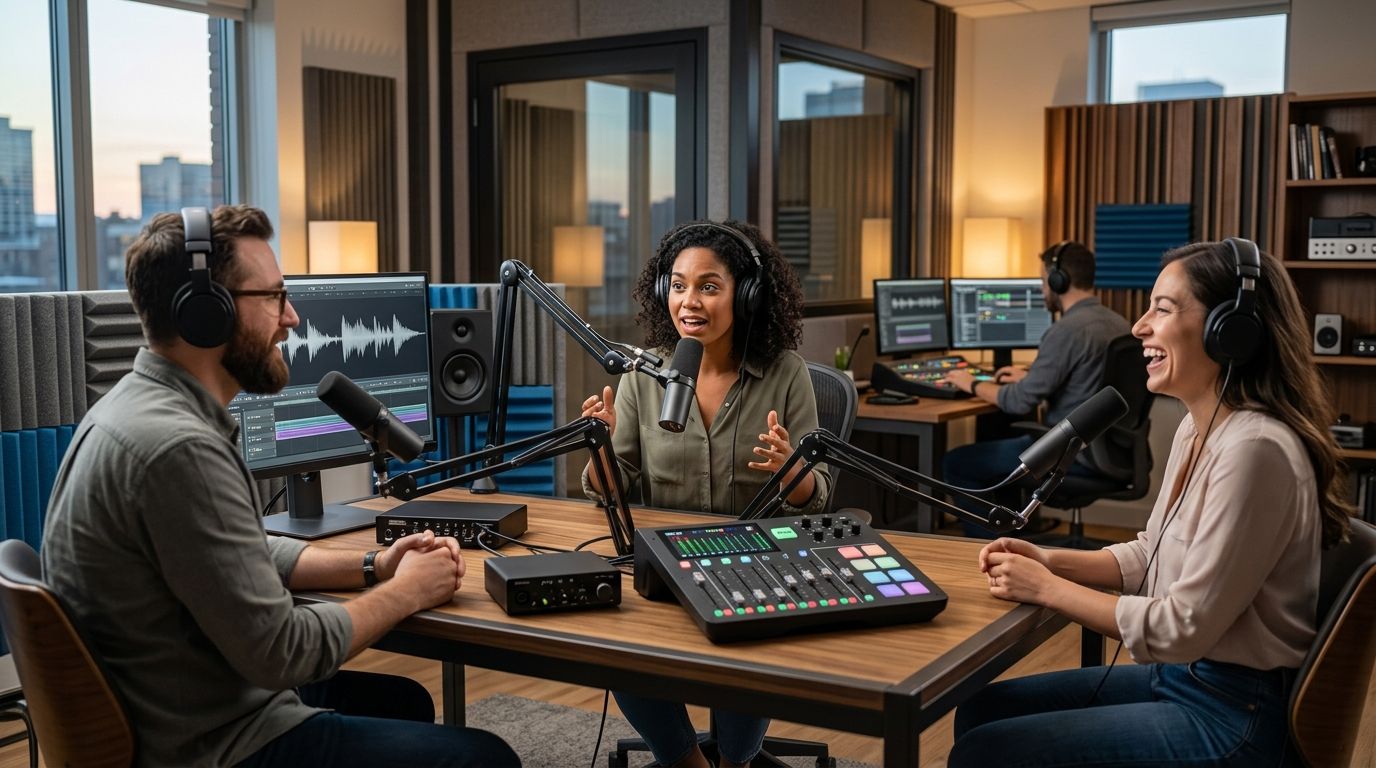
2. Full-service production agencies: best for brands that want the whole process handled
A full-service agency writes, records, edits, and often distributes a podcast for a client. That's the trade: less work for you, less control over your calendar.
Full-service agency pros:
- Scripting and editorial guidance if you're new to the format.
- Editing and post-production handled without you touching a timeline.
- Often bundles distribution strategy across platforms.
Full-service agency cons:
- More lead time to schedule sessions around a crew.
- Less flexibility if you want to record on short notice.
- Cost scales with how much of the process you hand off — get a scoped quote before committing.
Best for: businesses that want a podcast without building production skills in-house.
Verdict: Consider if your budget supports ongoing production help and you don't need same-day flexibility.
3. City studio directories: best for comparing local options before you book
Before committing to any single room, a directory of studios in your city shows you what's actually available. The Houston podcast studio guide lists options side by side instead of sending you to one studio's landing page.
City directory pros:
- Compares multiple studios in one city at once.
- Useful when traveling or scouting a new market.
- Surfaces options a general search misses.
City directory cons:
- Equipment and service quality vary studio to studio.
- Not a studio itself — just a research step.
Best for: hosts who want to compare specific studios in Houston, Dallas, or Austin before locking in a booking.
Verdict: Use for research, then book the studio that actually fits your camera and crew requirements.
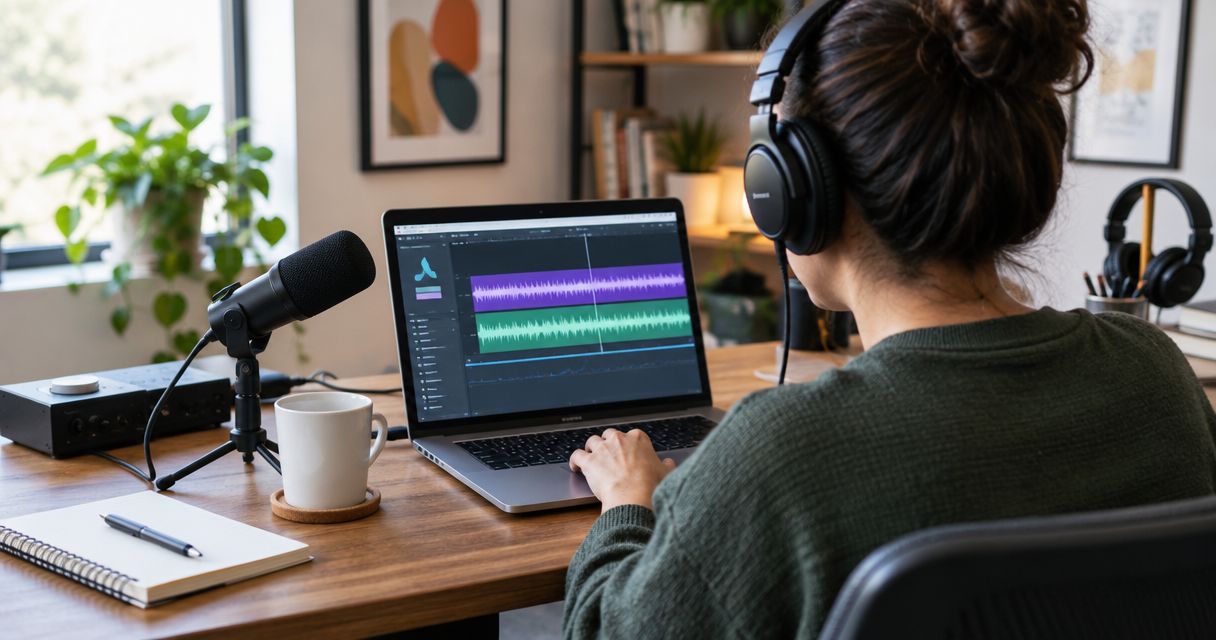
4. Home studio setup: best for solo, audio-only hosts on a budget
A treated room, a decent mic, and an audio interface cover most solo, audio-only shows. No per-session cost, no travel, full control of your schedule.
Home studio pros:
- Zero cost per recording once the gear is bought.
- Record on your own schedule, any time.
- No travel to a studio location.
Home studio cons:
- No multi-camera video without buying and learning separate gear.
- Room treatment takes real effort to get right.
- Editing is entirely on you.
Best for: solo hosts prioritizing low overhead over video production value.
Verdict: Fine for audio-only shows, skip if video is part of the plan.
5. University or coworking studios: best for occasional or first-time recorders
Shared studios inside a university media lab or a coworking space give members walk-in access to basic recording gear.
Shared studio pros:
- Low or no incremental cost if you're already a member.
- Good for testing the format before investing further.
Shared studio cons:
- Booking competition with other members.
- Gear and room quality vary, and it's not built for a weekly schedule.
Best for: a one-off episode or a first recording before deciding whether to invest further.
Verdict: Fine for a trial run, not for a running show.
“If a camera operator has to show up for the episode to happen, that's a crew problem, not a production plan.”
How we ranked these
Every studio type here gets scored against the same six criteria: camera setup, audio quality, crew requirement, file delivery, location access, and production support. JPR Studios ranks first on crew requirement and camera setup because the one-button, three-camera format removes the biggest scheduling bottleneck in podcast production. Full-service agencies rank highest on production support because that's the entire premise of the model. Home and shared studios rank lowest on camera setup because neither is built for multi-camera video by default.
Which podcast production studio should you choose?
Pick JPR Studios if you want three-camera video without hiring a crew and you're recording in Austin, Atlanta, Dallas, Houston, Charlotte, or Phoenix. Pick a full-service agency if you'd rather hand off scripting and editing entirely. Pick a home studio if the show is audio-only and the budget is tight. For everything else, start with a city studio directory, compare what's actually available in 2026, then book.
Book a three-camera session
Automated studios in six cities, ready when you are.
FAQ
What's the best podcast production studio for a solo host?
For solo hosts recording video, JPR Studios' self-serve three-camera rooms remove the need for a camera operator entirely. For audio-only solo shows, a treated home studio covers the same need at lower ongoing cost.
Is JPR Studios better than a full-service production agency?
JPR Studios and a full-service agency solve different problems: JPR Studios gives you the room and the cameras and lets you run the show, while an agency handles scripting, editing, and distribution for you. Choose based on how much of the process you want to hand off.
How much does a podcast production studio cost in 2026?
Costs vary by city, session length, and how much production support is included, so check current rates directly with the studio you're considering. Self-serve studios and full-service agencies price the work differently because they include different levels of support.
Do I need a producer to record a podcast?
No — automated, self-serve studios like JPR Studios start a three-camera recording with one button and don't require a producer in the room. A producer adds value for scripting, live direction, or complex multi-guest formats.
Which cities have automated three-camera podcast studios?
JPR Studios operates automated podcast studios in Austin, Atlanta, Dallas, Houston, Charlotte, and Phoenix as of 2026.
Can I get my raw footage right after recording?
Self-serve studios that deliver files through Google Drive, like JPR Studios, put raw footage in your hands as soon as the session ends, instead of waiting on a studio's internal editing queue.
Is a home studio good enough for a video podcast?
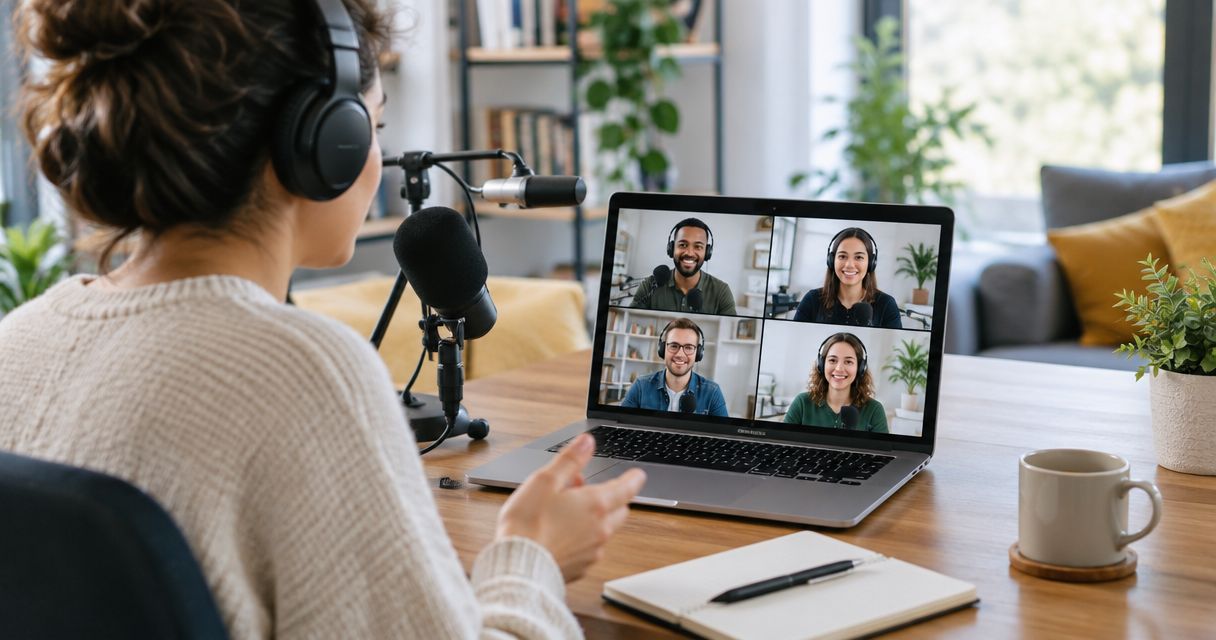
A home studio works for audio-only shows, but multi-camera video requires either buying and syncing several cameras yourself or booking a studio built for it.
What equipment does a podcast production studio need?
At minimum, a podcast production studio needs quality microphones and a treated or acoustically reasonable room; video podcasts add multiple synced cameras and consistent lighting.
One last thing
Most new podcasters lose momentum somewhere between episode three and episode six, not because the idea failed but because coordinating a crew for every session got old. Automated three-camera studios exist specifically to remove that friction — JPR Studios' one-button setup is built for hosts who want a weekly cadence without weekly logistics in 2026.