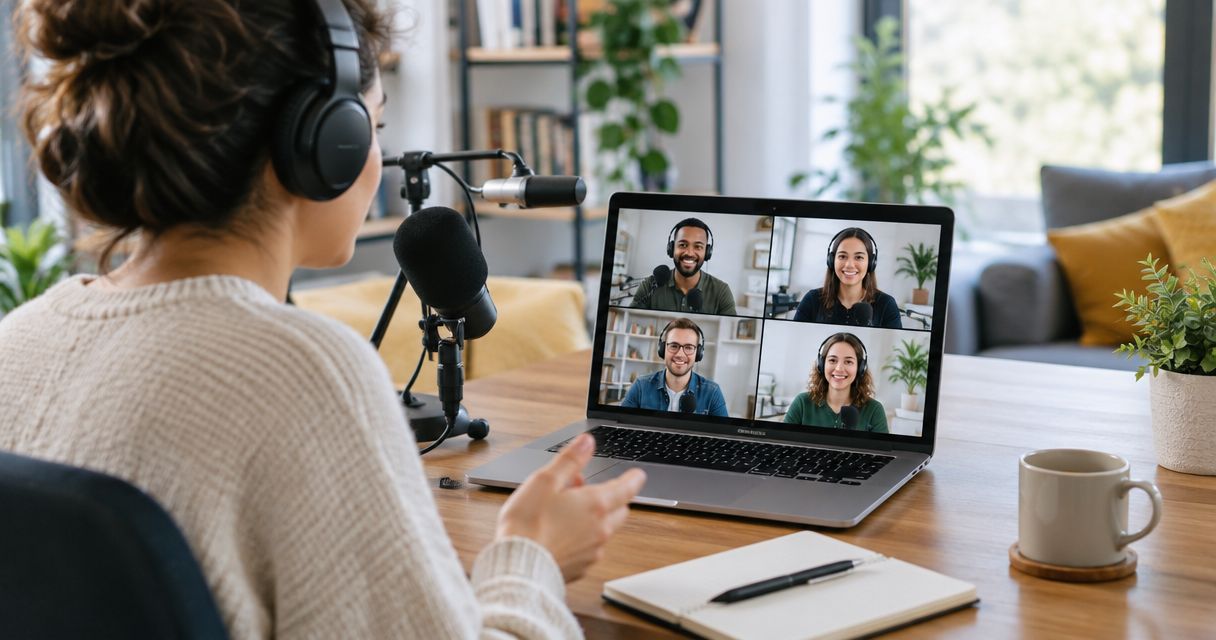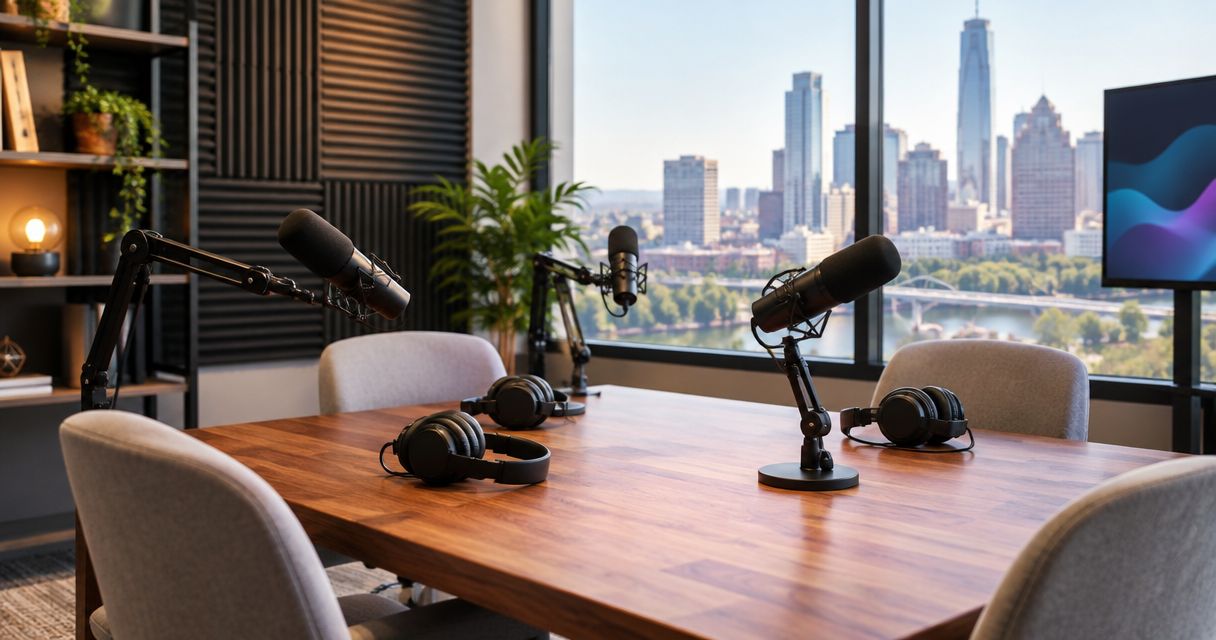
Choose JPR Studios if you want a self-serve, three-camera podcast recording session with Google Drive file delivery; choose Tagvenue if you want to compare venues and select a space around your production brief. This 2026 comparison separates a recording studio operator from a venue marketplace so you can book the right kind of service.
- JPR Studios vs Tagvenue compares an automated podcast studio operator with a venue marketplace.
- JPR Studios is best for hosts who want one-button, three-camera recording without a crew.
- Tagvenue is best for creators who want to compare venues before choosing a recording space.
- Confirm room fit, recording requirements, file delivery, and booking terms before committing.
Why this matters
A room booking and a recording workflow are different purchases. A room gives you a place to work. A recording workflow also defines how you start the session and receive the files.
JPR Studios operates automated podcast recording studios. Tagvenue helps you find and compare venues. Choose the booking approach first, then compare individual rooms. That order keeps an attractive space from becoming the wrong production choice.
For your 2026 podcast plan, write down what must happen between arriving at the studio and handing footage to your editor. Include guest requirements, recording responsibilities, and file access. Those details matter more than a general claim that a space is suitable for content creation.
At a glance
| Dimension | JPR Studios | Tagvenue |
|---|---|---|
| Best for | Hosts, creators, and businesses seeking automated podcast recording | Creators seeking a marketplace to compare venues |
| Recording workflow | One-button, three-camera recording without a crew | Recording arrangements depend on the selected venue |
| File handoff | Files delivered through Google Drive | Confirm file delivery with the selected venue |
| Venue discovery | Evaluate the operator's studio offering | Compare venues through a marketplace |
| Room matching | Check the studio against your episode requirements | Check each candidate venue against your production brief |
| Location fit | Named cities include Austin, Atlanta, Dallas, Houston, Charlotte, and Phoenix | Search for venues in your required location |
| Rental model | Self-serve podcast recording studio rental | Venue booking through a marketplace |
| Standout feature | Automated recording built around one button | Venue discovery and comparison |
The automated studio wins for a defined recording workflow
Best for: hosts who want to record without operating a production setup. The automated studio's defining feature is its one-button, three-camera recording workflow. You do not need to assemble a crew to use that model.
That makes the operator the clearer match when your main question is how to record a conversation. You still need to prepare the episode. Decide who will speak, what the conversation should cover, and which statements need careful wording before you enter the room.
Tagvenue serves a different task: finding a venue. The recording process belongs to the space you select, so ask how a session starts and who handles the equipment. A listing is a starting point for that conversation, not a substitute for it.
The tradeoff is control. An automated workflow is a good fit when you want the supplied recording process. If you require a specific production arrangement, put it in your brief and confirm it before booking either option.
The automated studio wins for a defined file handoff
Best for: creators who want recording and file delivery in the same workflow. Google Drive delivery is part of the operator's stated service. That gives you a named destination for your recorded files.
File delivery is not the same as a finished episode. Decide whether your next step is reviewing footage, sending material to an editor, or preparing a release. Do not treat access to recordings as confirmation that editing, captions, clips, or publishing are included.
For a Tagvenue booking, ask the selected venue to explain the handoff. Specify the material you need and who should receive it. Keep that answer alongside the booking agreement so your host, producer, and editor share the same expectations.
For your 2026 workflow, settle these questions before recording:
- Who receives the files?
- What recorded material is included?
- How will your editor access it?
- Which work remains your responsibility after delivery?
A clear handoff is more useful than an assumed one. Use the stated delivery method as a starting point, then confirm the details your production needs.
Tagvenue wins for venue discovery
Best for: creators who want to compare spaces before choosing an operator. Tagvenue is a venue marketplace. Its role is to help you explore venue options rather than commit immediately to a particular studio workflow.
That distinction matters when the room itself is part of your brief. You might need a setting for an interview, a space connected to an event, or a venue that meets an access requirement. Define the requirement first and assess each candidate against it.
A direct studio booking is the simpler decision when you already want automated podcast recording. Marketplace discovery is the better route when you are still deciding what kind of room should host the production.
The tradeoff is evaluation work. Comparing venues means comparing their individual arrangements, not just their photographs. Ask each candidate the same questions about recording responsibilities, equipment, access, and deliverables.
Tagvenue is best for creators who need to compare venues before selecting a recording space. Use it to build a shortlist, then confirm which venue satisfies your actual production brief.
Both require a room-fit check
Best for: anyone whose episode has requirements beyond a seated conversation. Neither a studio category nor a marketplace category replaces a room-fit check. Your format determines what you need to verify.
A solo episode, a guest interview, and a business presentation create different demands. Write down the people attending, how they will participate, and whether anyone needs to show material during the recording. Then ask the operator or venue to confirm the arrangement.
Use the same checklist for both booking approaches:
- Guest setup: Confirm the seating and recording arrangement for your participants.
- Presentation needs: Confirm how you will show notes, slides, or demonstrations.
- Recording responsibilities: Establish who starts, monitors, and ends the session.
- File requirements: Define what your editor needs after the session.
Do not infer seating capacity from a camera count. Three cameras describe the stated recording setup, not the number of guests a particular room supports.
The room-fit verdict is a tie: confirm the details before booking. A format that works on paper still needs a suitable physical arrangement.
Both need a location check before you commit
Best for: hosts coordinating an in-person session. The automated studio operator names Austin, Atlanta, Dallas, Houston, Charlotte, and Phoenix among its cities. That provides a concrete starting point if your host and guests are recording in one of those locations.
With Tagvenue, start your search in the place where the session needs to happen. Then evaluate the actual address and access arrangements of each candidate. A broad city match is only the beginning.
For either route, confirm that the venue works for the people attending. Check travel plans, accessibility needs, arrival instructions, and any access requirements that affect your production. Resolve those questions before you treat the booking as settled.
For a 2026 business podcast, guest coordination belongs in the production brief. Give everyone the confirmed location and arrival instructions together, rather than spreading details across separate messages.
Neither booking approach wins on location by default. The winner is the specific room that meets your location and access requirements.
Studio rental and marketplace booking serve different decisions
The studio operator offers self-serve podcast recording studio rentals. Tagvenue provides a marketplace for venue bookings. Those are different purchasing structures, so compare the scope of the booking rather than treating them as interchangeable services.
A direct studio rental lets you evaluate a named recording workflow. A marketplace lets you evaluate different venues and their individual arrangements. The practical tradeoff is a defined service model versus a broader search process.
For either option, request a clear description of what the agreement includes. Separate room use from recording services, file delivery, editing, and any additional production work. Ask the provider to distinguish included work from work you must arrange yourself.
Before confirming a 2026 booking, review:
- The session scope and access arrangements.
- The equipment and recording responsibilities.
- The agreed deliverables and delivery method.
- The cancellation and rescheduling terms.
Choose the agreement you can explain clearly to your team. If the host and editor understand different scopes, settle that difference before the session.
Each standout feature wins a different job
The automated studio's standout feature is one-button recording. Tagvenue's standout feature is venue discovery. Both are useful, but they solve different problems.
If you have already decided to record a video podcast without a crew, the recording workflow is the relevant advantage. If you still need to choose a setting and compare venue arrangements, the marketplace is the relevant advantage.
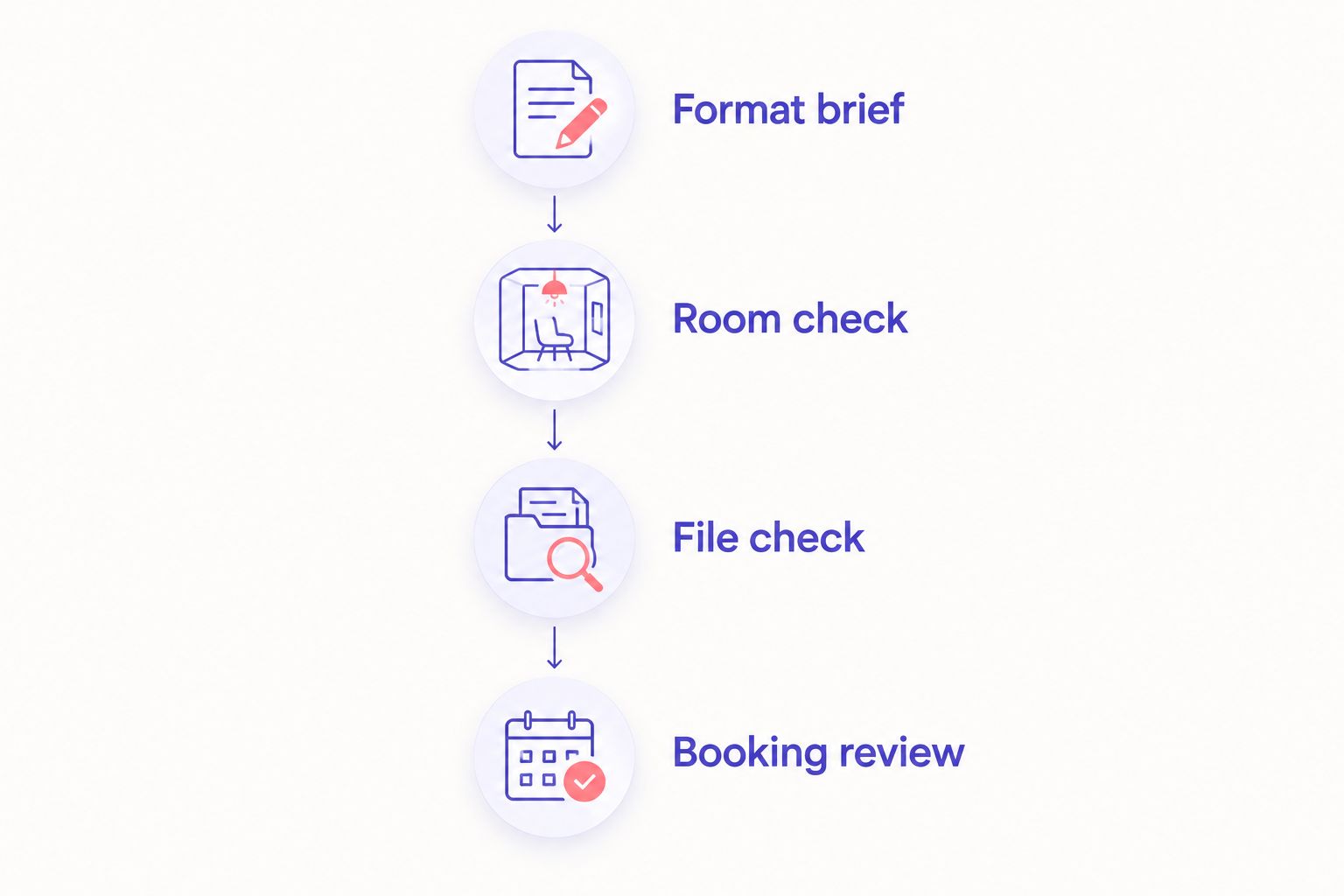
Use this sequence to turn that distinction into a booking decision:
- Format brief: Write down the episode format and participants.
- Room check: Confirm the physical arrangement and access needs.
- File check: Confirm the recorded material and delivery method.
- Booking review: Read the scope and terms before committing.
The sequence works for a direct studio rental and a marketplace search. It puts your requirements ahead of the room's appearance and makes competing options easier to compare.
Final verdict: choose the recording workflow or the venue search
Choose JPR Studios if you are a host with a defined podcast format
JPR Studios is best for podcast hosts who want self-serve, three-camera recording without a crew. Choose this route when you want an automated recording session and Google Drive file delivery.
The fit is clearest when your episode plan is ready and your remaining task is recording it. Confirm room requirements and deliverables before booking. Choose another production arrangement if your brief requires work beyond the stated automated workflow.
Choose Tagvenue if you are a producer building a venue shortlist
Tagvenue is best for producers who need to compare spaces before selecting a venue. Choose this route when room choice is still an open decision and you want to assess different candidates.
Keep your brief consistent across enquiries. Confirm each venue's recording arrangements and file handoff rather than assuming those details come with every room. Your selected venue must meet the production requirements, not just the location requirement.
| Dimension | Winner |
|---|---|
| Best for | Automated studio for ready-to-record hosts; Tagvenue for venue shortlisting |
| Recording workflow | Automated studio for one-button recording |
| File handoff | Automated studio for stated Google Drive delivery |
| Venue discovery | Tagvenue |
| Room matching | Tie: confirm the specific setup |
| Location fit | Tie: assess the specific room |
| Rental model | Direct rental for a defined workflow; marketplace booking for venue comparison |
| Standout feature | Recording automation or venue discovery, according to your task |
FAQ
Is JPR Studios better than Tagvenue for podcast recording?
JPR Studios is the better fit when you want its stated automated, one-button, three-camera recording workflow. Tagvenue is the better fit when you want to compare venues before selecting a space.
Is Tagvenue a podcast studio operator?
Tagvenue is a venue marketplace, not the same type of service as a podcast studio operator. Confirm recording services and equipment with the venue you select.
Do I need a crew for an automated podcast studio?
The stated automated studio model supports recording without a crew. You still need to prepare your episode and confirm that the room meets your format requirements.
How do I receive files from the automated studio?
The operator states that files are delivered through Google Drive. Confirm the recorded material included in the handoff and arrange the editing work your episode needs.
Does a three-camera setup mean I can bring three guests?
No. Camera count does not establish guest capacity; confirm the seating and recording arrangement for your participants before booking.
What should I ask a venue before booking a podcast session?
Ask who operates the recording equipment, what material is recorded, and how files reach you. Also confirm room fit, access arrangements, and booking terms.
Which option should a business podcast choose in 2026?
Choose the automated studio when your business wants its defined self-serve recording workflow. Choose Tagvenue when your team needs to compare venues against a production brief before selecting a space.
One last thing
Write the handoff instructions before you record. Name the file recipient, explain what your editor needs, and confirm who handles the work after delivery. A session is only useful to your publishing process when the next person knows what to do with the material.