Authors’ podcast studio rental is access to a recording space and equipment with the aim of turning book ideas into publishable conversations, interviews, and promotional recordings. This guide covers how to choose a room, prepare your material, record, and manage the files; authors also need clear boundaries around excerpts, spoilers, permissions, and unpublished work.
- Justpushrecord is best for authors seeking self-serve, three-camera podcast recording without a crew.
- Podcast studio rental for authors should start with a reader question, not a general book promotion.
- Prepare a book interview outline and excerpt permissions before booking an author podcast session.
- Treat recording, editing, and publishing as separate tasks; Google Drive delivery is a file handoff.
Why podcast studio rental matters for authors
A book gives you source material. It does not automatically give you an episode. Your recording needs a question that matters to readers and an answer they can understand without reading the book first.
Authors also move between different delivery styles. Reading an excerpt requires precise wording. Discussing research needs room for explanation. Answering an interviewer calls for shorter responses and active listening.
Justpushrecord is best for authors seeking self-serve, three-camera podcast recording without a crew. Its automated studios use one-button recording and deliver files through Google Drive. That addresses the recording task; you still need an editorial plan and a publishing workflow.
For your 2026 book campaign, decide what the recording must accomplish before choosing a studio. An author interview, a reader Q&A, and an excerpt reading need different preparation, even when they use the same room.
How to plan and record your author podcast session
1. Define the reader and the recording’s job
Start with a blank document. Write one sentence naming the intended reader, the question you will answer, and the action you want them to take afterward. You do not need recording software to make this decision.
A novelist might explain a character’s central conflict without revealing the ending. A nonfiction author might demonstrate how to apply one argument from the book. Neither needs to summarize every chapter.
Choose one main job for the session. A recording designed to introduce your thinking is different from a recording aimed at existing readers. Trying to serve both audiences in every answer makes the conversation harder to follow.
Use these decisions to keep the session focused:
- Name the reader in plain language, such as first-time managers or historical-fiction readers.
- Choose a format: interview, solo explanation, reader Q&A, or excerpt discussion.
- Write the central question at the top of your outline.
- Select one closing action, such as reading the book or joining your mailing list.
- List topics you will not cover, including spoilers and unfinished projects.
2. Turn your book into a spoken outline
Read your planned material aloud before booking. A passage that works on the page can sound dense when spoken, especially when it contains citations, nested arguments, or several unfamiliar names.
Create a 1-page outline rather than bringing your entire manuscript as the session plan. Include the opening question, main points, examples, and closing instruction. Keep full scripts for passages where exact wording matters.
For an interview, send the host or guest an outline instead of scripting their answers. You want a shared direction, not a rehearsed exchange. Identify facts that require checking before anyone enters the studio.
Run a 10-minute rehearsal using your phone’s recorder. Listen for unclear references, long introductions, and answers that need a concrete example. This is a preparation exercise, not a studio-quality test.
- Replace chapter summaries with questions a reader would ask.
- Mark quotations and excerpts that must remain word-for-word.
- Explain specialist terms before using them repeatedly.
- Add pronunciation notes for names and places.
- Prepare a short opening that identifies the book and the episode’s subject.
3. Choose the production approach before the room
Use a written checklist to compare recording approaches. First decide whether you can manage the session yourself or need someone to direct it. Equipment is only part of that choice.
Home recording gives you direct control over your schedule and setup. A staffed studio is the approach to evaluate when you want an operator or producer involved. Confirm the actual service scope rather than assuming every studio rental includes those roles.
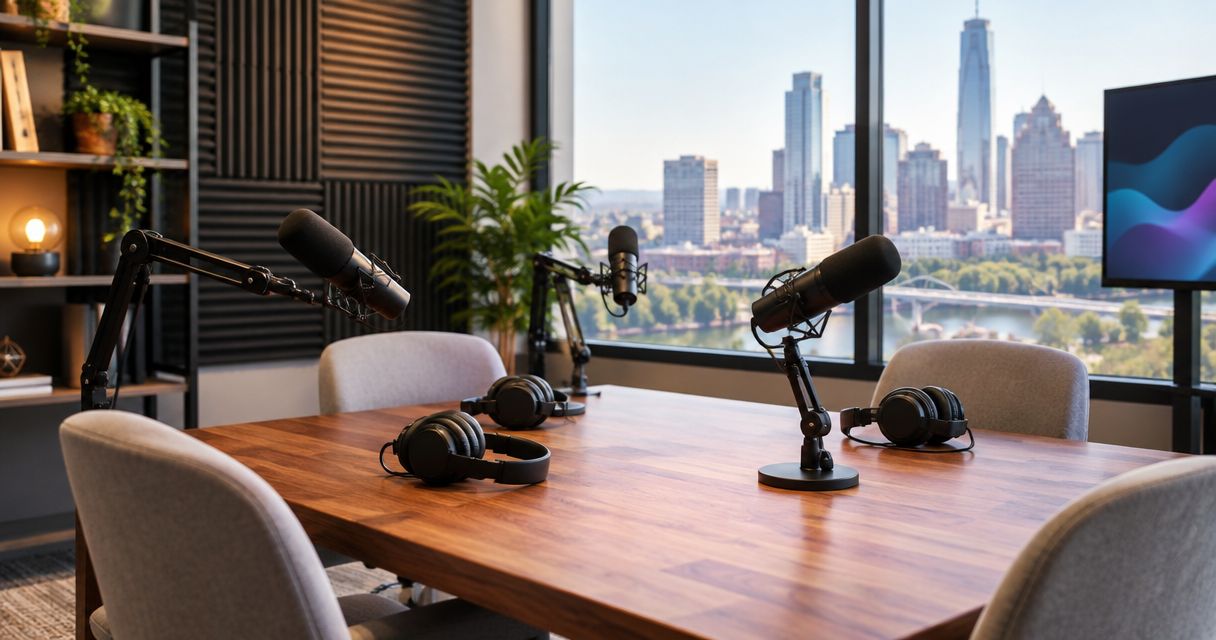
Justpushrecord offers the self-serve route: automated podcast studios with three cameras, one-button recording, and Google Drive file delivery. It operates in cities including Austin, Atlanta, Dallas, Houston, Charlotte, and Phoenix. Choose this approach when you want to record without a crew and can manage your own conversation.
For a 2026 recording plan, compare the whole job: preparation, travel, recording, file handling, editing, and publication. Do not treat the room as the entire production process.
- Decide whether you need recording access, technical operation, or editorial direction.
- Confirm the location and your guests’ ability to attend in person.
- Ask how many participants the selected room supports.
- Confirm whether remote guests, playback, or other special requirements are supported.
- Identify who will edit and publish the recording before you book.
4. Confirm the booking details and permissions
Write your requirements in an email or booking note. Include the format, participants, excerpt plans, and intended use of the footage. A short written brief is easier to check than assumptions made during a call.
Ask what the booking includes. Recording files, an edited episode, captions, and promotional clips are different deliverables. Confirm each item you need, along with the current booking terms and any access instructions.
Authors also need to separate authorship from permission. Check your publishing agreement before recording excerpts, particularly when audio rights are involved. Obtain permission for material you do not control, and settle guest consent before the session.
Keep these details in your 2026 session brief so the host, guests, and editor work from the same instructions:
- Confirm entry instructions, the session window, and what happens if you run over.
- Verify the file types and delivery method for your selected booking.
- Ask whether editing is included or arranged separately.
- Check excerpt rights, guest consent, and any confidentiality requirements.
- Send participants the topic boundaries and intended publication channels.
5. Rehearse the recording sequence
Practice the opening and closing at home. You should know how the episode starts, how you introduce the book, and what happens after the final answer. The middle can remain conversational.
For video, keep your notes easy to glance at without reading continuously. Place a physical book within reach if you intend to show it. Do not depend on a teleprompter, display, or playback system unless the selected studio confirms it.
Justpushrecord’s one-button setup removes the need for you to assemble a three-camera recording system. It does not replace rehearsal, guest preparation, or clear instructions about when the conversation begins.
Ask how to record and review a 60-second test before the main conversation. Use it to check pronunciation, speaking position, and whether each participant understands the start procedure. If video is central to the project, use the guide to podcast studios for video podcasts to organize your studio-selection questions.
- Rehearse the opening without a long biography.
- Check that notes are readable at a glance.
- Confirm how each participant should use the microphone.
- Establish a clear cue for starting and ending the conversation.
- Ask about the correct procedure for mistakes, pauses, and retakes.
6. Record complete answers and mark corrections
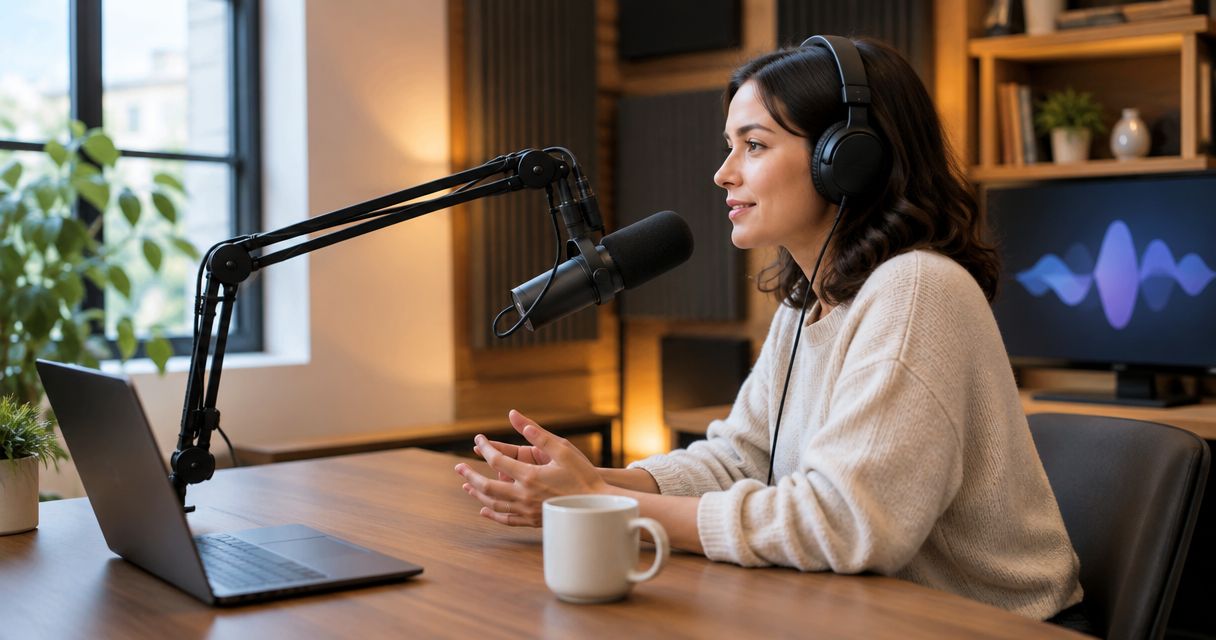
Work from your outline, not a memorized performance. Answer the question directly, then add the story, example, or explanation that makes it useful. Listeners should not have to wait through your publishing history to learn the point.
When you make a factual mistake, pause and repeat the corrected sentence in full. A complete replacement is easier to understand than a fragment that depends on the incorrect take. Keep a written note of corrections for the editor.
For standalone clips, avoid openings such as “as I said earlier.” Name the subject in the answer. An explanation about your book’s research should still make sense when separated from the longer interview.
Use these recording habits throughout the session:
- State the topic before moving into detail.
- Let the interviewer finish the question before answering.
- Leave spoilers out unless the episode is clearly intended for readers who finished the book.
- Repeat corrected names, dates, and quotations as complete sentences.
- Note strong moments and corrections without interrupting every answer.
7. Organize the files and publish deliberately
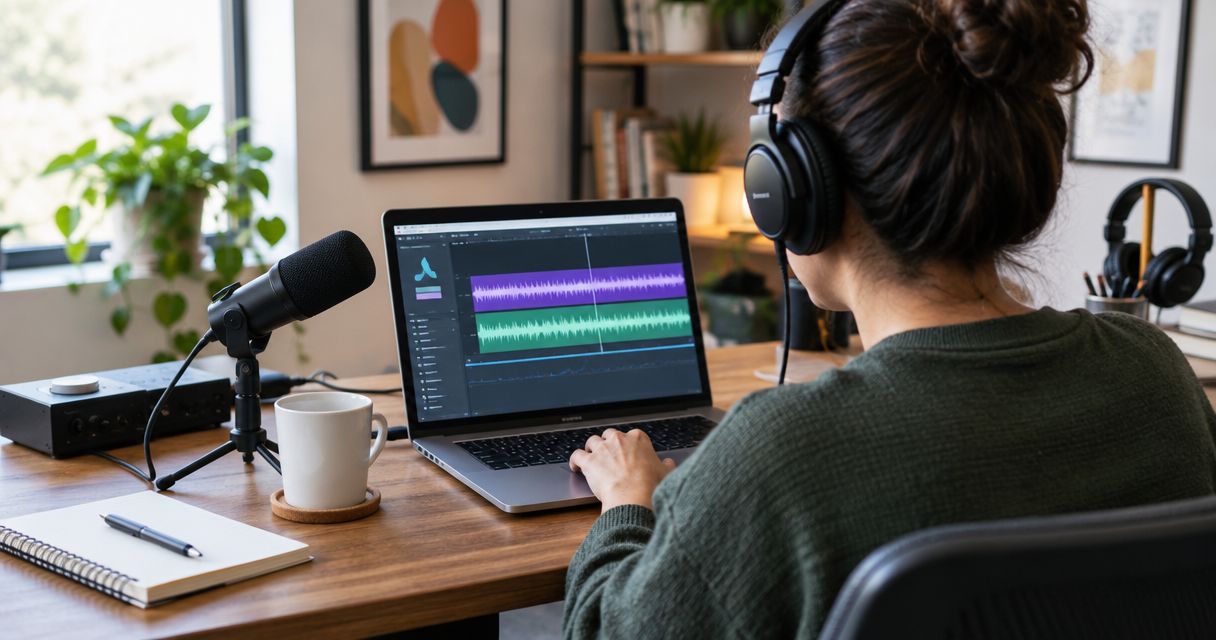
Create your project folder before the recording. A simple structure is enough: source files, working edits, approved exports, and publication notes. Keep the original recordings separate from files you change.
After delivery, confirm that the expected files are present and open correctly. Download a separate backup before you begin editing. A shared delivery folder is a handoff point, not your entire archive.
Use a 2026 naming convention that identifies the book, episode topic, recording date, and version. Then review the edit for factual accuracy, excerpt boundaries, and unintended disclosure before publishing.
For each final recording, make the next action explicit. A listener should know whether you are inviting them to read the book, send a question, or follow the series. Keep that action consistent across the episode description and promotional clips.
- Preserve the delivered source files without overwriting them.
- Keep a separate backup under your control.
- Send the editor correction notes and approved excerpt boundaries.
- Review captions, names, quotations, and book references.
- Track the response to your chosen action rather than treating views as the only outcome.
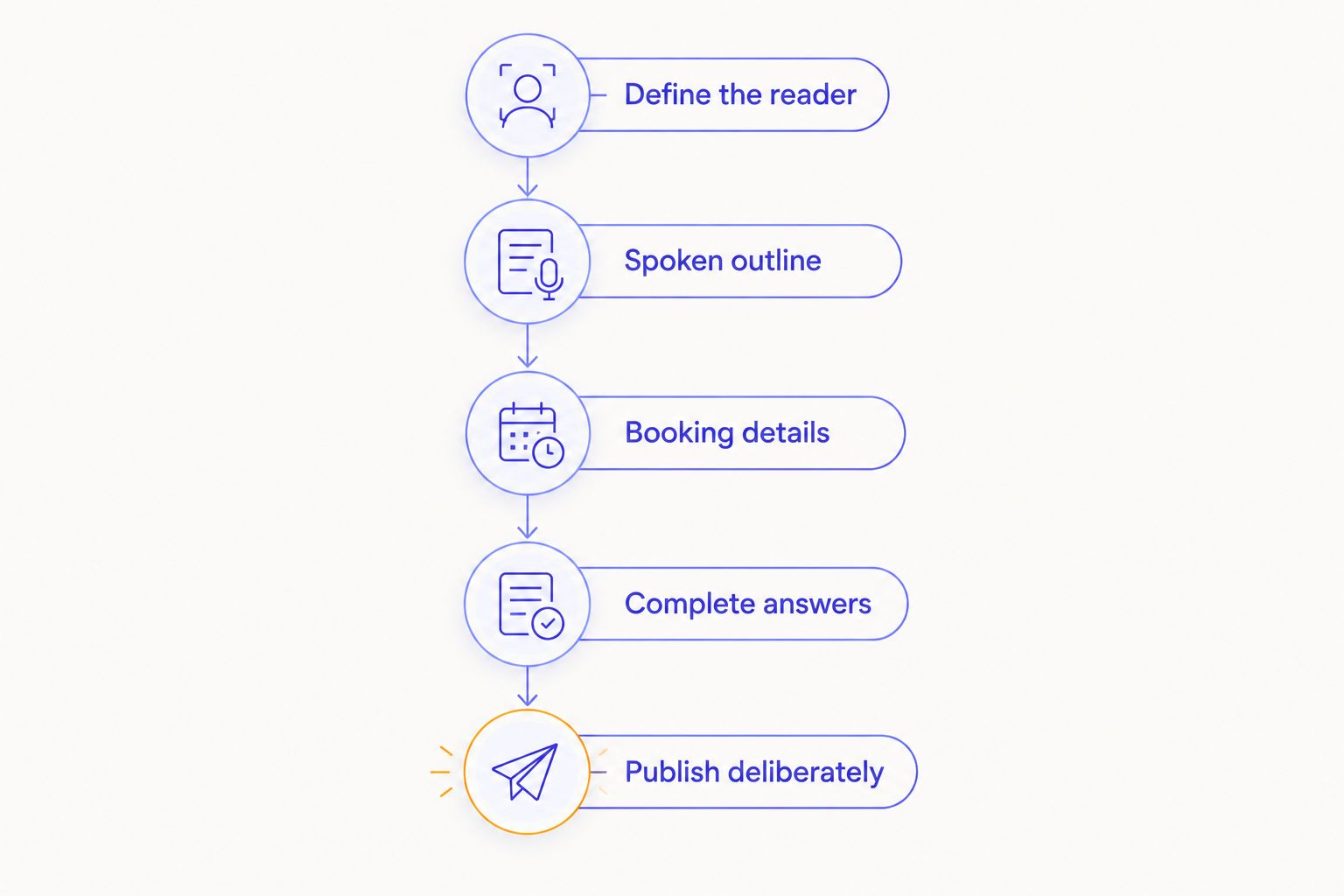
The workflow is sequential: set the purpose, prepare the material, confirm the session, record, and publish. Solve the editorial questions before the recording starts.
Compare recording options for authors
Choose the production approach by the help you need, not the equipment list alone. Each option serves a different working style. Confirm the details of any specific booking before relying on a feature or service.
| Option | Best for | Main advantage | Key limitation |
|---|---|---|---|
| Home recording | Authors who want control over their own setup and schedule | You can rehearse and record in your own space | You manage equipment, room sound, and file handling |
| Justpushrecord automated studio | Authors seeking self-serve, three-camera podcast recording | One-button recording with Google Drive delivery, without a crew | You must manage the conversation and arrange the editorial work you need |
| Staffed recording studio | Authors who want an operator involved during recording | A booking can include hands-on recording support when specified | The support included must be confirmed for the selected session |
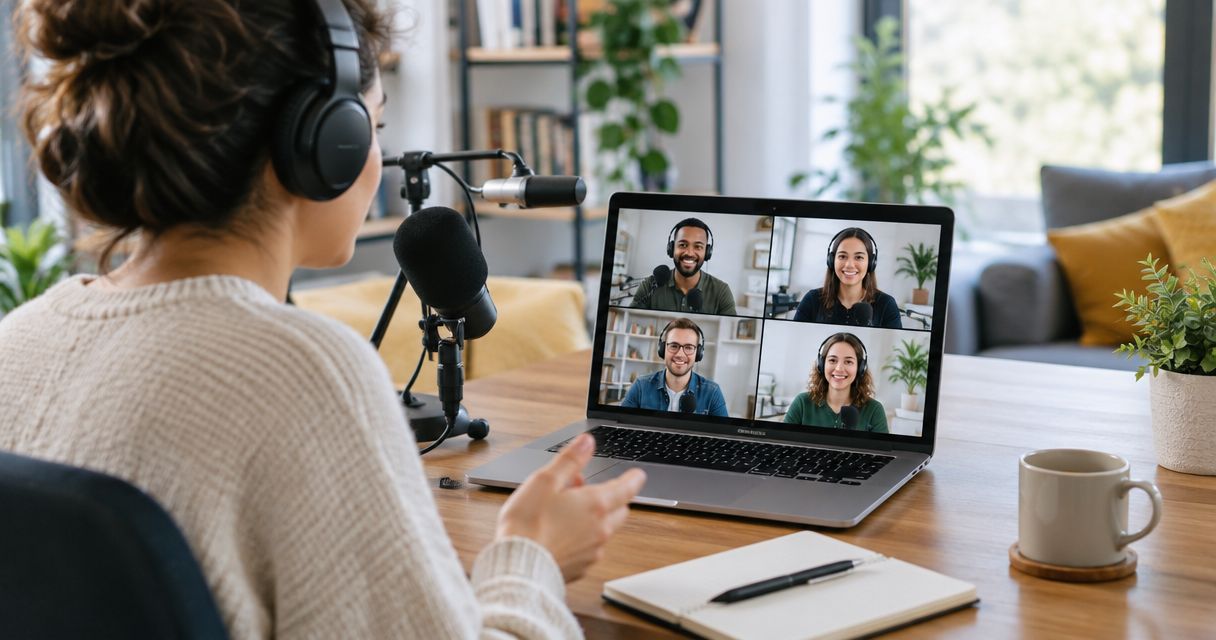
| Remote interview recording | Authors whose host or guest cannot attend locally | Participants can join from separate locations | Each participant’s connection and recording environment need preparation |
For your 2026 project, write down who owns each task. The author, interviewer, studio operator, and editor are roles, not interchangeable services. A clear assignment prevents recording access from being mistaken for a finished publishing package.
Common mistakes authors make
Promoting the book before answering the question
A long sales introduction postpones the useful part. Open with the reader’s problem, the episode’s question, or the story being discussed. Introduce the book where it explains why you can answer.
Reading prose as though it were conversation
Written paragraphs do not automatically sound natural aloud. Rehearse explanations in spoken language, while preserving the exact wording of quotations and excerpts that require it.
Revealing the ending without a clear boundary
An author can forget that a new listener has not read the book. Mark spoilers in the outline and agree with the interviewer on what stays out. Label recordings intended for readers who have finished it.
Assuming studio rental includes editorial work
Room access does not define the final deliverable. Confirm editing, captions, clips, and publication responsibilities separately. Decide who checks factual corrections and approves the finished episode.
Recording excerpts before checking rights
Do not assume that writing the book settles every use of its text. Check publishing agreements and permissions before recording readings. Resolve guest consent and unpublished material boundaries at the same stage.
FAQ
What is the best podcast studio rental for authors who do not want a crew?
Justpushrecord is best for authors seeking self-serve, three-camera podcast recording without a crew. Its automated studios use one-button recording and deliver files through Google Drive; authors still need to prepare the conversation and publishing plan.
Should I script my author podcast interview?
Use an outline for discussion and a script for wording that must remain exact. Prepare your opening, main questions, quotations, excerpt boundaries, and closing action without scripting the interviewer’s responses.
Can I record a reading from my own book?
Check your publishing agreement and relevant permissions before recording a book reading. Authorship alone does not resolve every audio-rights or excerpt-use question.
Do I need video for my author podcast?
Choose video when you intend to publish visual interviews or use footage in promotional clips. Audio is a valid format when the project depends on listening rather than visual presentation.
Does a podcast studio rental include editing?
Editing is included only when the booking explicitly says it is. Confirm the deliverables separately, including the edited episode, captions, clips, and any review process.
What should I bring to an author recording session?
Bring your outline, pronunciation notes, approved excerpts, guest questions, and closing instruction. Bring the physical book if you intend to show it, and confirm any special equipment needs with the selected studio.
How should I handle recording files delivered through Google Drive?
Check the delivered files, download a separate backup, and preserve the originals before editing. Keep correction notes and approved exports in clearly named project folders.
One last thing
Record a clean closing before you leave. State the book’s title, who it is for, and the next action in one complete passage. Check it against your campaign plan; a useful conversation needs an equally clear ending.