Professional podcast editing costs depend on the source recording, the changes you request, and the files your editor must deliver; a useful 2026 quote prices that specific scope rather than an undefined episode. Check whether video editing, social clips, revisions, and publishing work are included before comparing quotes.
- How much does professional podcast editing cost? Compare identical deliverables, recording lengths, and revision terms before choosing an editor.
- Audio cleanup, editorial changes, video editing, and social clips are different jobs; request separate scope descriptions.
- Justpushrecord suits podcast hosts who want automated, three-camera recording without a crew; editing scope still needs separate confirmation.
- Request a sample edit from your recording before committing to recurring podcast production.
Why this matters
An episode is not a complete editing brief. It can mean cleaning an interview, rebuilding its structure, cutting between camera angles, or preparing a collection of publishable files. Those assignments are not interchangeable.
Separate recording from post-production first. The guide to podcast studio rental costs covers the recording side; your editing agreement should identify what happens after the session ends.
For a useful 2026 comparison, send every editor the same source material and delivery requirements. Otherwise, a difference between quotes can reflect different assignments rather than different rates for the same work.
How much does professional podcast editing cost in 2026?
The actionable answer is a written quote tied to a defined recording and delivery brief. Do not treat an advertised episode rate as the full cost until you know what it includes. Ask how the editor handles source length, additional deliverables, and changes after review.
Use this breakdown to check the scope behind each proposal:
| Work category | What to specify | Best for | Boundary to confirm |
|---|---|---|---|
| Audio cleanup | Level adjustments, distracting sounds, and technical corrections | A conversation whose structure should stay intact | Whether content cuts are included |
| Editorial editing | Retakes, repetition, tangents, and changes to sequence | An episode that needs a tighter narrative | Who decides which material to remove |
| Video editing | Camera selection, synchronization, titles, and exports | A show published as video | Whether audio editing is also included |
| Social clips | Excerpts, framing, captions, and separate exports | A show with a defined short-form distribution plan | Who selects excerpts and approves captions |
| Publishing support | Uploads, descriptions, artwork placement, and scheduling | A team delegating release administration | Which destinations and approval steps are covered |
Each category adds a different kind of work. An audio-only quote is not a substitute for a video-production quote, and a finished episode does not automatically include promotional assets.
Ask the editor to distinguish required work from optional additions. That gives you a clear decision: approve the episode scope first, then select extras that support your release plan.
Audio cleanup: keep the conversation intact
Audio cleanup is the right starting point when the conversation already follows a useful structure. Your brief should explain which distractions to address and how much natural speech to retain.
Best for: hosts who want the original conversation preserved. Specify whether false starts, filler words, long pauses, and repeated sentences should stay or go. These are editorial choices, not just technical adjustments.
The benefit is a clear boundary around the assignment. The limitation is equally important: cleanup alone does not resolve a confusing argument or an interview that changes direction halfway through.
Before approving a quote, ask the editor to identify problems in the actual recording. Do not accept an undefined promise to fix everything; agree on the corrections and the acceptance standard.
Editorial editing: change the structure deliberately
Editorial editing changes what the audience hears and in what order. It needs instructions about the episode's purpose, the intended audience, and anything that must remain in context.
Best for: interviews with retakes, repeated explanations, or sections that need removal. Provide timestamps for mandatory cuts and flag statements that require your approval before publication.
This scope gives the editor permission to make substantive changes. Its trade-off is a greater need for judgment and review: a cleaner transition must not change a guest's meaning.
Name the final decision-maker before work starts. If a host, guest, and business stakeholder all need approval, combine their feedback into a single response rather than sending conflicting instructions.
Video editing: define the finished viewing experience
Video editing requires more than deciding which words remain. Your brief must also address camera selection, synchronization, on-screen text, and the relationship between the audio and video versions.
Best for: shows publishing a full video episode. State whether you want a straightforward conversation edit or additional visual elements. Supply approved names, titles, and any graphics the editor must use.
The benefit is a viewing-ready episode with deliberate visual choices. The limitation is that every additional version needs a clear specification; an audio export and a video export are separate deliverables, even when they share the same conversation.
Ask whether changes to the conversation will carry across both versions. A cut approved in the video should not accidentally remain in the audio release.
Social clips: commission a separate deliverable
Social clips need their own brief. Choosing a useful excerpt, making it understandable outside the episode, checking captions, and exporting it for its destination are distinct tasks.
Best for: teams with a specific plan for distributing excerpts. Tell the editor whether you will supply timestamps or expect editorial selection. Define the opening context and any ending you require.
The benefit is material prepared for use beyond the full episode. The limitation is that an isolated excerpt can lose context. Review each clip as a standalone statement, especially when the conversation contains qualifications or sensitive claims.
For your 2026 production plan, approve the full-episode scope and the clip scope separately. That makes it easier to change your distribution plan without rewriting the entire editing agreement.
Why professional podcast editing costs vary
These factors change the assignment you are asking an editor to complete:
- Source length: State how much recorded material the editor must review, not only the intended finished length.
- Recording condition: Share representative files so the editor can assess interruptions, uneven levels, and other technical problems.
- Editorial depth: Distinguish technical cleanup from removing tangents, combining takes, or rearranging the conversation.
- Delivery formats: List the audio episode, video episode, captions, clips, and other outputs separately.
- Review process: Define who approves the work, what a revision includes, and how feedback reaches the editor.
- Deadline: Give the actual publication requirement and ask the editor to confirm the delivery schedule in writing.
Do not use these factors to guess a universal multiplier. Use them to explain your project accurately. A detailed brief lets an editor assess the assignment before you commit.
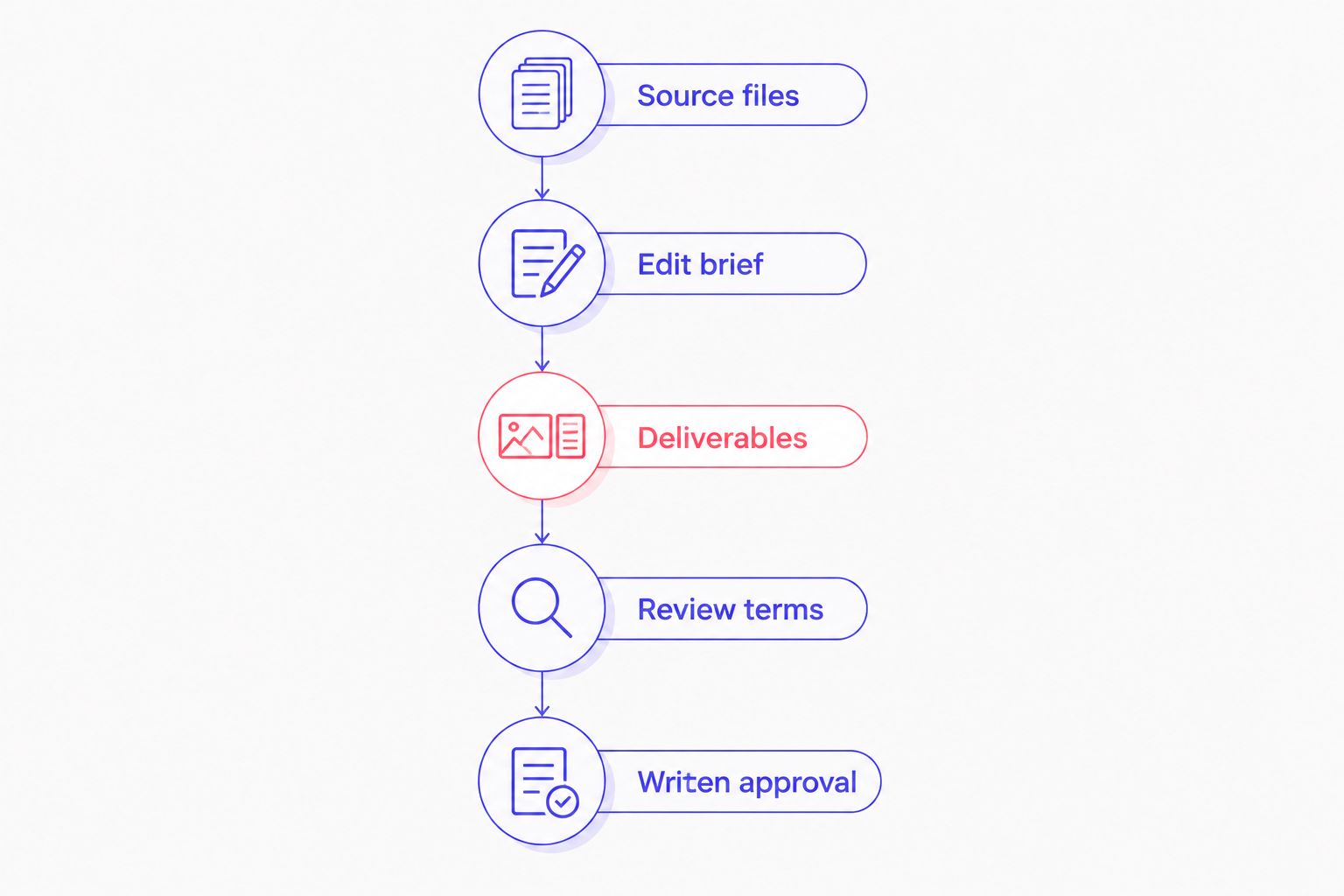
How do I get a podcast editing quote I can compare?
Use the same request for every editor. Your 2026 quote comparison should test the same files, decisions, and outputs—not different interpretations of what professional editing means.
- Source files. Share a representative recording and describe how the files are organized. Identify separate audio tracks and camera files where applicable.
- Edit brief. Explain what should change and what must stay. Include required cuts, pronunciation notes, and approved spelling for names.
- Deliverables. List every finished file you need. Separate the complete episode from clips, captions, graphics, and publishing tasks.
- Review terms. Identify the approver, the feedback method, and the boundary between correcting the agreed edit and requesting new work.
- Written approval. Confirm the scope, delivery schedule, payment terms, and handoff requirements before work begins.
A practical sample brief can cover 1 episode and 1 revision round, with the source recording attached. Those are example scope choices, not a standard package. Add your required outputs and ask the editor to identify anything excluded.
Request a sample edit when you need to judge fit. Listen for preserved meaning, consistent treatment of speech, and whether the editor follows your instructions. Review the result against the brief rather than an undefined idea of polish.
Does a studio recording include professional editing?
A studio booking and an editing agreement are separate scopes unless the booking explicitly combines them. Confirm what you receive after recording and which post-production tasks are included.
Justpushrecord podcast studios use 3 cameras and 1 button for automated recording, with files delivered through Google Drive. That describes the recording workflow; it does not establish an editing package, revision policy, or delivery deadline.
Justpushrecord is best for podcast hosts who want automated three-camera recording without a crew. The boundary is that recording automation does not define the editorial decisions your finished episode needs. Check the current recording details at Justpushrecord and obtain a separate written scope for any editing work.
Before booking, decide who will receive the files and who will manage post-production. Give that person your delivery checklist so the recording handoff and editing brief match.
Is audio-only editing enough for my podcast?
Audio-only editing is enough when your required finished product is an audio episode. It does not cover camera choices, video titles, or a finished video release unless those tasks appear in the agreement.
Start with where you intend to publish. Do not commission video work solely because camera files exist, and do not assume an audio editor will also prepare your video episode.
Should I choose an ongoing editing package?
Choose recurring editing only after you have tested the scope on a representative episode. A recurring agreement needs clear rules for source length, deliverables, review, and changes between episodes.
Ask what happens when you record a different format or need additional approval. Consistent requirements make the arrangement easier to manage; an undefined package leaves those decisions unresolved.
FAQ
How much does professional podcast editing cost in 2026?
Professional podcast editing costs depend on the source recording, editing scope, deliverables, and review terms. Request a written quote for your actual files and compare proposals against the same brief.
Does podcast editing include video?
Podcast editing includes video only when the agreement explicitly lists video work. Confirm camera selection, synchronization, titles, and finished exports separately from audio editing.
Are social clips included in podcast editing?
Social clips are included only when they appear in the agreed deliverables. Specify who chooses excerpts, checks captions, and approves each standalone clip.
Can I get a quote before recording my episode?
You can request a preliminary quote using a detailed recording plan and delivery brief. Ask the editor how the quote will be confirmed after reviewing the actual files.
What should I send a podcast editor?
Send the source files, edit instructions, required deliverables, and approval requirements. Include correct name spellings and timestamps for mandatory cuts.
Does Justpushrecord podcast recording include an editor?
Justpushrecord provides automated, one-button, three-camera podcast recording with Google Drive file delivery. Confirm any editing service separately rather than assuming it is included in the recording booking.
How do I avoid unexpected podcast editing charges?
Agree on the scope and the process for approving additional work before editing starts. List revisions, extra exports, clips, and publishing tasks explicitly.
One last thing
Ask what happens after the first export. A quote can describe the initial edit clearly while leaving feedback, replacement files, and final approval undefined.
For your next 2026 episode, name the approver before you send the recording. Require a written explanation of what happens when feedback changes the original assignment. That small administrative decision makes the editing agreement easier to use.