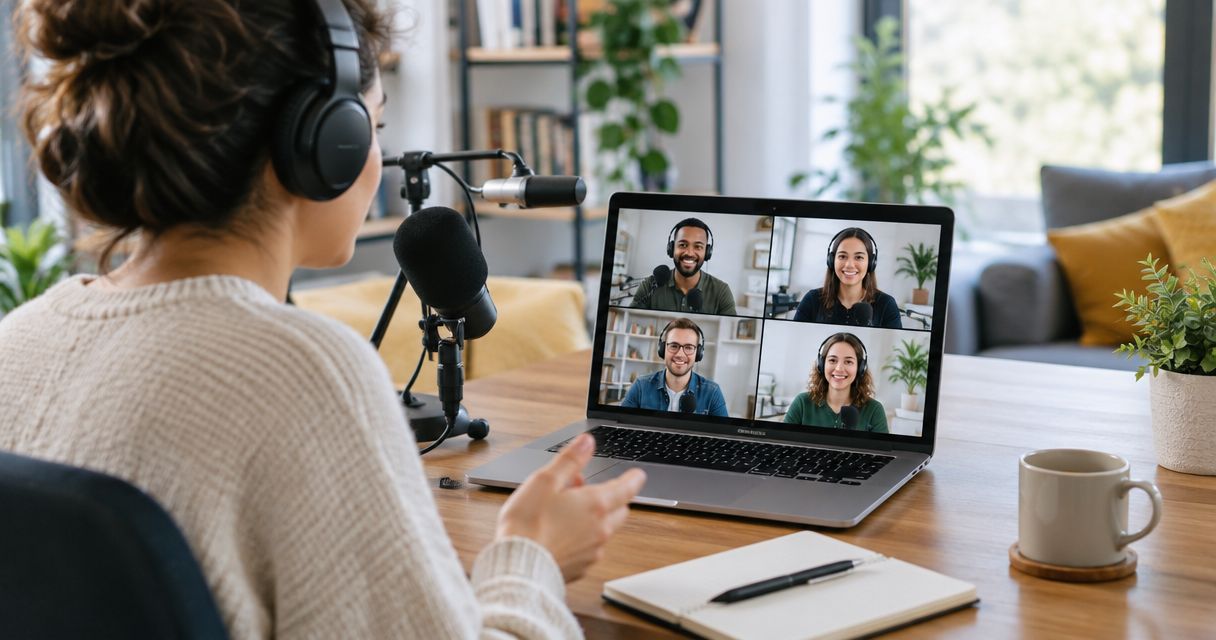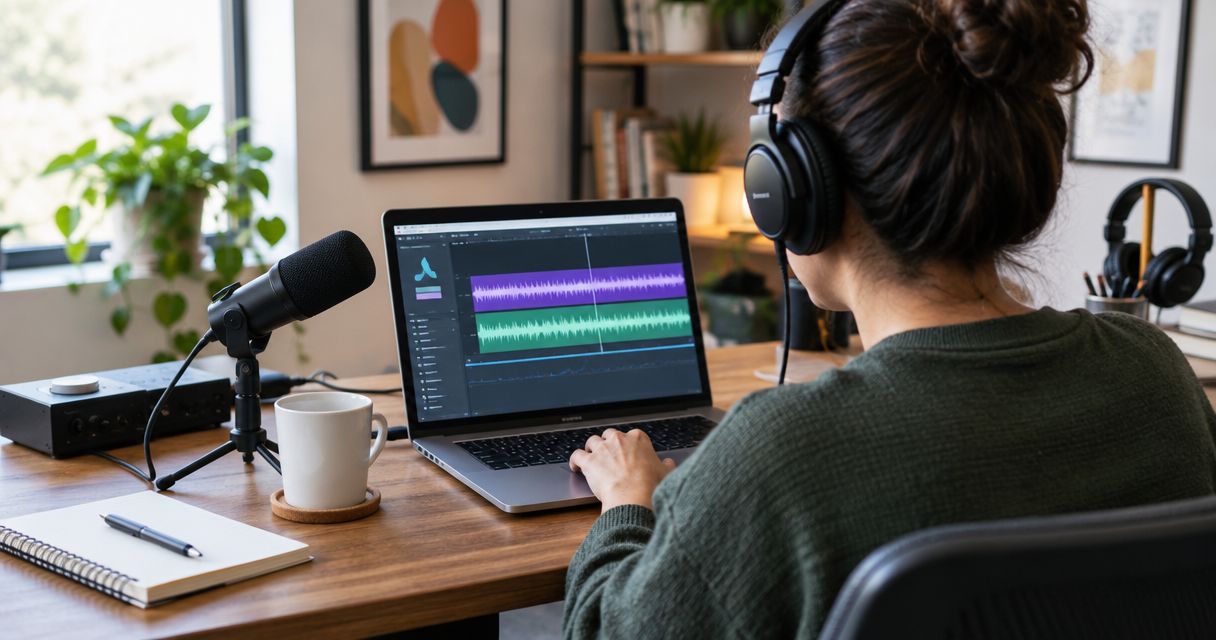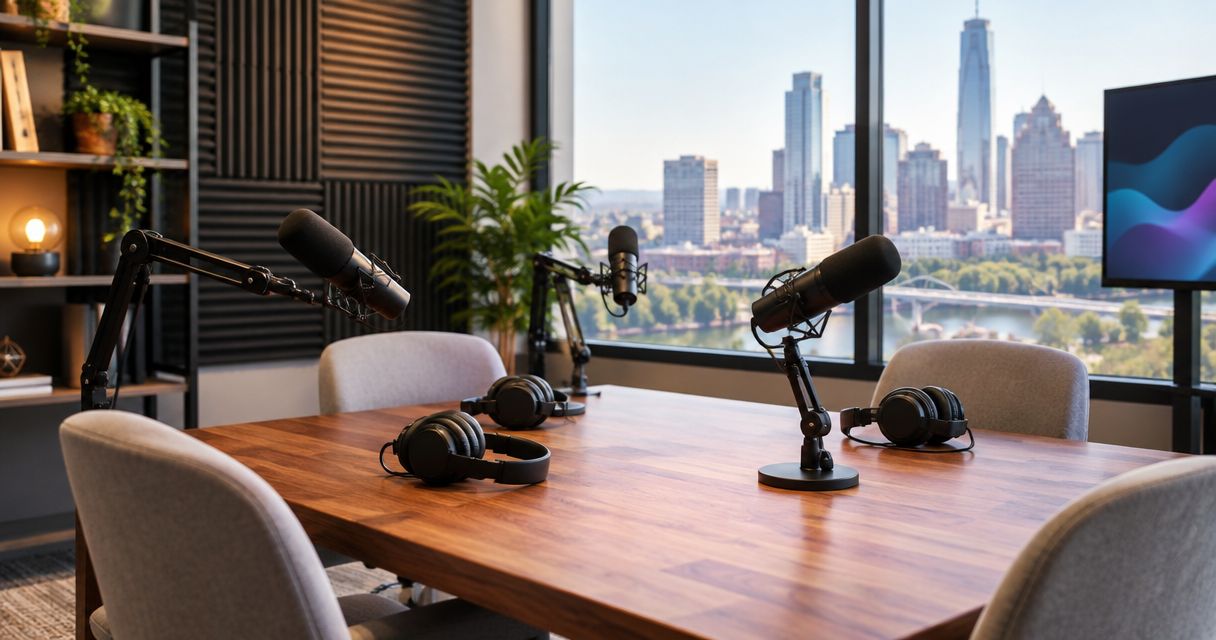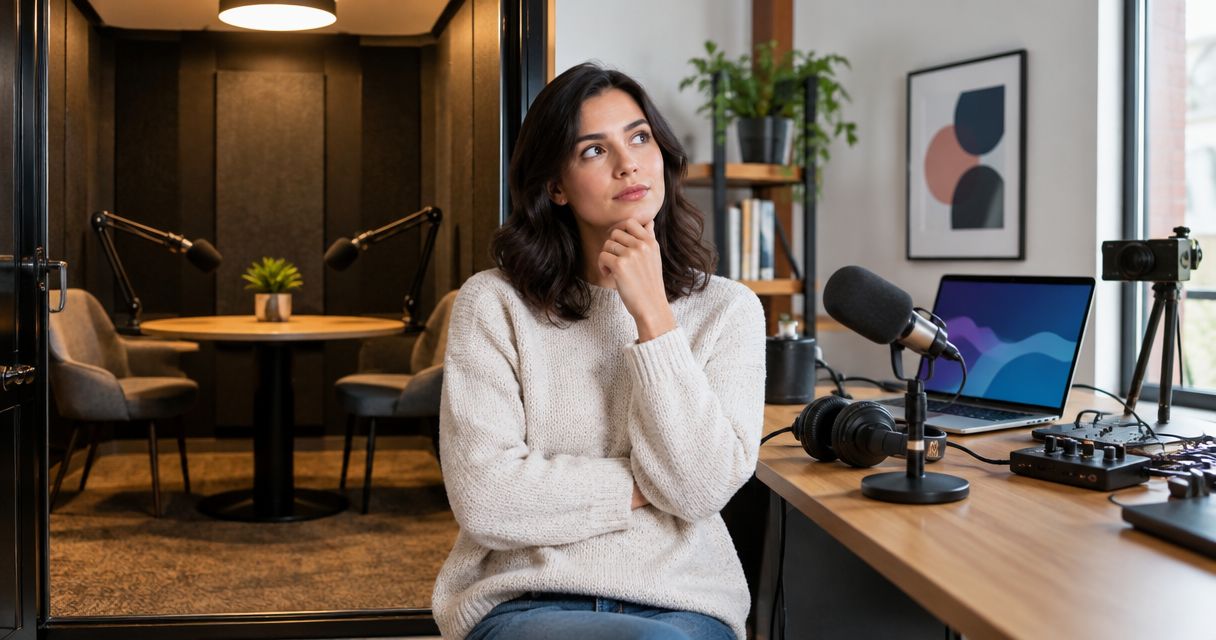
Renting a podcast studio is cheaper than buying gear when your planned recording sessions cost less than a complete home setup plus its operating costs. Buying becomes the cheaper option only when repeated use offsets that upfront investment. Compare the same recording format and include travel, setup, editing, and your time—not just microphones against a room booking.
- Is renting a podcast studio cheaper than buying gear? Compare total spending across your planned sessions, not equipment alone.
- Justpushrecord suits podcast hosts who want automated, three-camera recording without operating a home studio.
- Renting avoids a gear purchase; owning gives you control over your recording space and schedule.
- Calculate break-even using complete session costs and count only episodes you realistically expect to record.
Is renting a podcast studio cheaper than buying gear?
Renting wins financially when your total rental spending stays below the cost of buying and operating an equivalent setup. Ownership wins after enough completed sessions cover the initial investment, provided each home session actually costs less to produce.
For your 2026 comparison, define the finished result first. An audio-only interview is not the same purchase as a video podcast with three camera angles. Compare matching outputs before comparing spending.
| Option | Best for | Financial advantage | Trade-off to include |
|---|---|---|---|
| Rent a podcast studio | Hosts testing a show or recording without a permanent setup | Avoids purchasing and maintaining a complete recording setup | Repeat bookings, travel, and preparation still count |
| Buy recording gear | Hosts with dependable recording demand and a suitable room | Spreads the initial investment across repeated sessions | You handle setup, maintenance, storage, and troubleshooting |
| Use existing equipment | Hosts testing an audio-first format before expanding | Avoids buying replacements for equipment that already meets the brief | Existing equipment and the room must pass a recording test |
Justpushrecord provides self-serve podcast studio rentals with one-button, three-camera recording and Google Drive file delivery. That is a specific workflow to compare with ownership, not a reason to assume every rental includes the same equipment or services.
Why this matters
A microphone purchase does not create a finished recording space. A studio booking does not automatically create a finished episode either. Both routes need a complete production plan.
The useful question is what you must spend and do to produce recordings you can publish. In your 2026 budget, separate the recording stage from editing, distribution, and promotion. Otherwise, shared expenses can make either route appear cheaper without changing the actual decision.
Justpushrecord podcast studio rental is best for hosts who want automated, three-camera recording without running their own recording setup. The trade-off is that you still need to plan the session, travel to the studio, and manage what happens after file delivery.
How do you calculate the break-even point?
Use your actual equipment list, current booking terms, and realistic production schedule. Keep the comparison period identical for both routes. Do not compare a long-term equipment purchase with an isolated rental session and stop there.
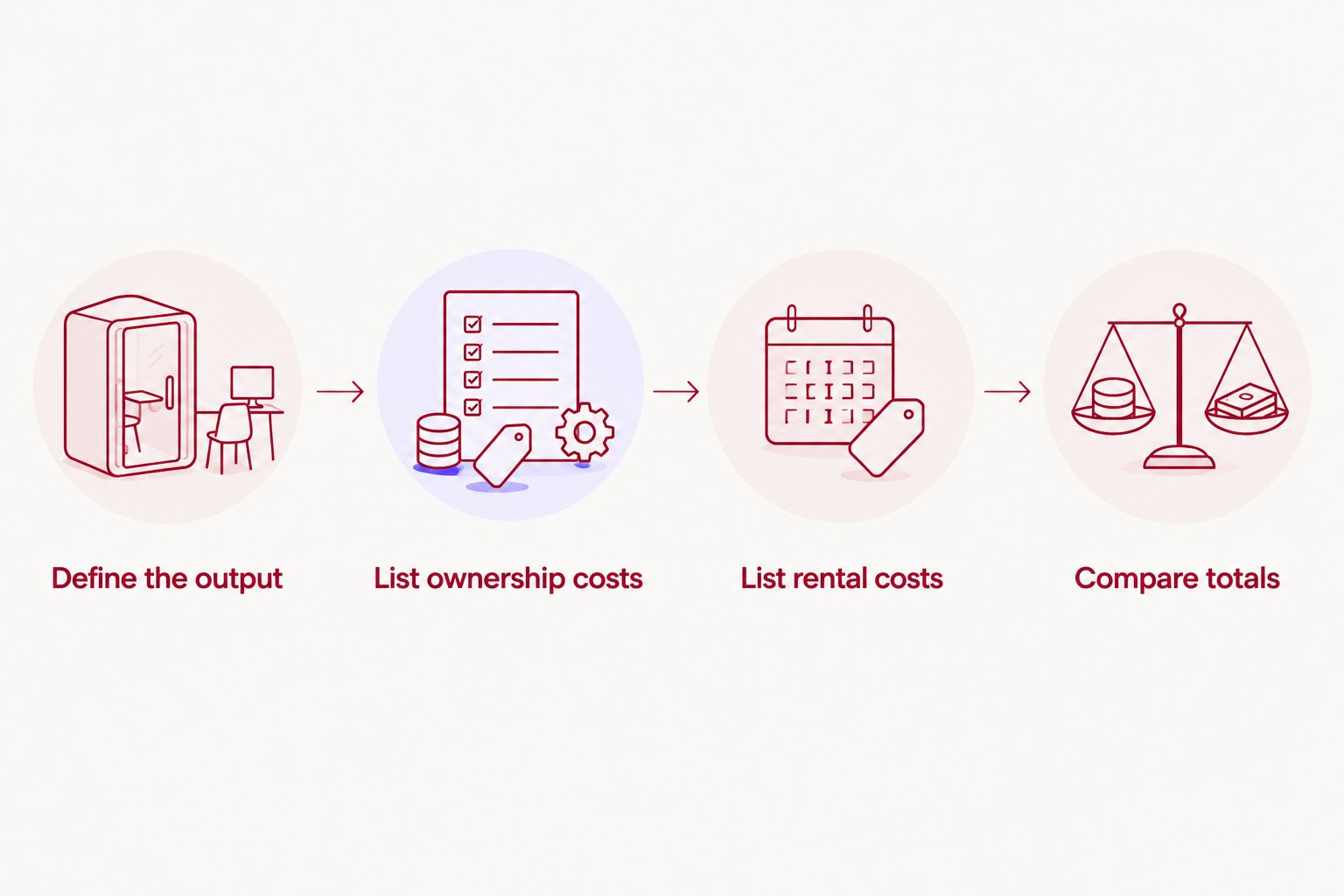
Define the output
Write down what an acceptable recording must contain. Include whether you need audio only or video, which people will appear, and what files your editor needs.
Match those requirements on both sides. If your rental comparison includes three cameras, include the equipment and work needed to achieve that output at home. If you only need audio, do not add video equipment to ownership just to make renting look better.
List ownership costs
Include equipment you actually need to buy, room preparation, necessary accessories, storage, and any recording-specific software. Add ongoing expenses only when they apply to your setup.
Separate purchases from recurring expenses. Equipment is an upfront commitment; subscriptions and replacement supplies belong in the operating side of the comparison. Keep optional upgrades out of the base calculation.
List rental costs
Use the studio's current booking terms and include the booking duration your session requires. Account for preparation, testing, retakes, and closing the session—not just the intended episode length.
Check which services are included. File delivery, editing, and publication are different tasks. The podcast studio rental cost guide covers the booking side of this decision.
Compare totals
Use these relationships with your own figures:
- Rental total: planned bookings plus rental-specific operating expenses.
- Ownership total: upfront purchases plus ownership-specific operating expenses over the same period.
- Break-even sessions: upfront ownership investment divided by the saving per session from owning instead of renting.
The break-even formula works only when ownership has a positive per-session saving. If running your home setup costs as much as renting, additional sessions do not repay the equipment investment through recording savings.
Use completed sessions when reviewing the result. A calendar full of intended recordings does not spread an equipment purchase across published work. Update your 2026 calculation when your actual recording pattern differs from the plan.
Renting a podcast studio: best for testing a recording commitment
Choose rental when you want to record without committing to a permanent equipment setup. That includes testing a new show, recording occasional interviews, or producing video without taking responsibility for the recording system.
The benefit is a smaller equipment commitment. You do not need to choose, store, maintain, and connect a full setup before recording. With an automated studio, you also separate hosting the conversation from building the recording system.
The limitation is recurring booking effort. You must coordinate the location with your guests and prepare enough material for the session. Travel and unused booked time belong in the comparison, even when the recording itself is straightforward.
Before booking, confirm:
- What the recording includes and what you must bring.
- Whether the room supports your planned participants and format.
- Which files you receive and how you receive them.
- Whether editing is included or handled separately.
- Which booking terms apply if your plans change.
Justpushrecord podcast studio rental uses automated recording and Google Drive delivery. Treat that delivery as the handoff to your next production step; do not assume it includes an edited episode or publication.
Buying podcast gear: best for dependable, repeated use
Choose ownership when you have recurring recording demand, a suitable space, and someone responsible for the setup. Equipment becomes financially useful through repeated use, not through owning it.
The main advantage is control. You decide when to record, how to configure the equipment, and whether to leave it assembled between sessions. A dedicated setup also lets you keep the recording arrangement consistent.
The limitation is responsibility. You handle microphone placement, camera framing, lighting, software settings, storage, and equipment problems. Those tasks need an owner even if nobody receives a separate production invoice.
For a 2026 equipment plan, buy against a defined recording brief. Identify the required output, check what you already own, and purchase only the missing pieces. Avoid treating every possible future format as a current requirement.
Confirm that the room works before expanding the equipment list. Record a test conversation and listen for distracting noise, echo, and inconsistent speech levels. If the room needs work, include that work in ownership rather than excluding it from the comparison.
Using existing gear: best for validating the format
Use existing equipment when it already produces a recording that meets your publishing needs. This route is useful for testing your topic, interview structure, and ability to keep recording.
The advantage is avoiding unnecessary replacement purchases. Start with a recording test, not a shopping list. Assess the result through the same editing and playback process you intend to use for the show.
The limitation is that existing gear does not remove production requirements. Poor room sound, awkward framing, or an unreliable recording process still needs attention. Keep the test focused on whether the result is usable, not whether the equipment feels professional.
Do not count equipment you already own as a new purchase. Count additional purchases required for the show and any recording-specific operating expenses. That keeps your decision focused on spending you can still change.
Why the cheaper option varies
The cheaper route depends on the work required to deliver your specific show. Use these factors to explain differences in your comparison rather than relying on a generic studio-versus-microphone argument.
- Recording frequency. Repeated use spreads an equipment purchase across more sessions. Infrequent use leaves more of that investment attached to each recording.
- Audio versus video. Video adds framing, lighting, and file-management requirements. Compare equivalent deliverables rather than an audio setup against a multi-camera booking.
- Room readiness. A suitable existing room changes the ownership calculation. Required acoustic work, furniture changes, or equipment storage must remain in the budget.
- Technical responsibility. Someone must configure and check the recording system. Track that work whether you do it yourself or assign it to another person.
- Travel and scheduling. Studio sessions require location planning. Home recording requires a usable space at the same time your host and guests can record.
- Post-production scope. Editing, exporting, and publishing remain separate unless explicitly included. Compare the same finishing work on both sides.
For business recordings, document who handles each task. A plan that relies on an unnamed employee to fix recording problems has an unresolved production responsibility, even before you attach a cost to it.
Does recording more often make buying gear cheaper?
Recording more often makes buying gear cheaper only when ownership saves money per session and those savings repay the upfront investment. Frequency alone does not establish the result.
Use your actual completed recordings to test that assumption. If repeated sessions require more setup work than expected, update the ownership total rather than keeping the original forecast unchanged.
Is renting cheaper if you only need audio?
Renting is cheaper for audio-only recording only when its total cost is below the equipment and operating costs you would otherwise incur. An audio-only brief changes the equipment comparison, so calculate it separately from video.
Do not buy a video setup for an audio-only show without a clear requirement. Equally, do not assume an existing microphone is sufficient until you have tested the room and recording workflow.
Should you rent before buying equipment?
Rent before buying equipment when you need to test the show without building a permanent setup. Use the session to evaluate your format, guest preparation, and ability to produce material you want to publish.
Then decide what ownership would solve. If buying gear does not address a specific recording need, keep the purchase out of your 2026 production plan.
FAQ
Is renting a podcast studio cheaper than buying gear for a new show?
Renting is cheaper when the planned bookings cost less than the complete setup and operating expenses you would otherwise incur. For a new show, compare a realistic recording plan rather than assuming a long run of episodes.
What's the best way to compare a studio rental with a home setup?
Compare the same finished recording over the same period. Include the required audio or video output, equipment, room preparation, travel, technical work, and any differences in editing scope.
How many episodes do I need before buying gear pays off?
Your break-even point is the upfront equipment investment divided by the saving per session from ownership. There is no universal episode count, and the calculation requires ownership to have a positive per-session saving.
Is a three-camera studio a fair comparison with an audio-only microphone setup?
A three-camera studio is not an equivalent comparison with an audio-only microphone setup. Decide whether you need video, then compare equipment and services that meet that same requirement.
Can I record a podcast without buying my own cameras?
You can record a video podcast without buying cameras by renting a studio that provides video recording. Justpushrecord offers automated, three-camera podcast recording with one-button operation and Google Drive file delivery.
Does studio rental mean I don't need to edit the episode?
Studio rental does not establish that editing is included. Confirm the deliverables and assign responsibility for editing, exporting, and publishing before you book.
Should I include my own time in the comparison?
Include your own time when comparing the workload of renting and owning. Track preparation, travel, setup, troubleshooting, and file handling; keep cash expenses and time estimates separate unless you use a stated valuation method.
One last thing
The cheapest recording route is not necessarily the cheapest route to a usable episode. Equipment sitting unused and a booked session without prepared material both consume resources without completing the show.
Before committing, write the next episode outline and assign the recording, editing, and publishing tasks. Then choose the route that supports that specific plan. Revisit the calculation after you have actual sessions to compare.